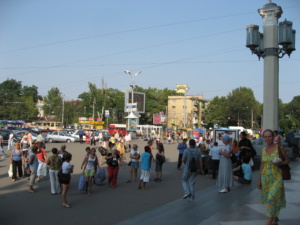
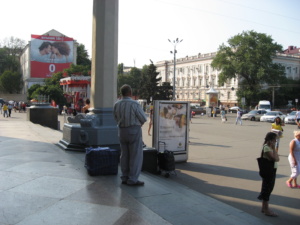
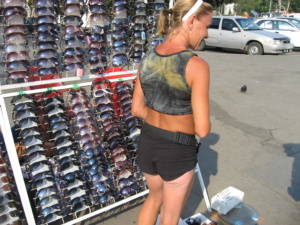
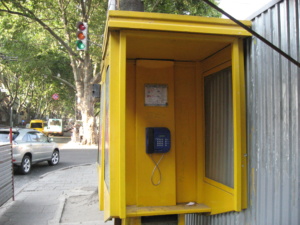
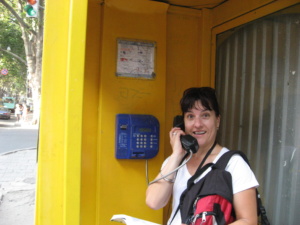
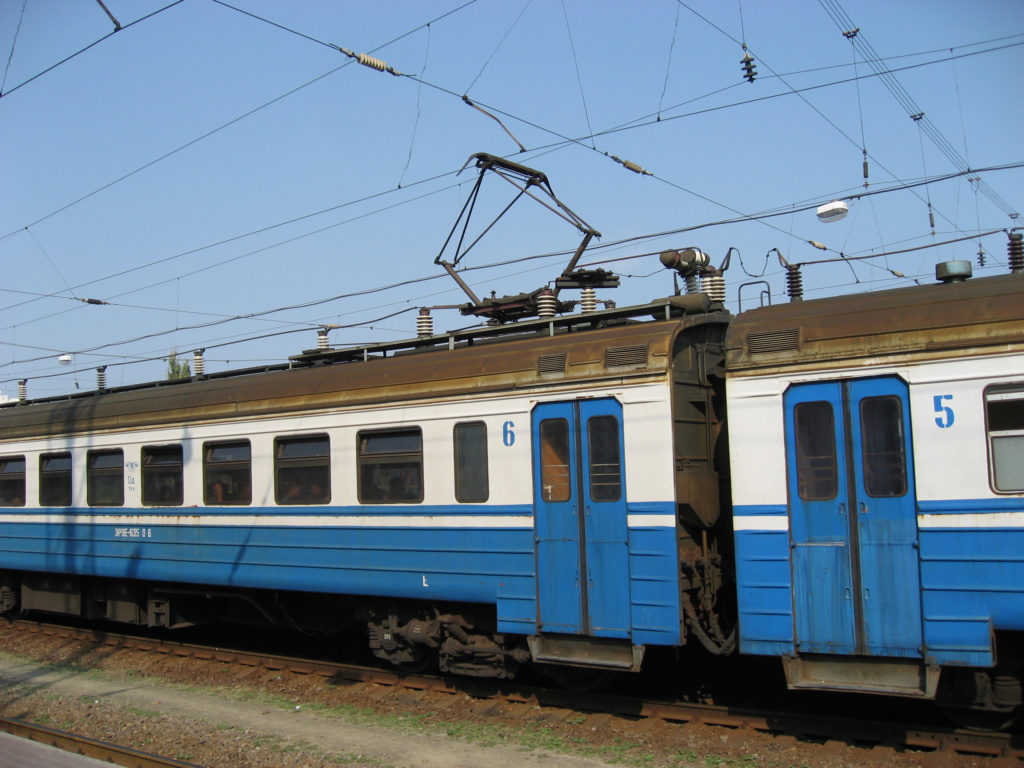
We were going to drive all the way to Mucachevo today, but we left Verychanka late – sometime in the early afternoon. We didn’t get to the mountains til around 2, lunch was around 3, and we stopped at a big craft market at 6. Natalia was still not feeling well, and Mukachevo was still 200 or so kilometres away. Eugene had a Plan B. He knew a small hotel called Tisa hotel, in Rakiv, which was just 40k away, and it would mean that we slept in the Carpathians. So we went with plan B. The hotel was four storeys and was old Sovet style, but a single floor had been bought and renovated by someone else and rooms were being rented out. Really cheap – 130 hryvy per room, so about $60 for 3 people. Rooms were clean and comfortable and both Natalia and I slept well. Natalia didn’t feel well enough to go for dinner, so Eugene and I did. I had borsch and salad and then popped in to an internet cafe to do email speedier than in the car on Eugene’s laptop. It cost 2 hryvny for 30 minutes of internet.
This morning, Eugene asked one of the taxi drivers for some help, he gave the directions, and then a few minutes later, he caught up with us and directed us away from a turn we were about to make, calling out the window, “If there are signs to Ternopil, do not turn.”
We got gas, which was not as easy as it sounds. The first pump had no gas and we had to get into another lineup. The gas station was selling coca cola and since Natalia now has the bug I had yesterday, we bought cokes. They keep the refrigerator locked until you pay and then the open it remotely.
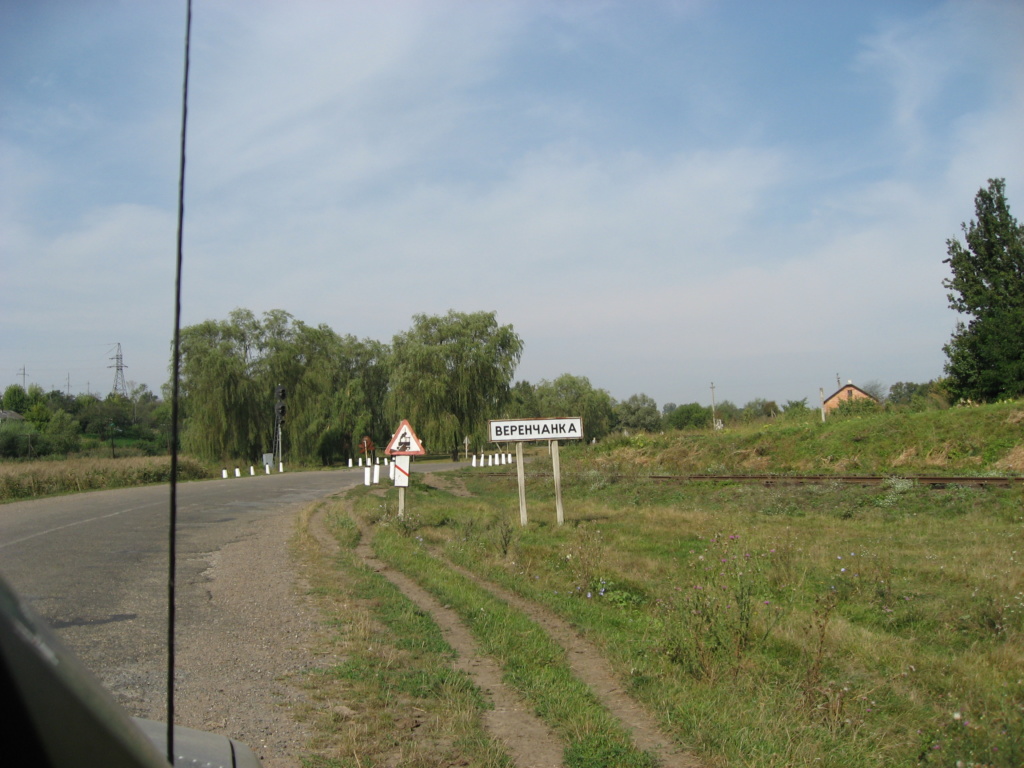
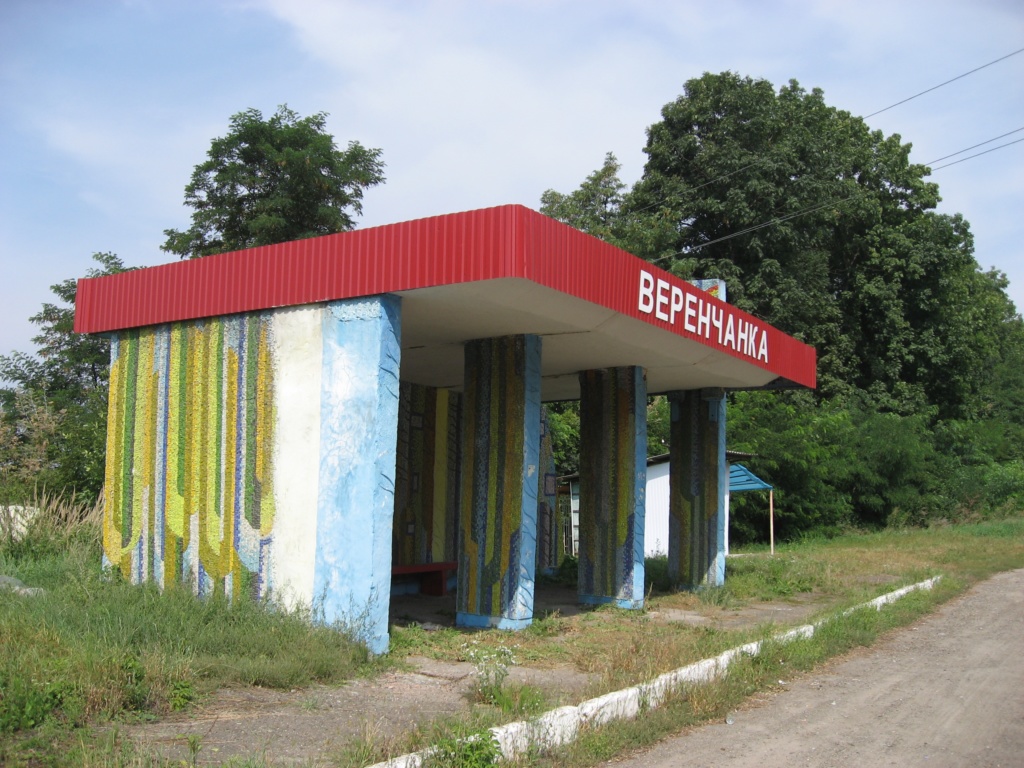
Once we got out of Chernivtsi we had good roads and traffic for all of a kilometer or two and then we came to almost a standstill because there was a group of cyclists with a medic behind and police in front and traffic couldn’t pass. One van bumped a couple of the cyclists and knocked one down. We were finally able to pass and we went through Kitzman and then finally saw the sign to Verychanka.
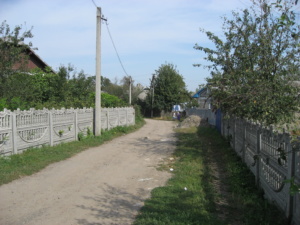
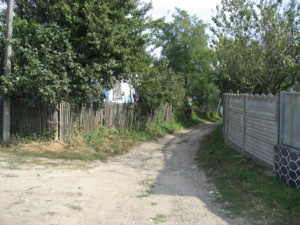
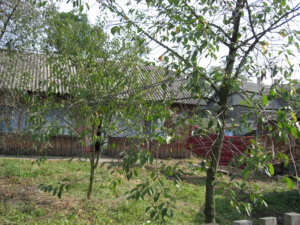
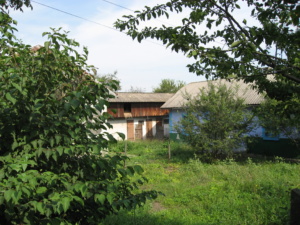
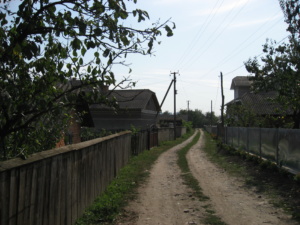
What a beautiful village. When you first turn the corner, there are lush green trees and then they open up to a meadow and a pond.
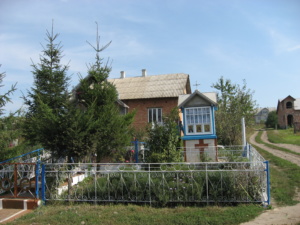
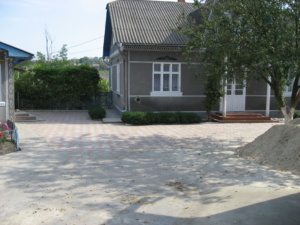
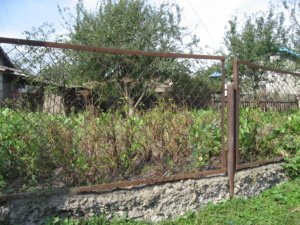
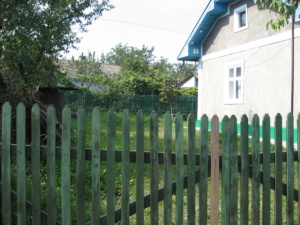
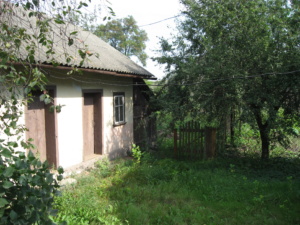
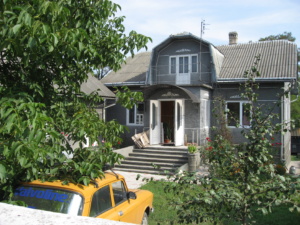
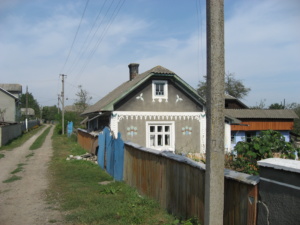
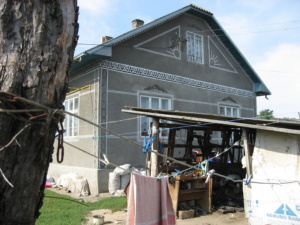
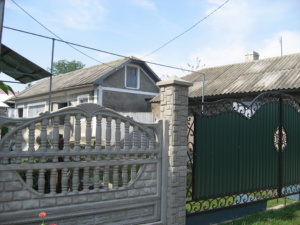
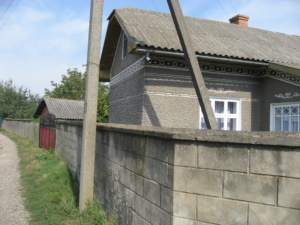
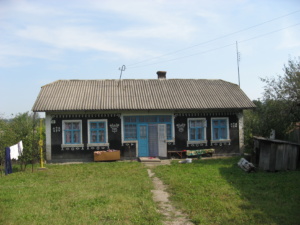
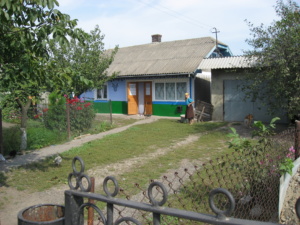
A bit further up, you begin to see houses. They’re substantial houses, made of pebbled plaster with decorative edges.
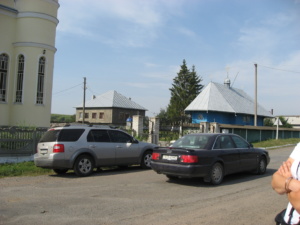
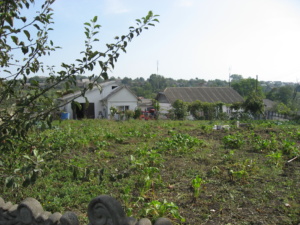
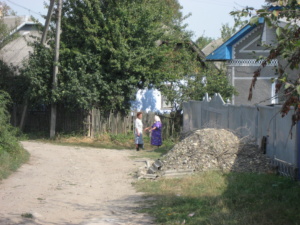
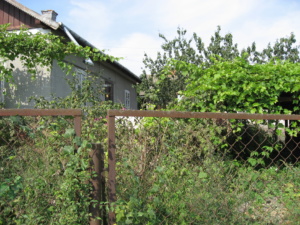
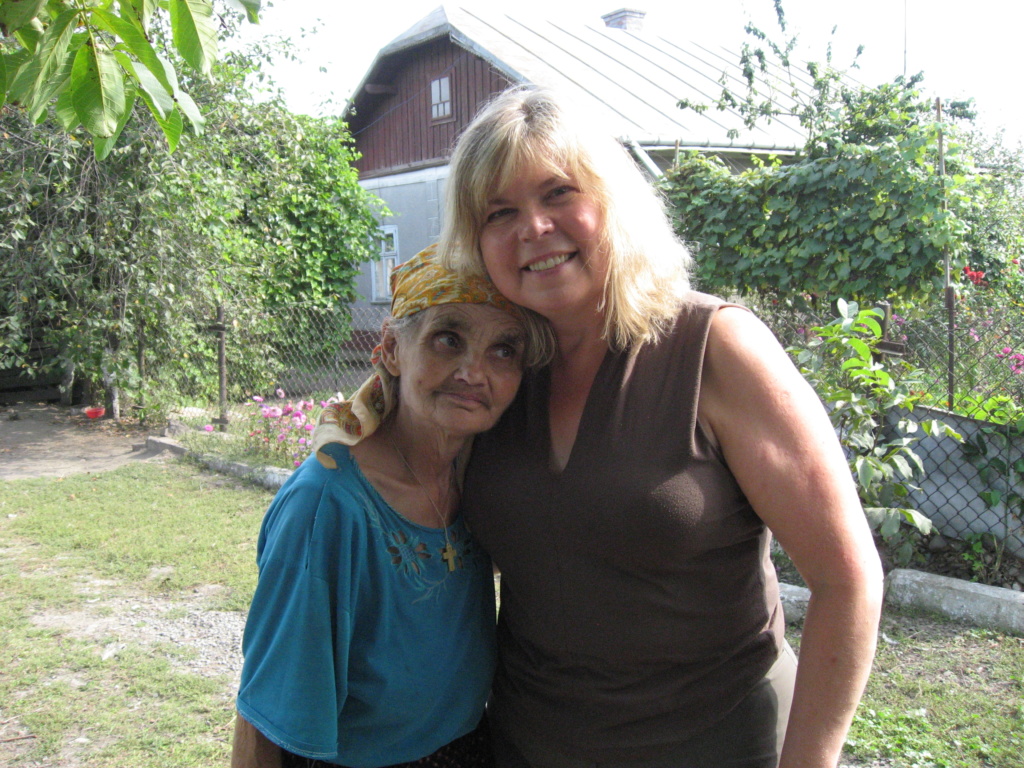
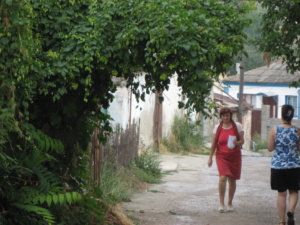
Every house had a large fenced in garden lush with flowers pumpkins vegetables. Lots of pet dogs, two churches and one store that I saw. We walked down a street and took photos and then I took a photo of an old woman who lived across the road from the Orthodox church. She scolded me at first but then Natalia told her who I was and why we were here and she became quite animated. Invited us in to her yard and Natalia took a photo of us together.
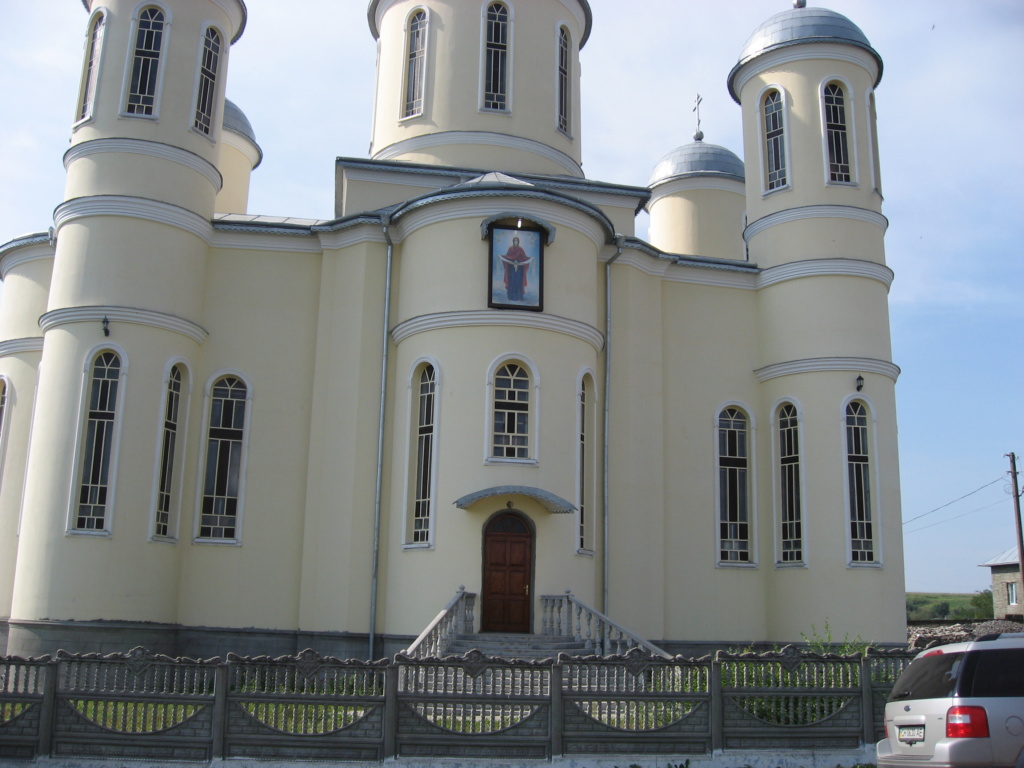
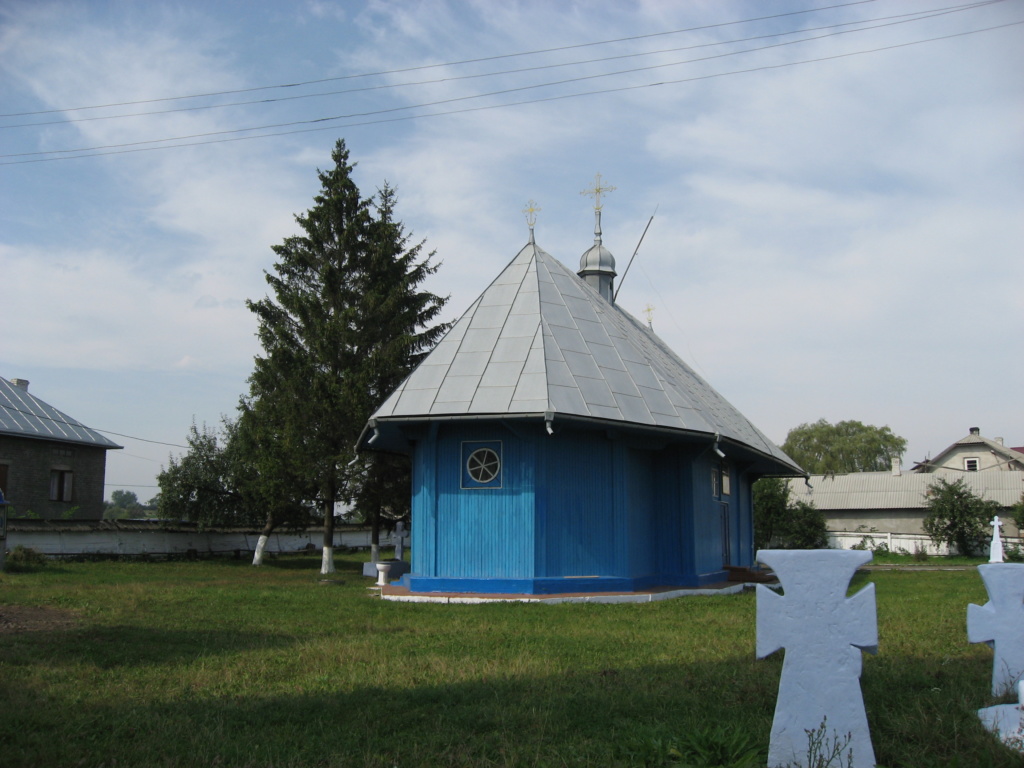
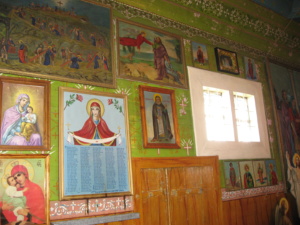
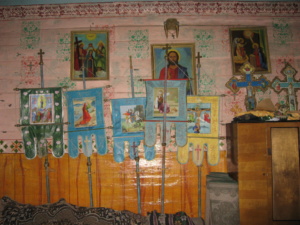
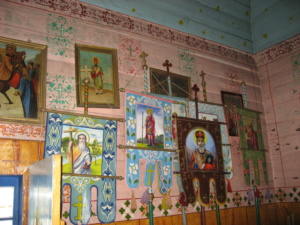
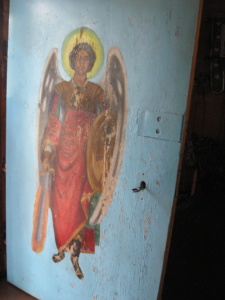
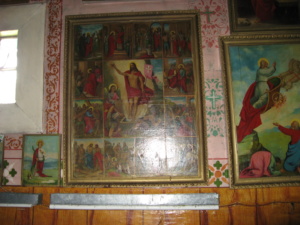
Her daughter came out and was chatty. They have no place to work. They live off what they can grow. Her cell phone rang as we were having this conversation. It was the priest’s wife, asking Valya who she was talking to. She must have been watching from the window. When the priest’s wife found out who we were and what we were looking for, she sent her husband out to greet us. The priest told us that he would be able to help us. The church records go back 500 years and he would be able to look up details of marriage, baptisms, and funerals. The city hall has archives. The priest showed us the new Orthodox church that had been built eight years ago and then he went back and got the key for the old church, which was built in 1794. My grandfather would have been baptized in this church.
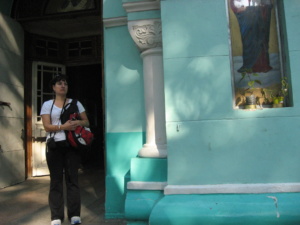
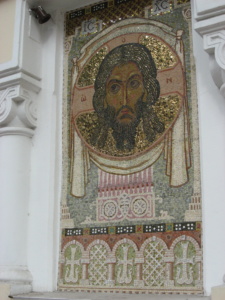
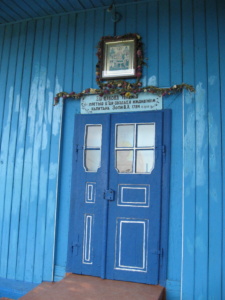
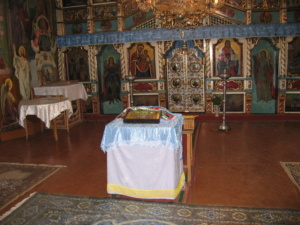
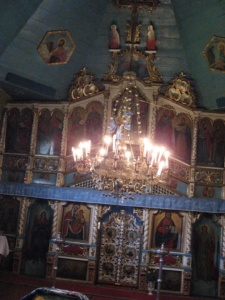
He let us in and we took photos.
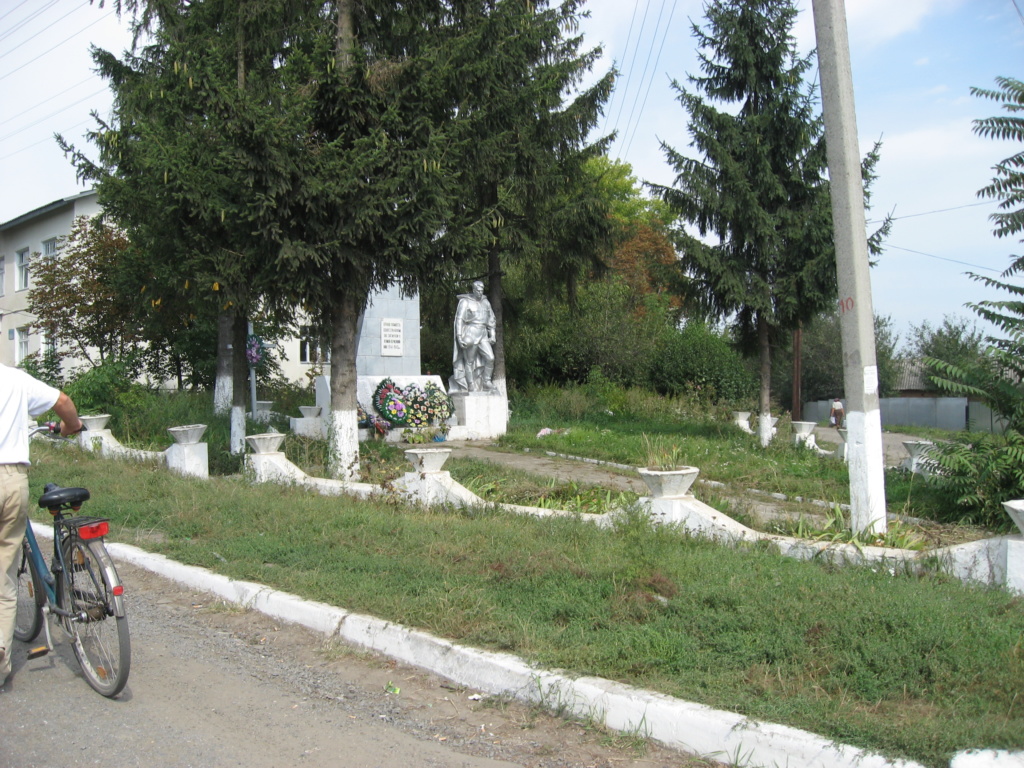
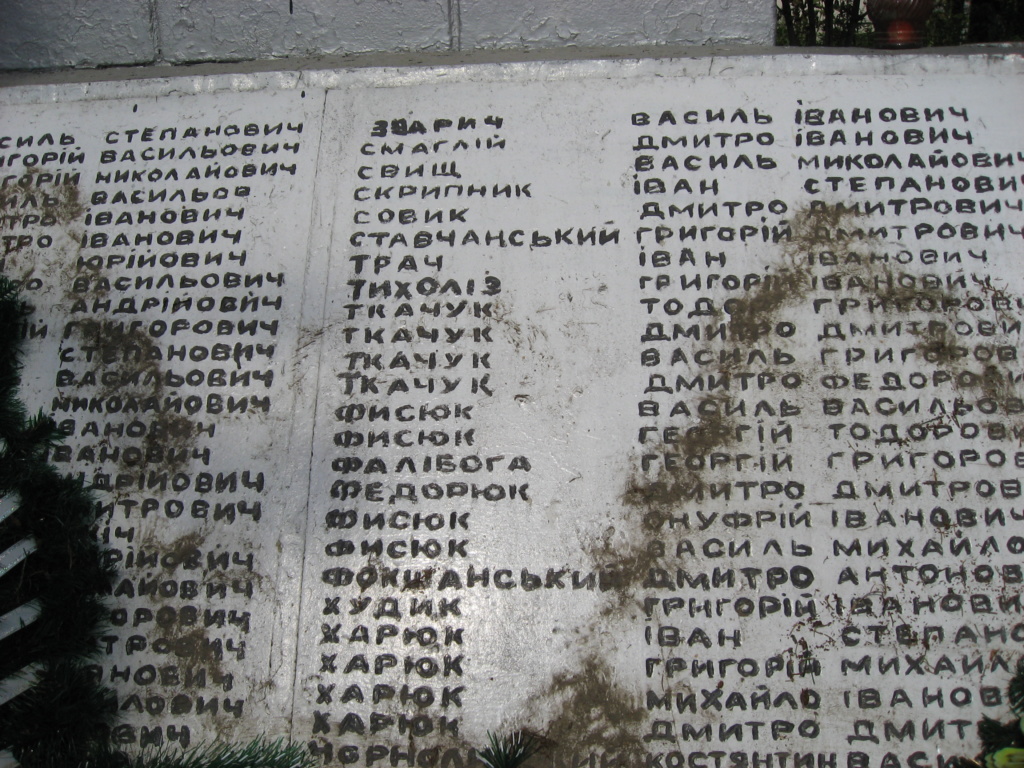
He gave me an icon (plastic) from the church and some prayer missals. He took down my name and email address and said he would look for info on my father’s family and email me back. We drove down to the end of the village and there was a memorial to the people from the village who had died in WWII. There were four Fesiuks. I was thinking it was Feschuk, but it was Fesiuk. There was a Gregory Fesiuk. Also an Onifry and two Vasyls — cousins? At the end of the road was an old cemetery, and a new one. Could have spent a whole day here, but then again, I could have spent a whole day in any of these places. So much to see. What a beautiful beautiful country.
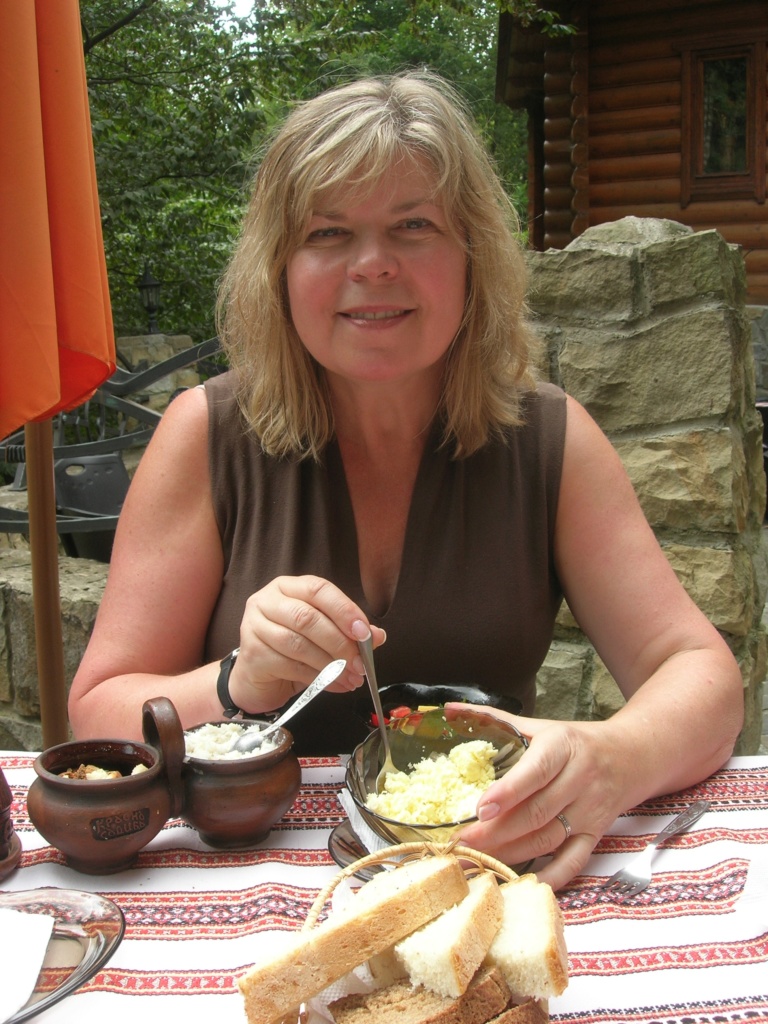
Now we’re on our way to the Carpathian Mountains. Kolomia is first. At lunch, at a restaurant called Yaremche, I had some brynza, a kind of cheese my father has been trying to get at home for ages. It was quite tasty. Sharp yet mild, sort of like crumbly cheese curds.
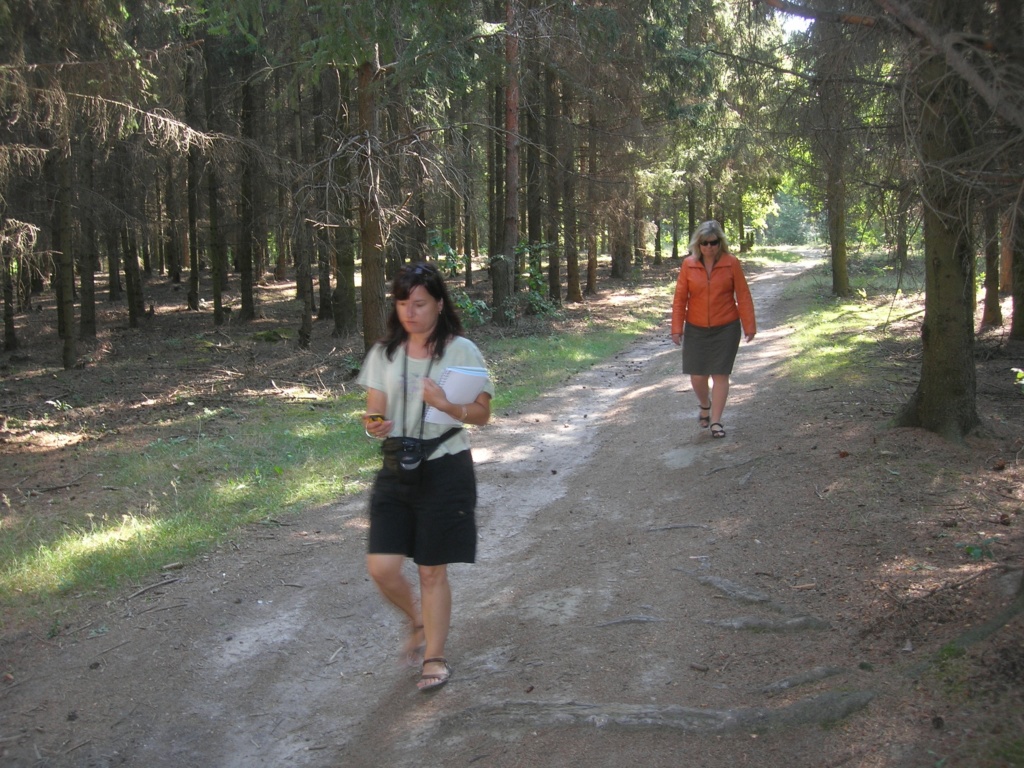
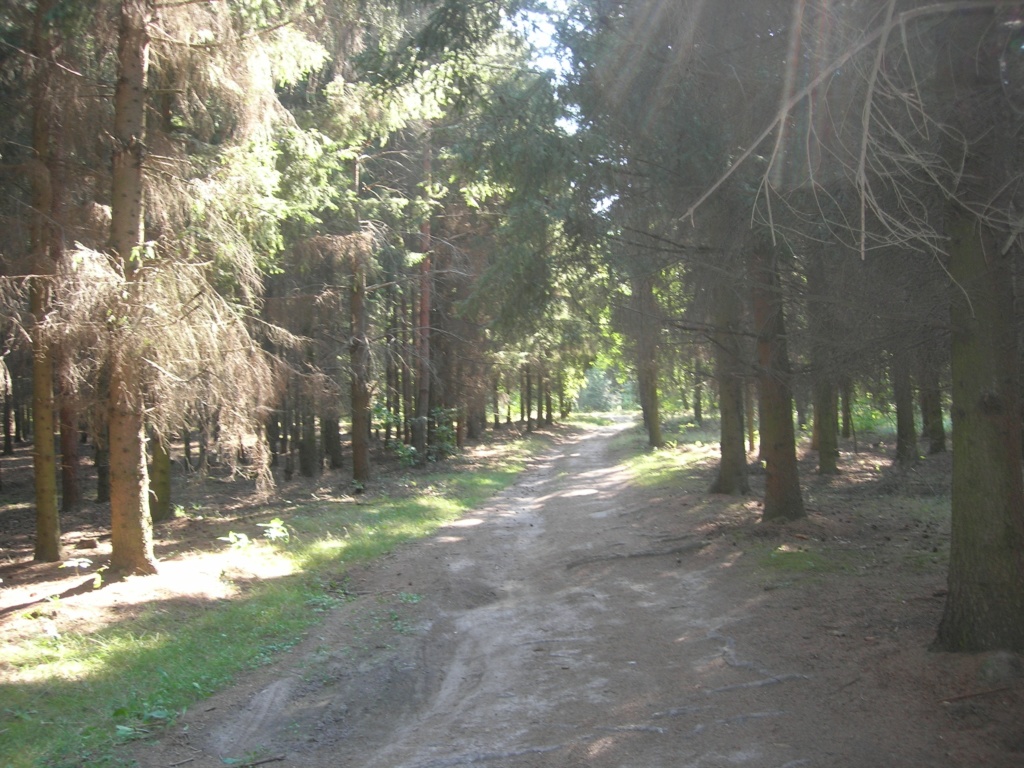
We drove to Hitler’s secret bunker just outside of Vinnitstya. Such a beautiful and tragic place. Fourteen thousand Ukrainian POWs and some German solders built it and then they were all shot. It was an overwhelmingly emotional experience to walk through the forest.
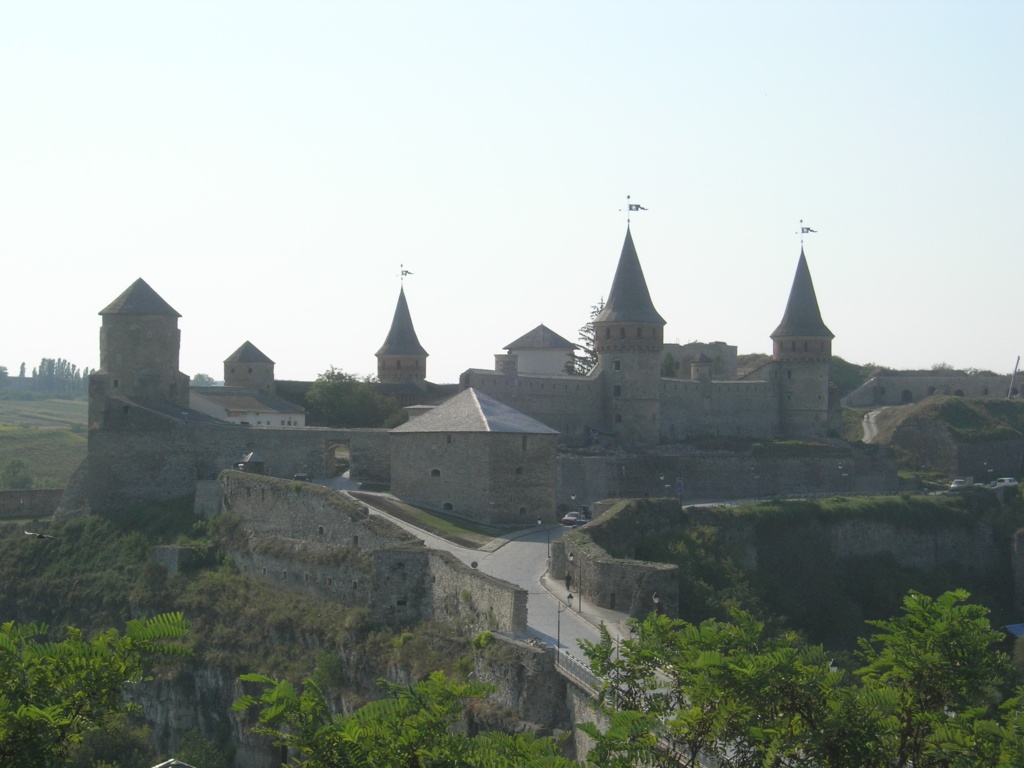
We drove to Kaminets Podilsky and had lunch there and then walked around the fortress and the churches.
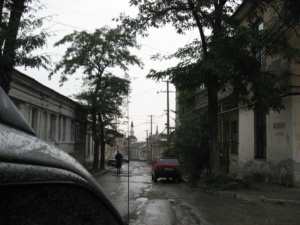
We drove to Chernivtsi – and this was very interesting. The houses once we got into Bukovyina were entirely different than the Podilsky houses. Lots of beautiful and intricate metal work and the houses are BIG. Chernivtsi is a confusing city and it was quite the challenge for Eugene to find the hotel even though it was supposed to be on the main street. He ended up getting a taxi driver to lead us to it. Hotel Cheremosh. This is the oldest hotel we’ve been in. Looks Soviet and the rooms bathrooms are old looking but downstairs is all redone and there was a working ATM. Natalia was feeling the effects of the virus I’d had the day before so we went to a restaurant called Cafe Reflection because it looked like they had ungreasy food. We all had soup and bread and tea. That was enough. Oh yeah, when we were in Kaminets Podilsky, the place were we had lunch had a stunning view. It was right on a cliff.
I had rice and tea Didn’t want to risk anything more.
And now to bed. I’m hoping for a good rest. Tomorrow we drive to Gido’s village.
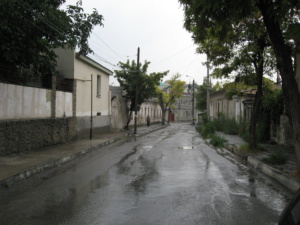
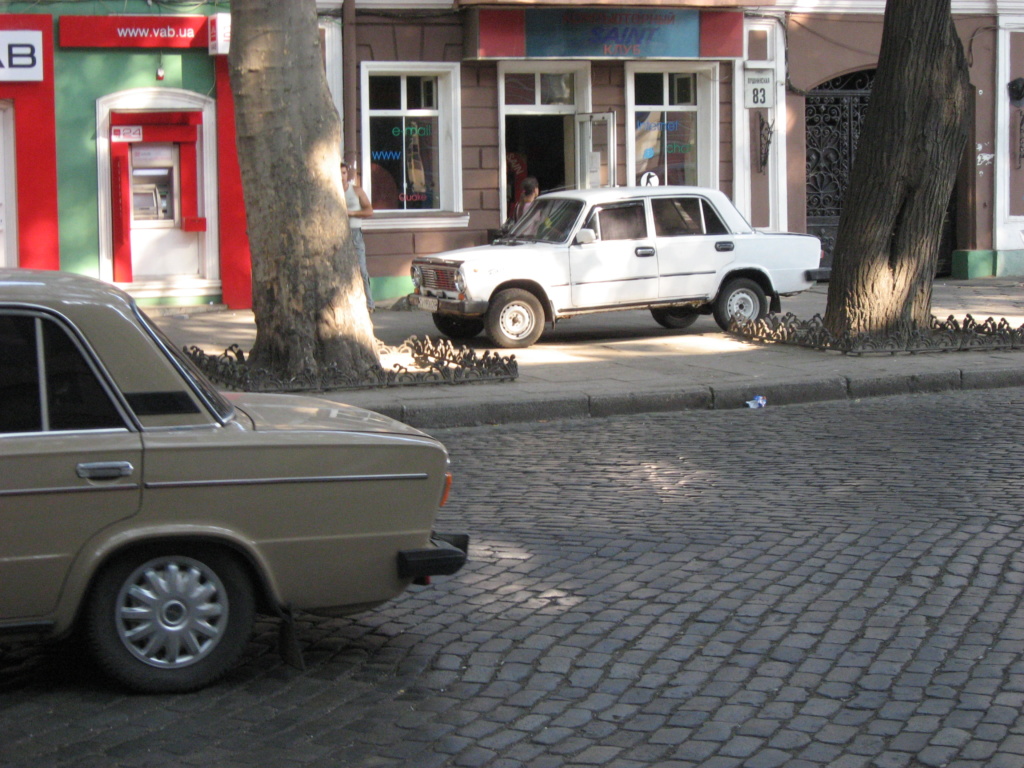
Getting out of the city was challenging. No signs, and the ones that were there were the truck signs. Cobblestones make for really rough driving and all of the streets in the city are cobblestone. Asing a taksi driver is the best way to find anything and they are so amzingly friendly. Last night when we came in, one of them led us with his car to our hotel through twisty windy streets.
We started out early Wed morning from Simferpole. Eugene had the hotel lady bring us up a light (bizarre) breakfast at 7am so we’d be awake and ready for 8. The breakfast was these little packaged croissants called 7 days, plus instant black cofffee.
We got on the road and drove 12 and a half hours through to Vinnitsya. Along the way, we stopped at gas stations and for lunch but it was an extremely long day.
It was neat to see the way the countryside and the houses kept on transforming. We saw lots of harvested sunflower and lots of burning fields. This is a way for them to get rid of weeds in a field after harvest. It was really hard on our eyes and sinuses.
The Hotel in Vinnitzya was lovely and by the time we pulled in it was late – something like 10pm. We were starving and had supper in the hotel restaurant – perch and potatoes fried in garlic. It was tasty but greasy and I guess it was just too much too late and perhaps I had a virus because I couldn’t sleep all night because of an upset stomach. After throwing up three times I felt much better but in the morning I was exhausted and weak.
This morning, Eugene greeted us with cups of Turkish coffee and he had pre-ordered breakfast, which turned out to be blini, cheese pancakes, salami on bread, and a tomato salad – and more coffee. Very filling and delicious. We walked down the Koktabel boulevard to the beach – large round stones that took good balance to walk on – and went swimming in the Black Sea.
Then we had showers, packed, and went to Feodosia and found where the slave market would have been in 1500. It looked similar to the Genovese fortress.
Our next order of business was to find another “hole in the wall” — aka bank machine. We visited one that didn’t work and another that wouldn’t accept our cards and finally a third that worked.
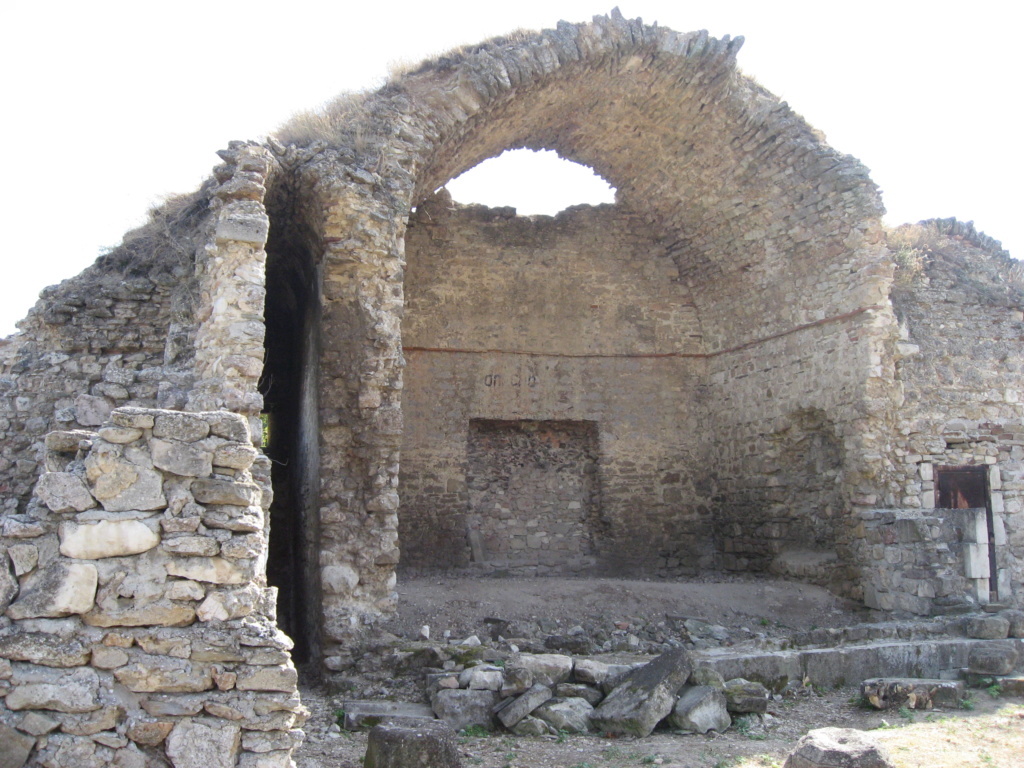
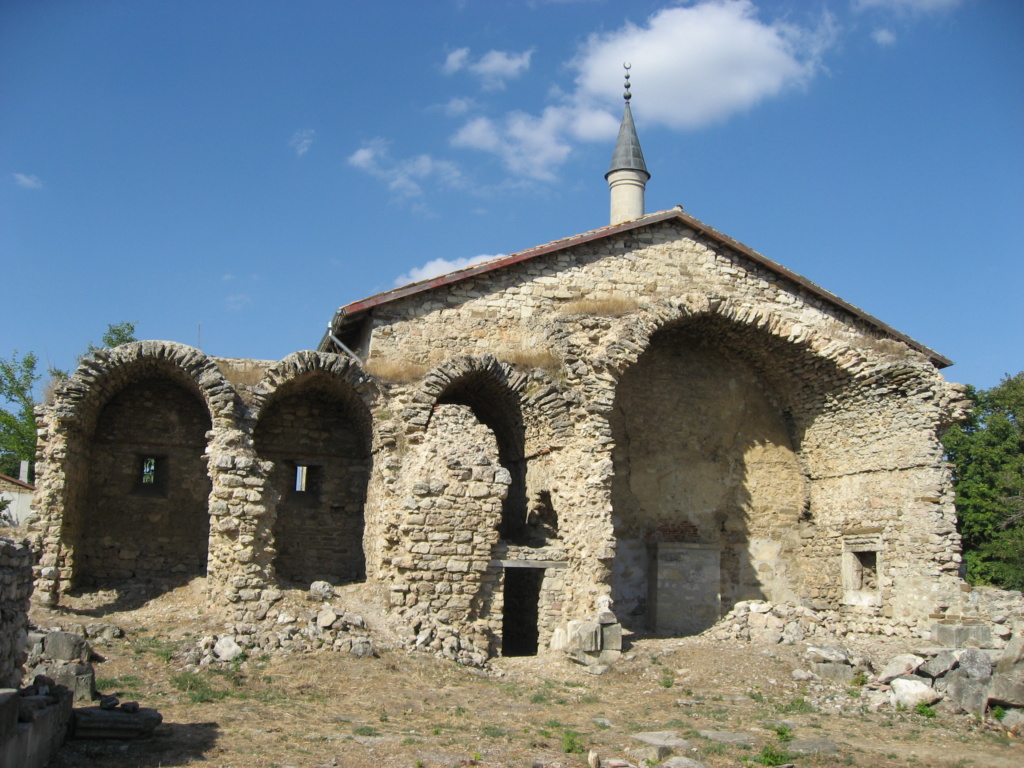
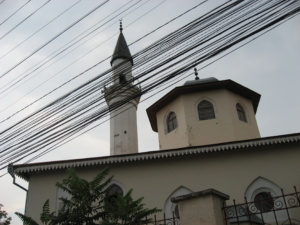
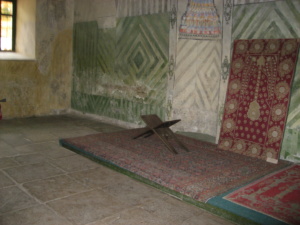
We drove to Stary Crim and visited the oldest surviving mosque which would have been from about 1299.
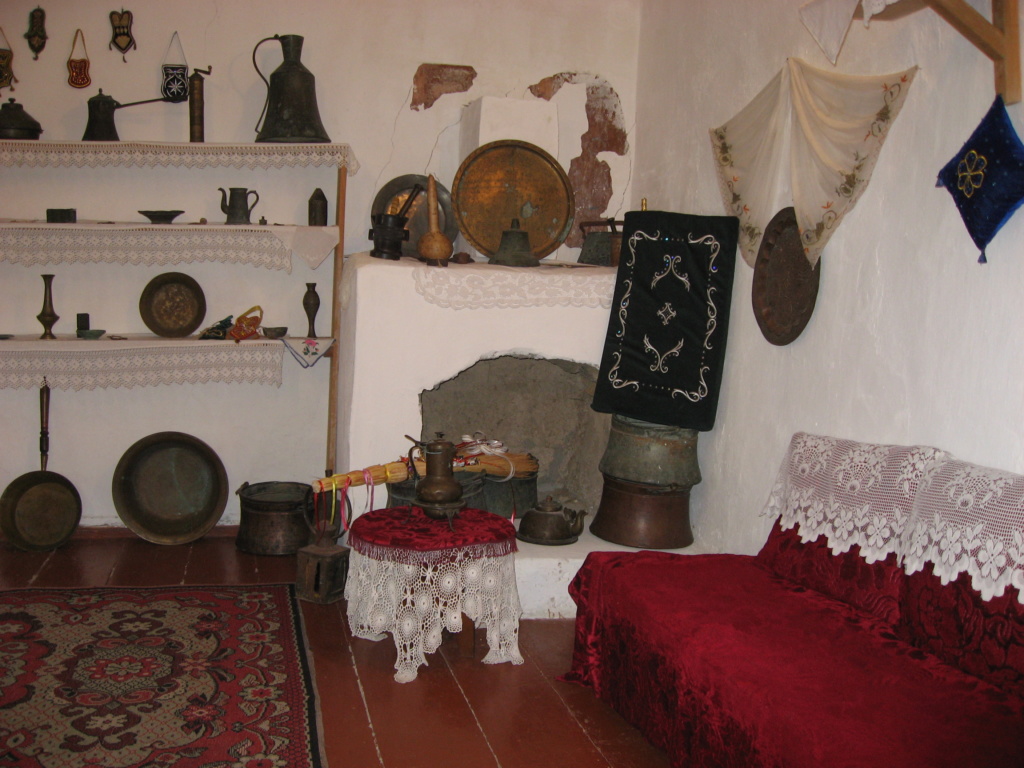
Then we visited a Tatar museum and had a lovely couple of hours with a woman who taught at the Tatar school and ran the museum as well. Her enthusiasm for her nationality shone through her eyes. It was a joy to see. Natalia and I both bought prints from her and then we returned and gave her some Canadian souvenirs.
Drove to Simferpol, but stopped along the way at a restaurant on the way. I had a soup called salynia which had a savory/spicy broth and small squares of meats. Yummy. Then had rabbit stew. Again, yummy. There was a dog and cat that went along with the restaurant and begged for food, but the dog was so picky he wouldn’t eat bread. Felt sorry for it because it had a ripped nose and seemed feverish. Fed it a bit.
Just before Simferpol, Eugene took us to a memorial where Nazis had killed thousands of Jews in 1941. There had been a lot of vandalism during Soviet times but the memorial went up after that and the graves were protected underground with cement. It was a moving experience. So much sadness. So much suffering.
He took us to an amazing hotel. Cheap – 300 hryvny – and so clean with a superb bathroom!
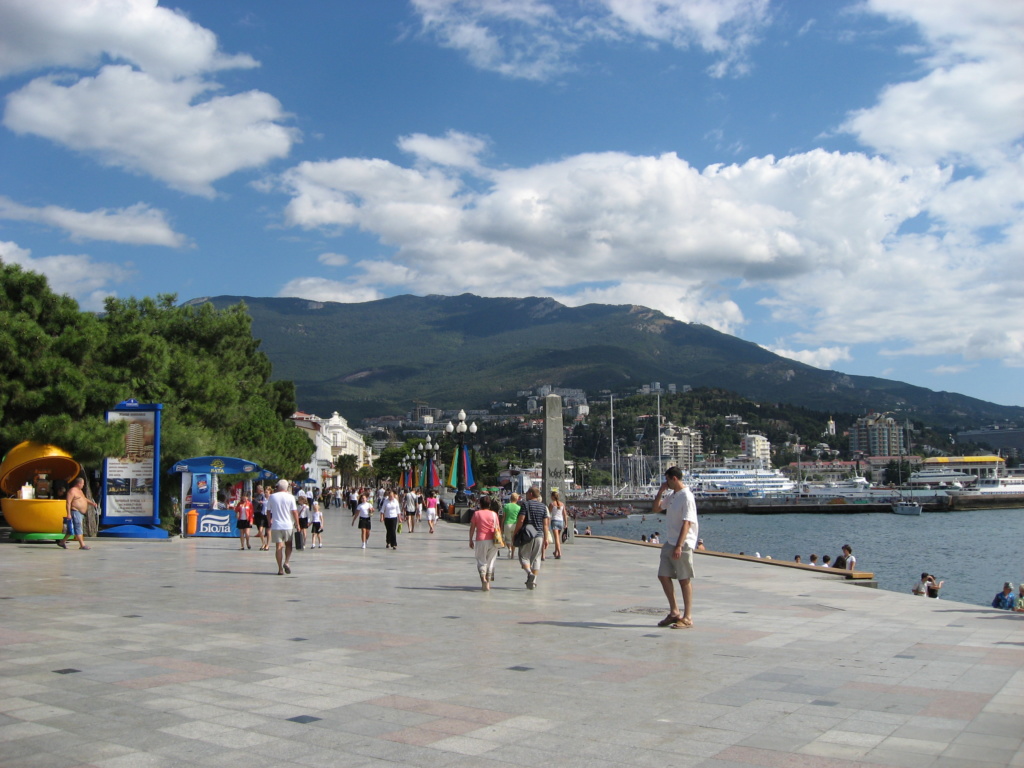
We drove to Yalta Sunday night, stopping on the way for various sights, including a cemetery for German WWII soldiers that was funded by Germans. The apartment we’re staying in here is amazing. Absolutely spotless and three bedrooms. And a working shower.
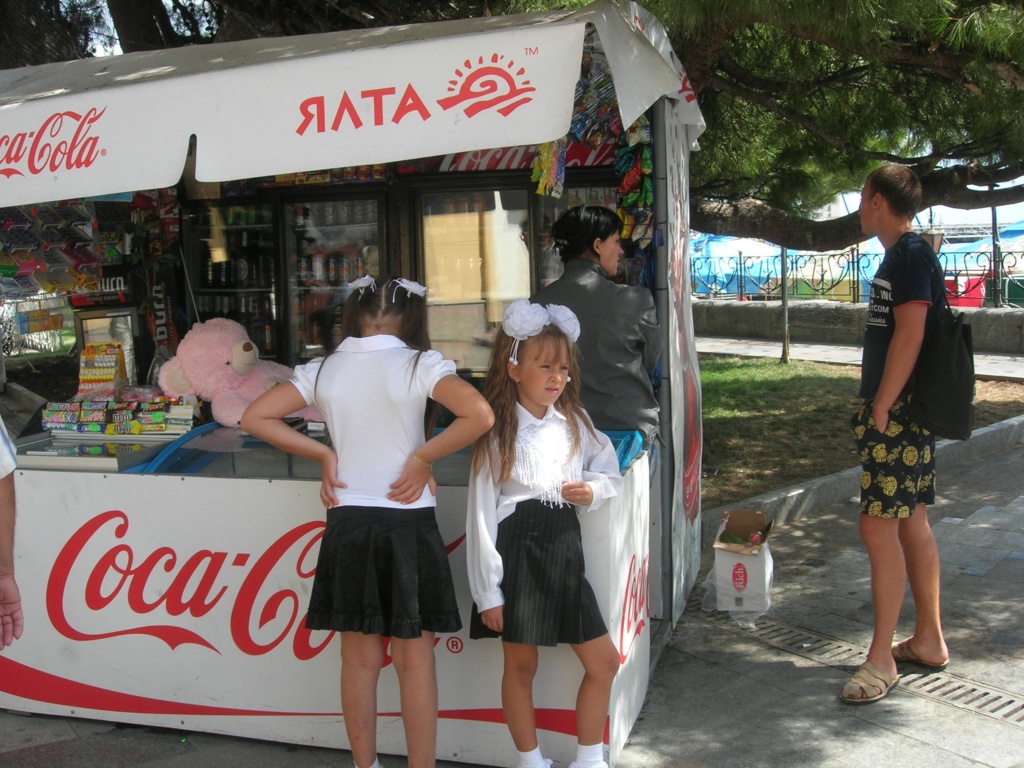
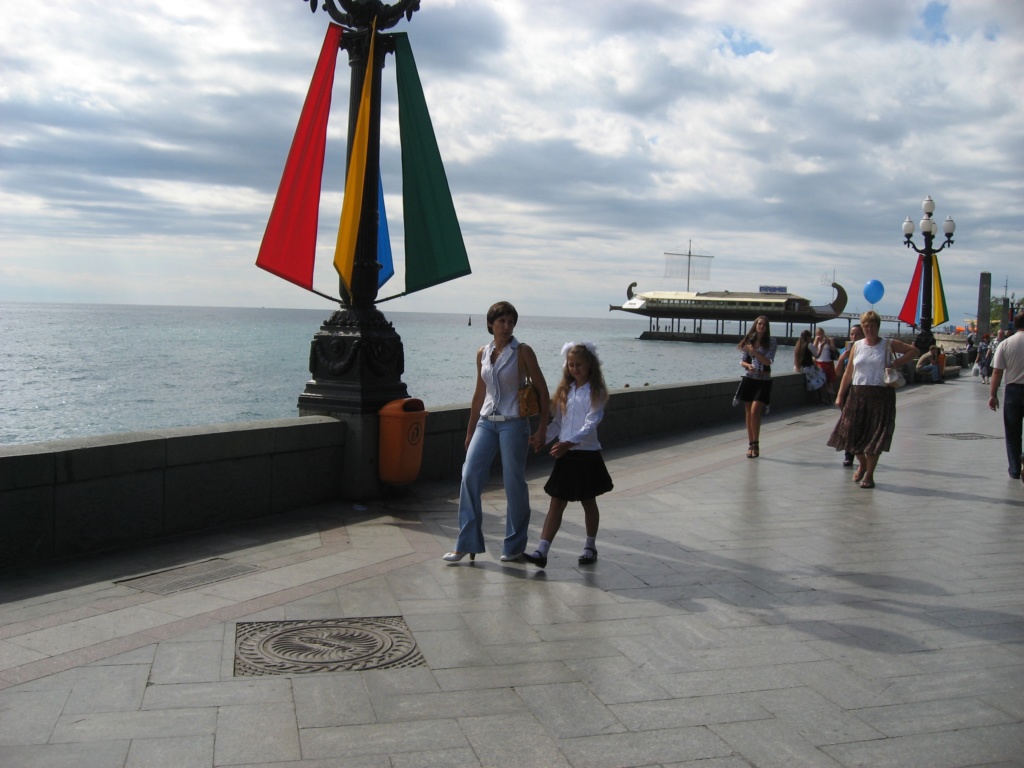
On Monday morning, Eugene cooked us a breakfast of ham, eggs, bread, apple juice and coffee and then we walked along the boulevard of Yalta. It was the first day of school and so the kids were all dressed up in black and white outfits which is traditional. Some were in sparkly outfits and little boys were in suits. All were variations of the same thing. The girls wore giant white organza bows in their hair.
Driving in Yalta is quite something. Narrow streets and people having to back out as others go forward. We went to the Massandra Winery for a tasting and I bought a port from 1944 and also Tsar Nicholas’ favourite wine.
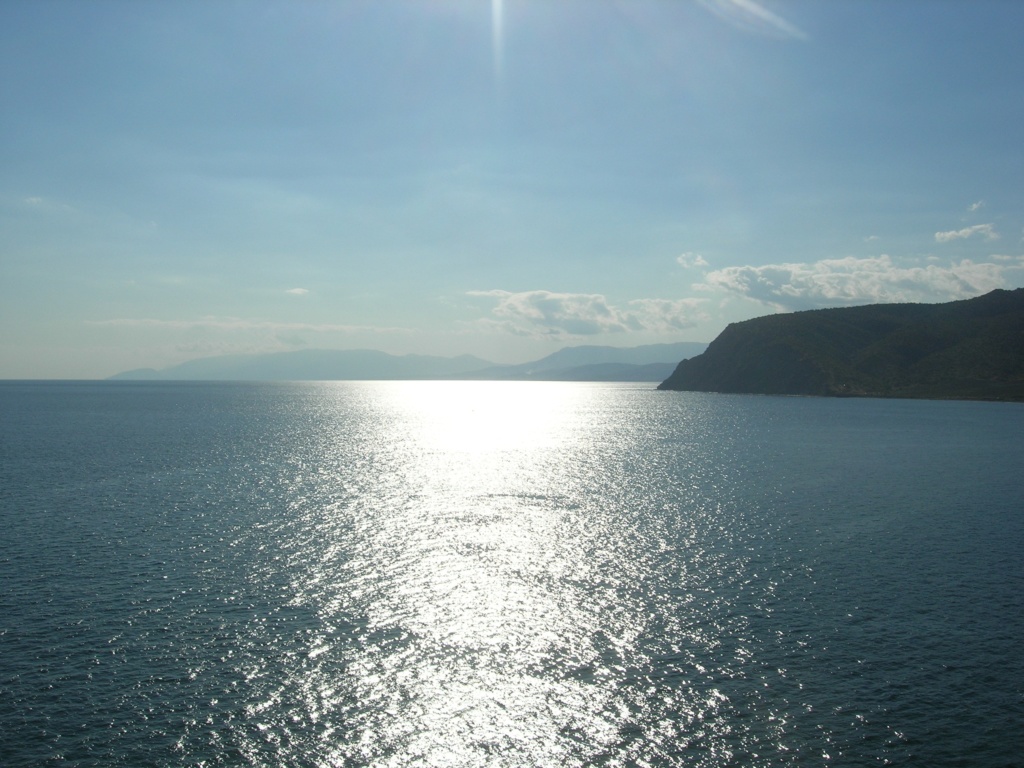
From there we drove towards Koktobel, through the mountains – twisty turny and amazingly beautiful. We stopped for soup along the way. I had kvas soup which was interesting. Natalia thought it tasted like coca cola. We continued along the twisty road with breathtaking scenery.
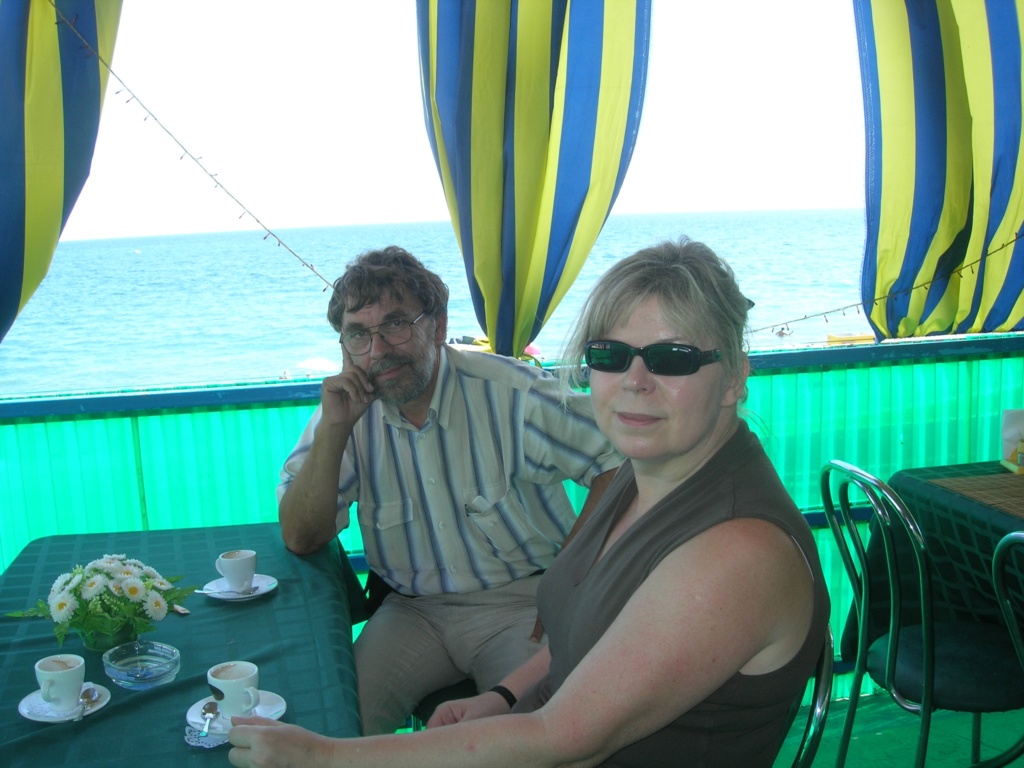
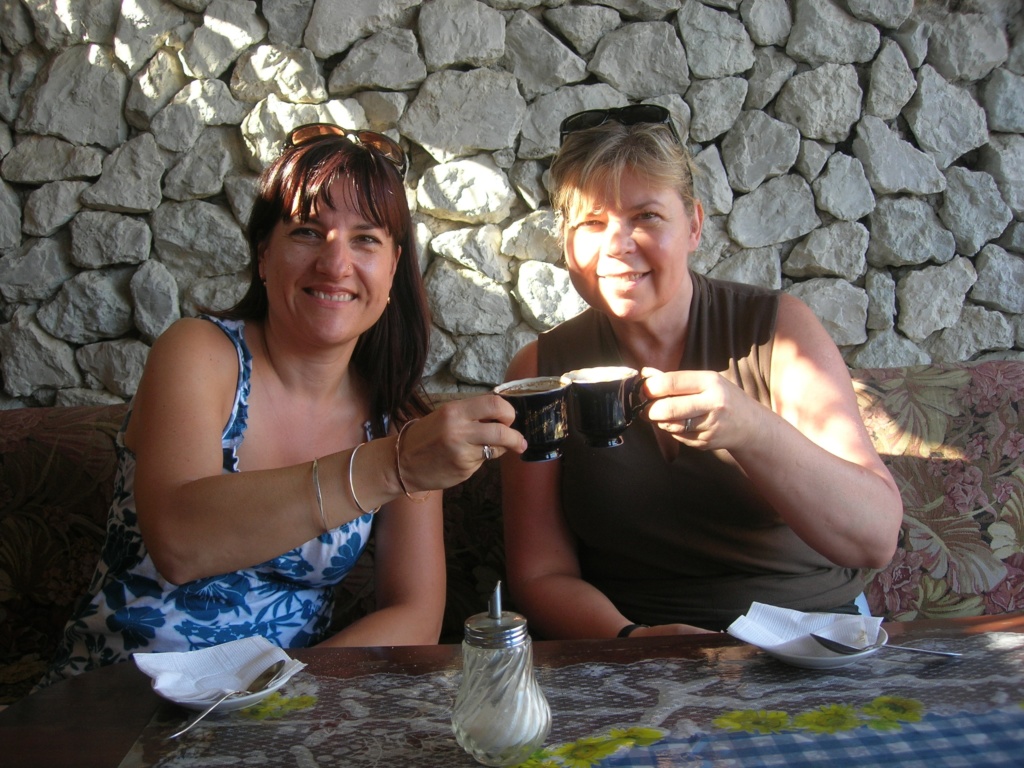
Before we got to Sudak, Eugene turned off towards a beach area and we parked in front of a restaurant owned by a friend of his who is a Tatar. We had Turkish coffee
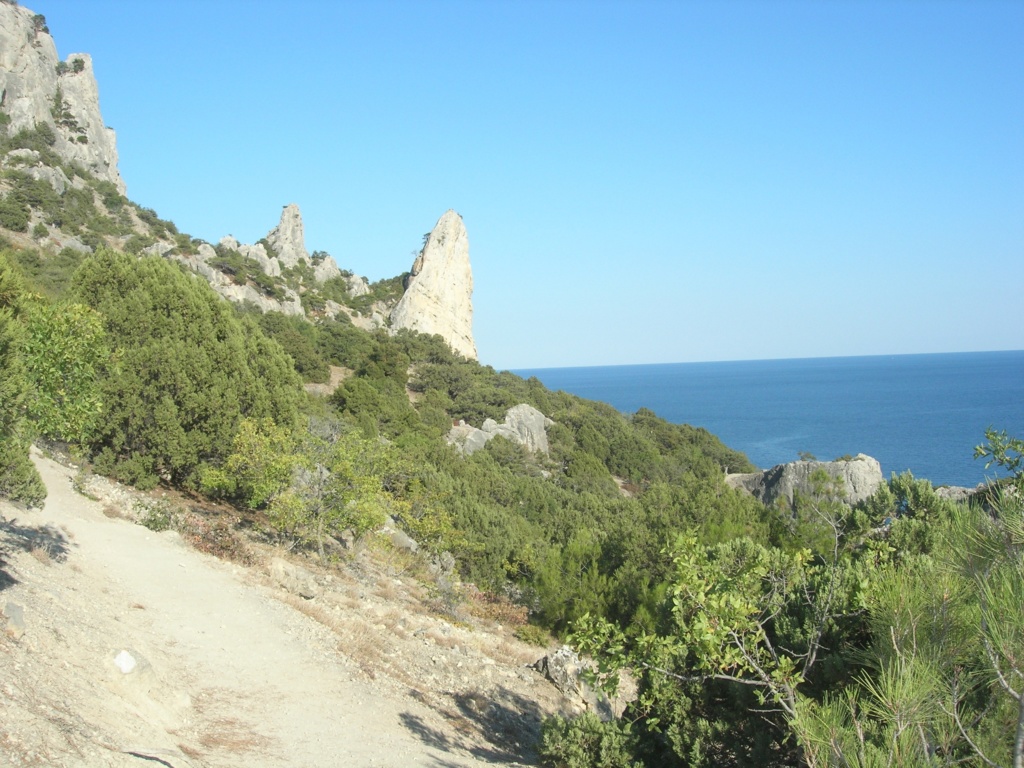
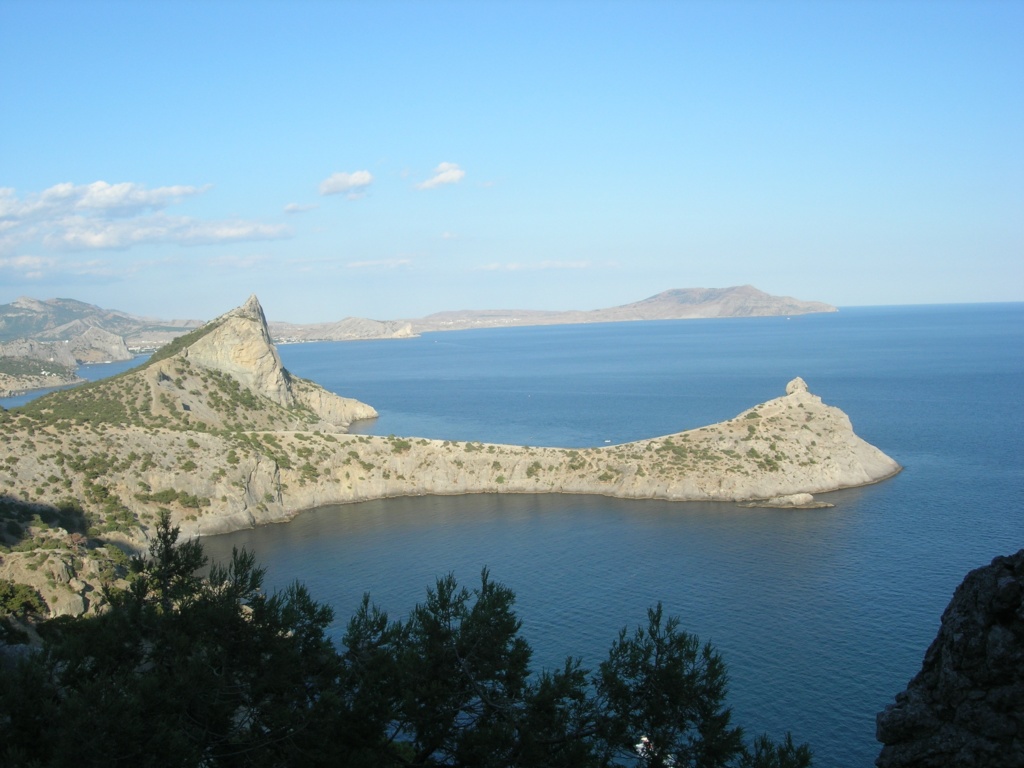
and then went on the most amazing hike, which started along the beach – which is tarry coloured sand and lots of round smooth stones – and continued up the rocks. It was quite a climb but not as difficult as yesterday’s. We saw spectacular views.
When we came down, we had more coffee and paklava – which was quite different than any I’ve had before. It was crispy and sweet but not cloyingly so.
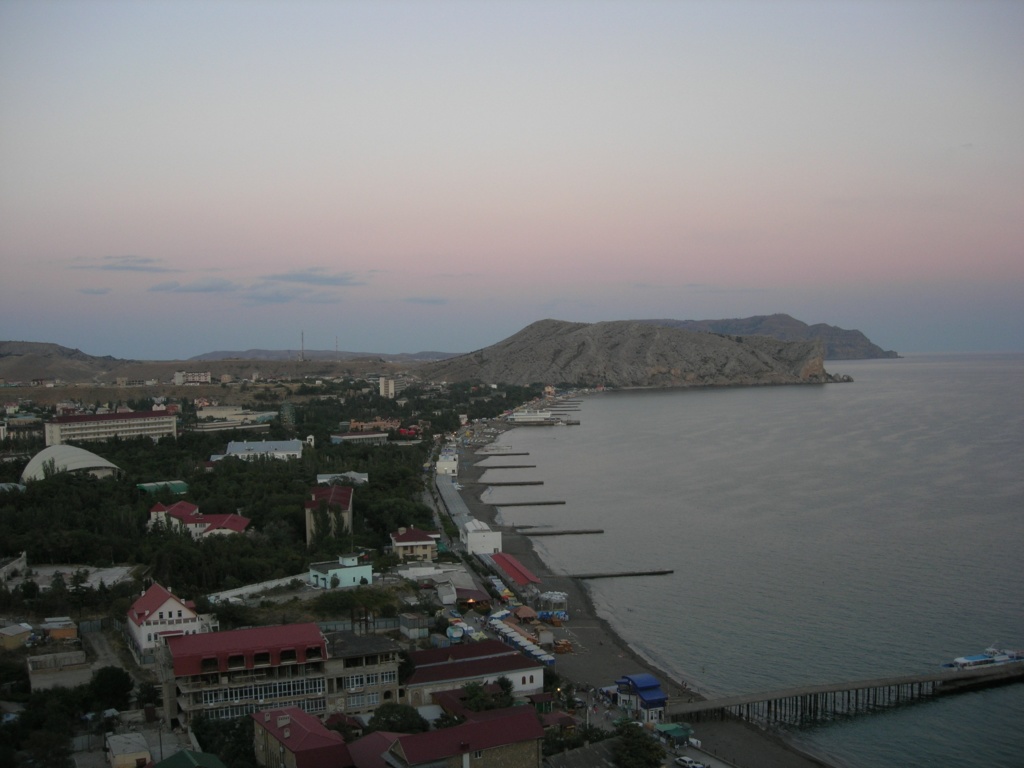
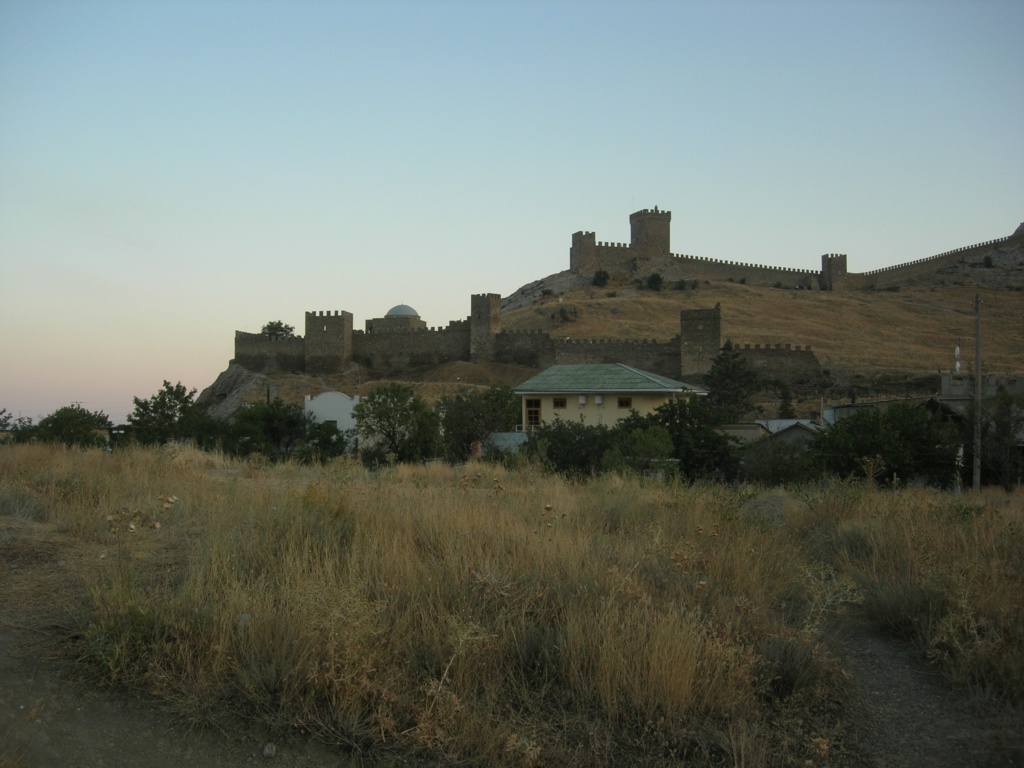
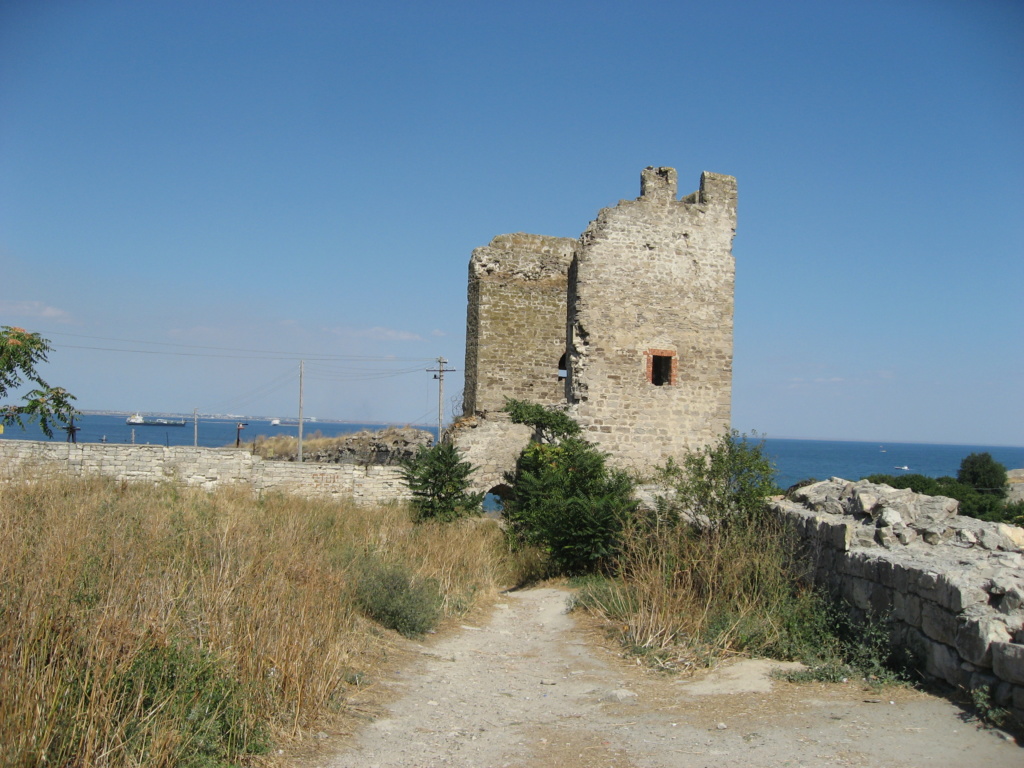
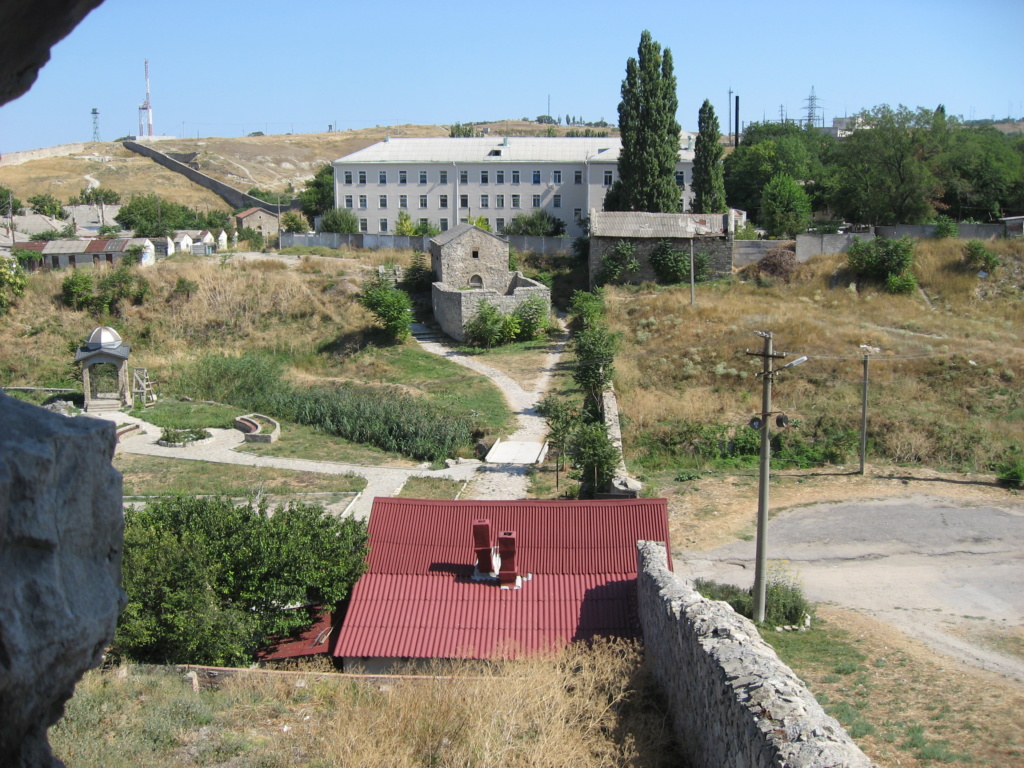
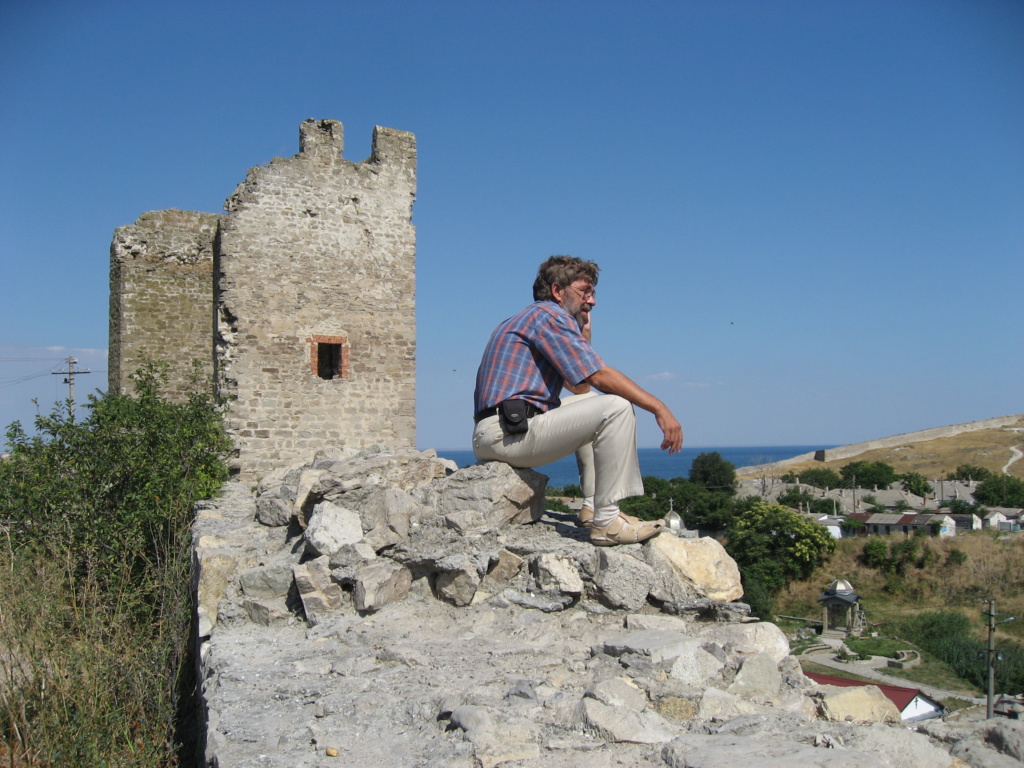
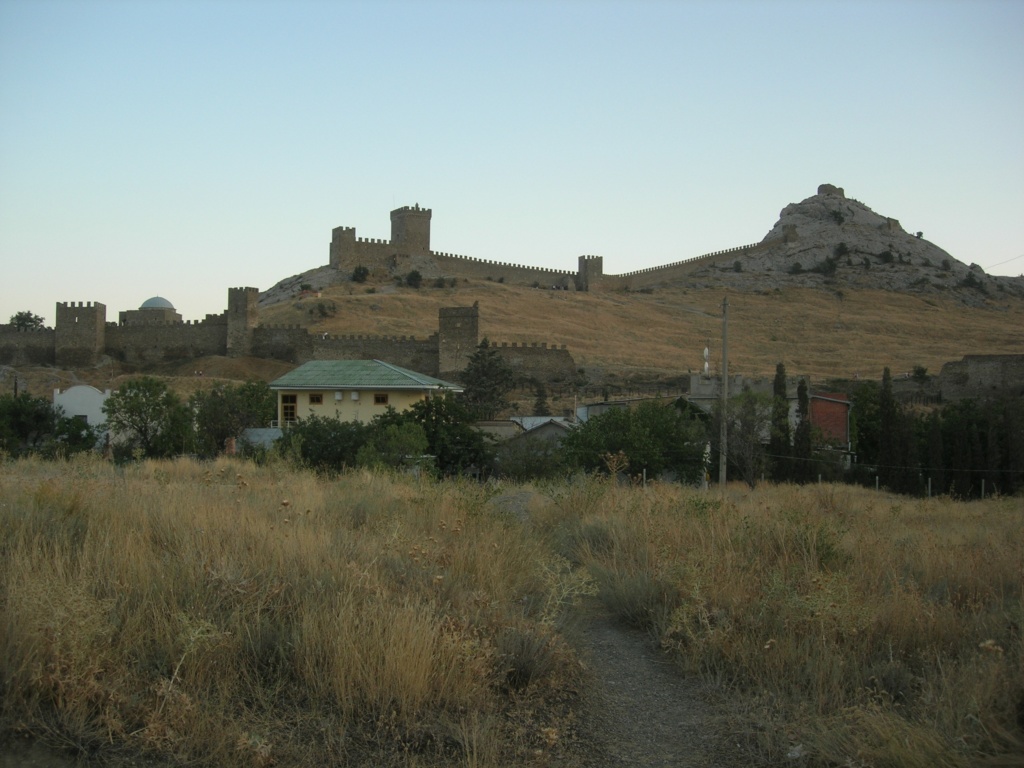
We continued on the winding road to Sudak and visited the Genovese fortress and walked up to the top.
It was interesting to see the scale of the fortress and to get a sense of what it would be like to live in it. We also found the first bank machine and I successfully withdrew hryvny.
We continued our drive to Koktobel and checked in to the first hotel of our stay. It had a great bathroom and lots of hot water and there was even a blow dryer in our bedroom.
We talked along the boulevard in Koktabel and it was like being in Port Dover. All sorts of souvenirs, Ukrainian tourists, music, kitchy things to do. We went to a quiet restaurant where jazz was playing and had a dinner that consisted mostly of meat but also a dessert that they called bisquick but tasted like trifle, and a bottle of Eugene’s favourite wine. The service was slow but the food was good when it finally came, albeit a bit heavy on the meat. The wine was nice too. The jazz musicians were quite entertaining and they even dedicated a song to us.
On Sunday morning, first stop was Three Fishes Restaurant in Sevastopol. Just like Saturday’s restaurant, there wasn’t a breakfast menu or even a lunch menu. Everything was geared towards a three course dinner. What we both felt like for breakfast was some of that excellent Turkish coffee we’d had the morning before, plus eggs and toast. The cook refused to make toast – I think Eugene told them we wanted French toast – so we had fried eggs and bread instead, along with the coffee and some respectable orange juice. The restaurant had a great bathroom. It was not only clean, with a modern toilet, soap and paper towels, it was interesting, which stone walls and ceramic floors.
After breakfast, Eugene wanted us to see the panorama of the Crimean War. This was the first panorama ever made – ie – invented here. Asolutely amazing detail, with clay models that looked life-like – posed as soldiers and officers during various famous parts of the battles. Also shown was the first sister of mercy, giving water to soldiers, and Pigorov, the first doctor to use nurses. It was fascinating to see that the battle mounds were dug shallowly into the groud, then built up with basket-like wooden structures. Over top of this was dirt and sandbags. In the side were doors. The soldiers slept inside and fought on top. The soldiers were wearing heavy winter clothing despite them fighting in sweltering summer weather.
Here is one of Eugene’s jokes:
Socialisism, Communism and Capitalism were going to have a meeting, but Socialism was late. The other two asked him why he was late. He said he’d been in a line-up waiting for kobassa. Capitalisim asked, “What is lineup?” Communist asked, “What is kobassa?”
another joke:
It is not up to the host to count the amount of food his guests eat. That’s the job of his wife.
Another Eugenism, while crossing a busy street: “We’re in the right. “We may be killed, but we’re in the right.”
After that, we drove to a WWII memorial for dead Soviet soldiers. It was a long treed walk and there were also displays of naval artifacts.
When we walked around the other side of the monument, we could see where the charge of the light brigade occurred.
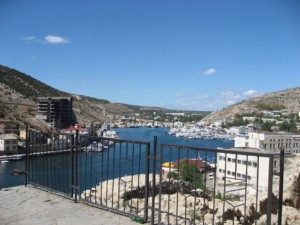
The we drove to Balaclava. This was a secret naval base during Soviet times and the city was closed to the public and never mentioned in newspapers etc. It has a huge S shaped harbour that fish love and it had been a fishing town before becoming the military experimental centre. Lots of utilitarian and sturdy but not very pretty buildings and walls.
We then drove to the other side and walked up to see some of the Genovese Fortress.
After that, we drove to Eski-Kermen, which was quite a distance, first on regular roads, but then on dirt packed roads with no markings. This was definitely not a tourist place. While we were still on the paved road, Eugene stopped at a fruit stand and we bought muscat grapes, pears and black raspberries. Delicious!
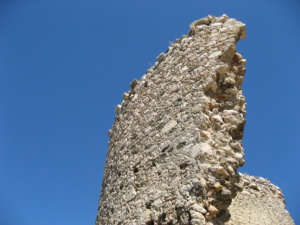
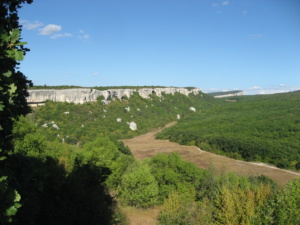
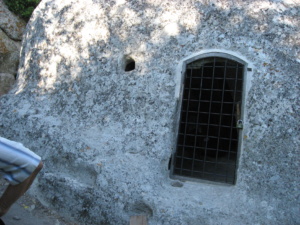
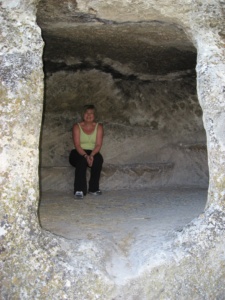
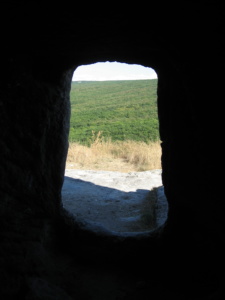
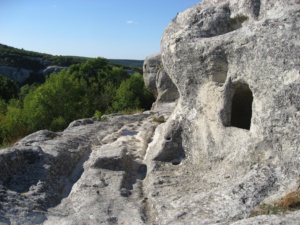
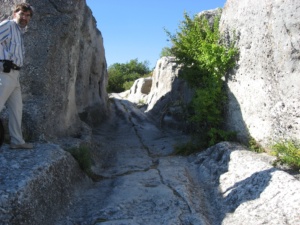
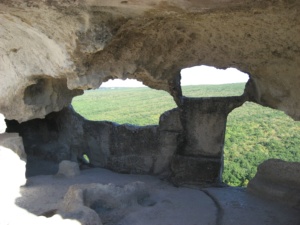
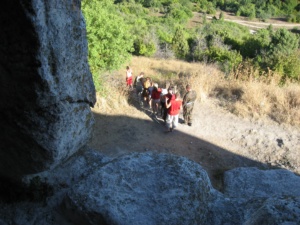
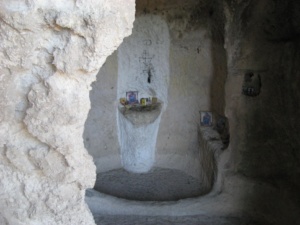
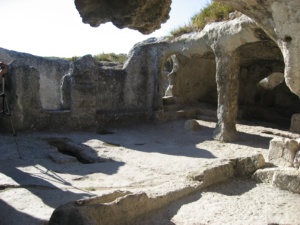
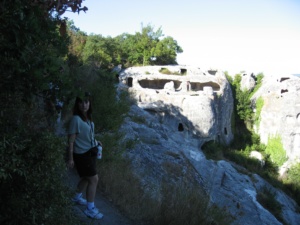
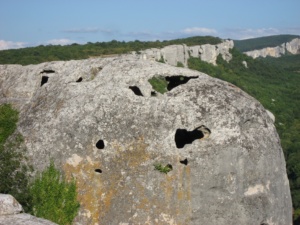
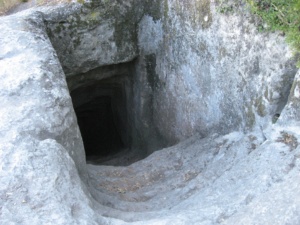
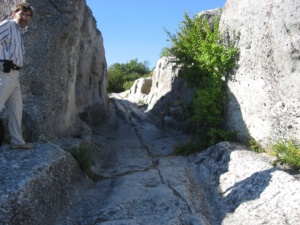
The Eski-Kermen cave towns were WAY high up and quite a walk. It took about 45 minutes to get up but boy was it worth it. A whole city had been up there in ancient times, complete with toll roads, a church, houses with several rooms, all within the caves.
Eski-Kermen
window through stone
Marsha
door
Toll booth
road
one of many rooms
other visitors
chapel
room
Natalia
holes through the rock
fast way down
Eugene
Getting down the mountain was a bit more treacherous than climbing up and we felt like we’d had a really good workout by the time we got down.
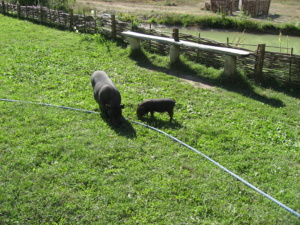
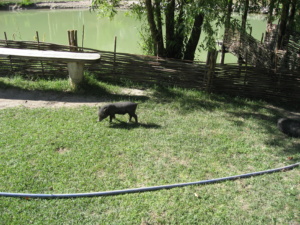
There was a small restaurant at the base of Eski-Kermen (only restaurant). Lots of black pigs running around, and on the menu was black pig cooked various ways. We ate black pig and one of them bit Natalia. She has a nice round bruise on her thigh. We had the pork two ways – pounded and breaded and served over mashed potatoes, and also in blinis. I had a Crimean beer.
The train pulled into Simferpol at noon. We kept on sleeping til almost noon and then got ready and repacked quickly. Eugene was waiting for us as we got off the train. He gave us each a rose and corralled our luggage. His car is a sort of station wagon SUV – Ford Freespirit – and it was spotless and roomy. We asked if he could take us to a place to eat, as we hadn’t had breakfast or lunch.
He took us to a small outdoor cafe called Silver Century and we had delicious Turkish coffee to start and then chicken noodle soup, mushroom soup and a really nice salad with local fish, greens, mushrooms, and the ubiquitious “mayonnaise”.
After lunch/breakfast, Eugene took us on a walking tour of downtown Simferpol, pointing out various historical sites as we passed them.
We popped into a department store to by a hair blower, which was 76 hryvny ($16 Canadian) – phillips brand with a two year warranty. The store was filled with every imaginable consumer item and they didn’t appear to be too expensive.
As we left the store is was pouring rain. Not a problem. We kept on walking. Natalia and I were so grungy anyway that a bit of rain was not an issue. We got some more Euros changed to hryvny and then went back to the car – they park cars all over the place here. A favoured place is on the sidewalks.
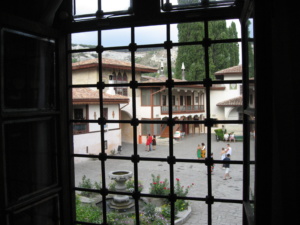
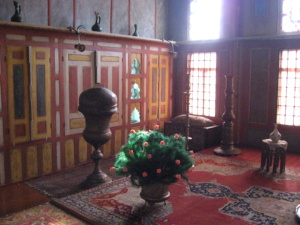
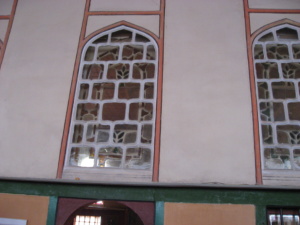
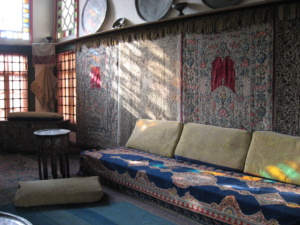
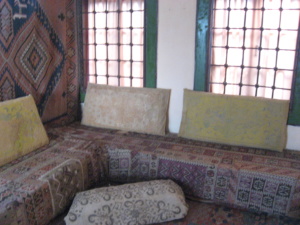
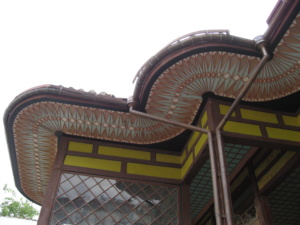
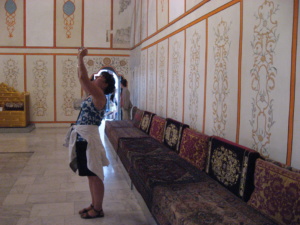
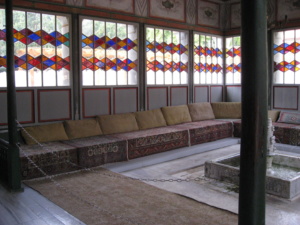
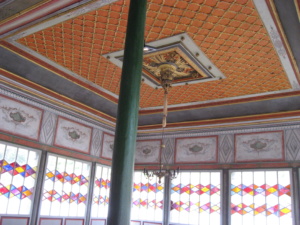
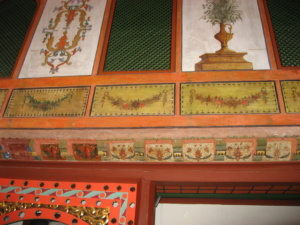
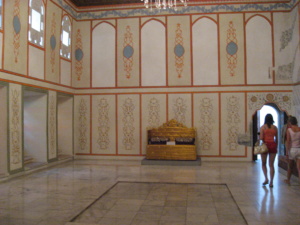
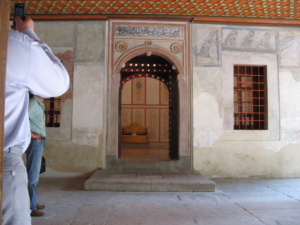
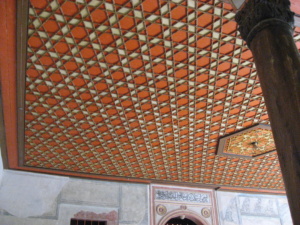
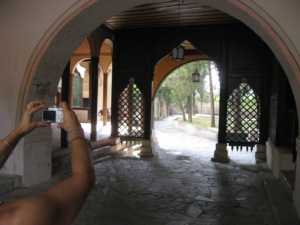
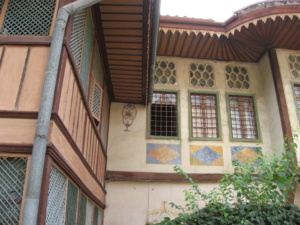
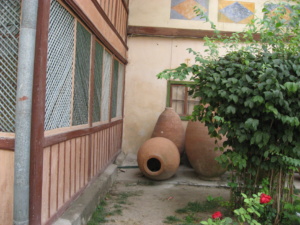
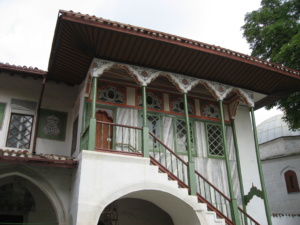
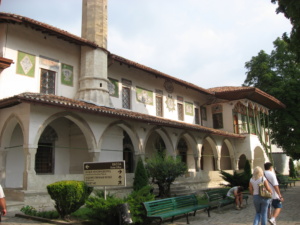
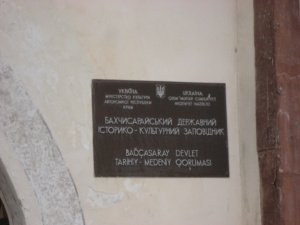
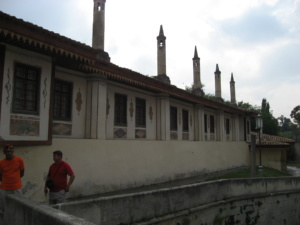
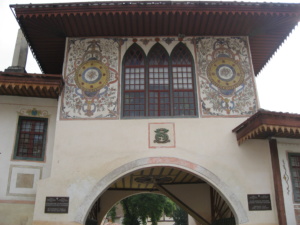
We drove to Bachisarry and walked through the khan’s residence, the harem, the courtyard. It was fascinating.
Then we had dinner at Karavan sarai salalachic which was a restaurant at the base of the cave monastery. We had a lamb soup, deep fried turnovers – one with cheese and one with meat – and a kind of shortbread for dessert. Again, absolutely fresh and delicious and cheap – 117 hryvny ($25 Cnd) for the three of us.
Then we drove to Sevastopol and stayed in a private apartment. It was on the fourth floor and there was no elevator, but the apartment was lovely. A comfy pullout sofa in one room and a double bed in another. Best of all, a bathroom with a great toilet and a tub. We couldn’t figure out how to get the shower head to work so we each had a sponge bath and washed our hair, and used the new blow dryer.
We also each had a chance to wash out some clothing and there was a computer with internet access, so I got to check my email. Natalia couldn’t get into her email though. It was a very slow connection.
The best part of the apartment was the spectacular view of the harbour. There were fireworks at night and a Silver Seas cruise ship came in. After a good night’s sleep, we packed up and headed out first thing the next morning. Eugene told us that the apartment had been built in the 1950s so wasn’t as utilitarian as some of the newer Soviet era apartment buildings.
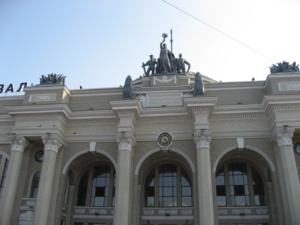
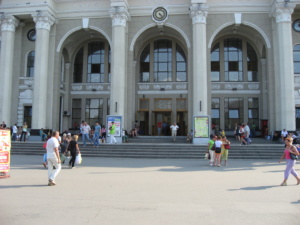
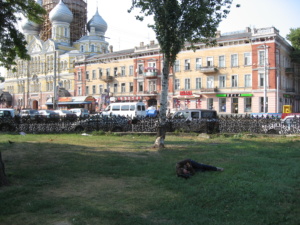
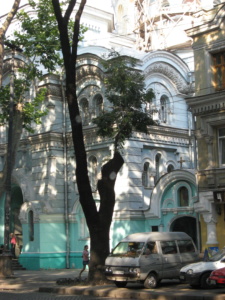
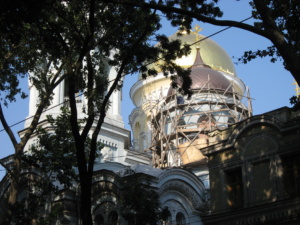
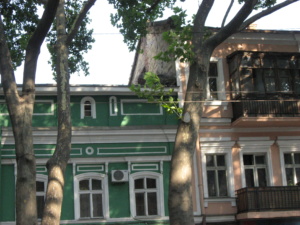
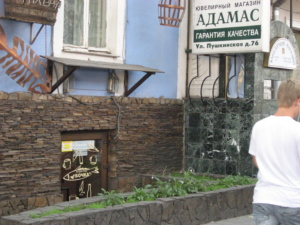
When we landed in Odesa, we were met by the guy from Unitours travel. He was right there with a big sign. He took us to the train station and gave us our tickets and explained how to get on the train and he also showed us how we could store our luggage at the station so we could walk around Odesa.
The luggage storage place was packed and we didn’t have hryvny yet, so I watched the luggage and Natalia whipped over to the money exchange in the train station to get some hryvny. The luggage people were quite amused that Natalia spoke Ukrainian and not Russian and wanted to know where she learned it.
After ditching our luggage, next thing on the agenda was to find a toilet. There was a pay toilet at the train station and it was clean, although the squatting type. After that, we walked around the city for a couple of hours.
We had dinner in a quaint Ukrainian restaurant in the main part of town – Lasynka – we had green borcht – which was amazing! And perch Odessa style, which was really delicious as well. Green borscht is made with sorrel, egg, potato.The perch was HUGE, and was served over top sliced fried potatoes and cooked thin onions. It was topped with what they call mayonnaise but what tasted more like crème fresh.
We walked back towards the train station, stopping on the way to get water and also to send email at an internet cafe. It began to rain and we didn’t have anything to do but wait for the train for several hours so we went to a little lunch place and had water. Everyone else was drinking beer. It was a clean and new lunch place – and that’s what really was striking – so many new businesses serving everything and selling everything. Tons of western products, lots of food venders everywhere. People looking prosperous. Buildings being renovated.
When it was finally time to stand on the train platform, we were two of hundreds. This is the last holiday weekend and a very busy time. Had we not preordered our train tickets we woudn’t have got them.
The first class compartment was surprisingly nice and clean with comfortable pillows, sheets and blanket and even towels. The bathroom was strange. We were dying for a good wash but couldn’t do that there. The sink was tiny and with a strange push device to get the water. But the toilet was a sit down and clean.
Natalia Buchok and I started our journey on August 28th, on a 6:30 LOT airlines flight out of Toronto, and landed in Warsaw early in the morning on the 29th. The food served on the flight was surprisingly not bad. Chicken with rice, a sandwich, wine, coffee, a chocolate bar. The woman in front of my was annoying. She put her chair back as far as it would go, hitting my knees, and then she kept on bouncing on it, I guess trying to soften up the pillow. The boy behind me kept getting up (pulling Natalia’s hair as he did so) and kept bumping the back of my seat and opening and closing the window. Made for difficult sleeping. They served us a bun and cold cuts and cheese for breakfast.
Our LOT connecting flight to Odessa was delayed 45 minutes. The security in Warsaw was ridiculously slow. Everyone going through beeped. Once we were past security, we found a bathroom (very clean) and I bought a bottle of water, which was 5 euros (approx $7.50 Canadian)!!
There was no announcement about why the flight was delayed or where to go but we kept on looking for announcements and watching other people to see what they were doing. We were finally checked through and put on a shuttle bus in the pouring rain instead of the plane. A man came out of the plane and told us there were technical problems and they’d soon be resolved.
We finally got on. I had a seat to myself but Natalia had to sit beside this whacko American who was “meeting his bride” in Odesa. This was the third time for him trying this. The guy had no social skills and seemed to be checking out Natalia in case bride three fell through. As soon as the seat belt sign went off, she changed seats and sat beside me.
We did manage to sleep a bit and they gave us another meal – bread, cheese, meat, and a chocolate bar.
Here’s a photo of the Warsaw airport as we waited:

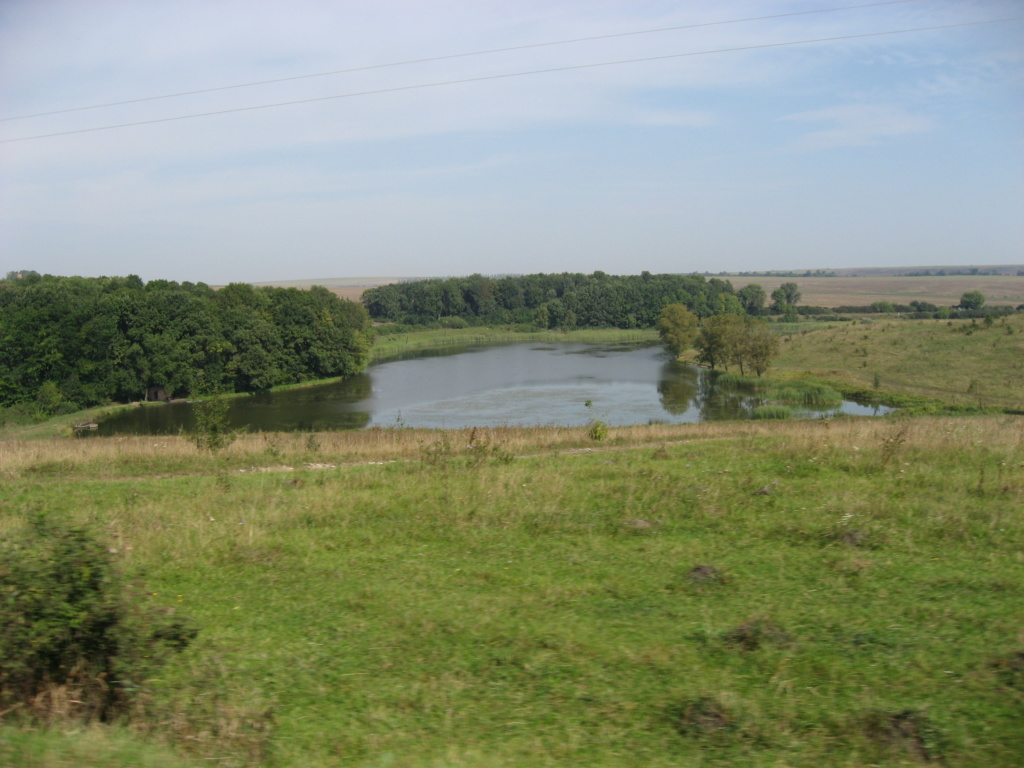 green trees and then they open up to a meadow and a pond.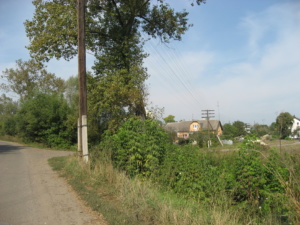

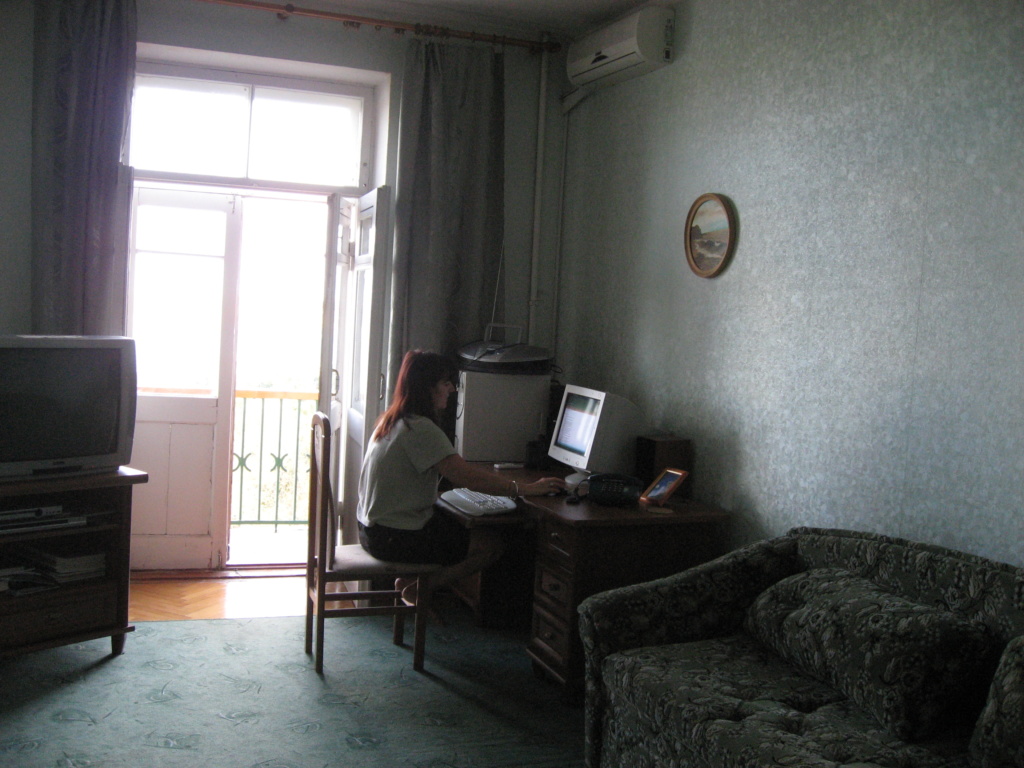 A comfy pullout sofa in one room and a double bed in another. Best of all, a bathroom with a great toilet and a tub. We couldn’t figure out how to get the shower head to work so we each had a sponge bath and washed our hair, and used the new blow dryer.