Celebrating folk traditions of Ukraine. I bought this blouse in 2001 in Lviv when I traveled to Ukraine for the first time. Went with my non-Ukrainian mom.

writes about war from a young person's view #bannedbyrussia
Celebrating folk traditions of Ukraine. I bought this blouse in 2001 in Lviv when I traveled to Ukraine for the first time. Went with my non-Ukrainian mom.
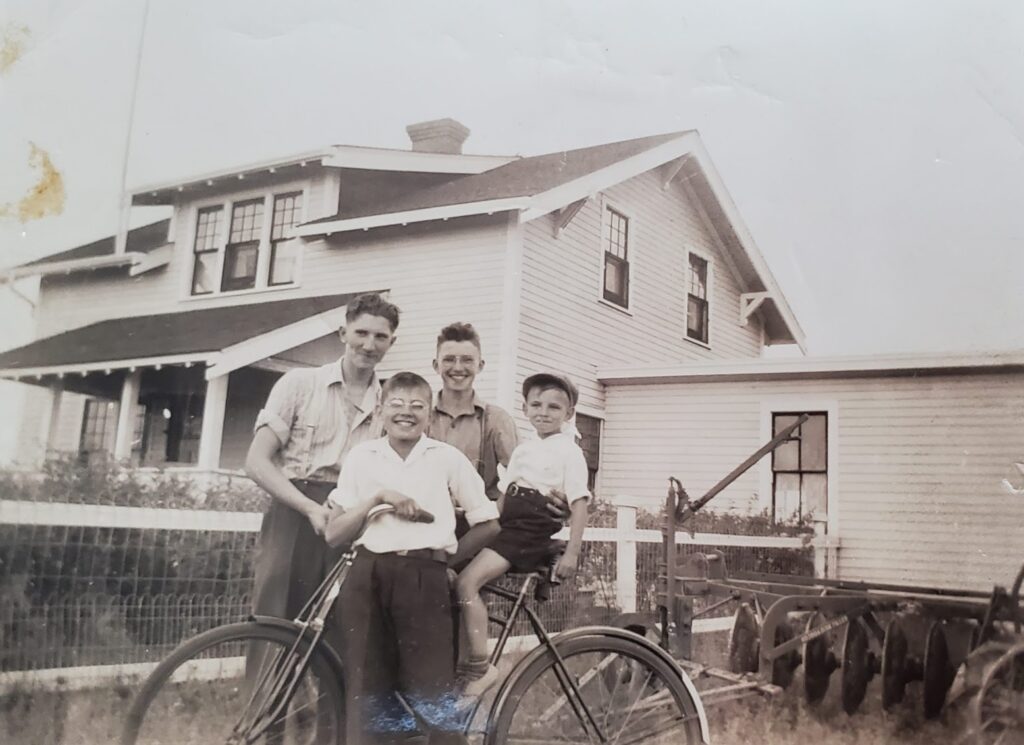
My late father, Marsh Forchuk, who died in November, would have turned 94 tomorrow. This is a photo of him when he was about 12. He’s the one with the glasses, holding onto that bike.
Dad had to quit school at age 12 because his father was no longer able to run their Alberta farm because of injuries he’d sustained while interned as an “enemy alien” in Canada in WWI had caught up to him.
So because of my grandfather’s internment, my father’s future was forever changed.
CBC Ideas interviewed me and other descendants of internees about this. Here’s the link.
Dad, I’m thinking of you
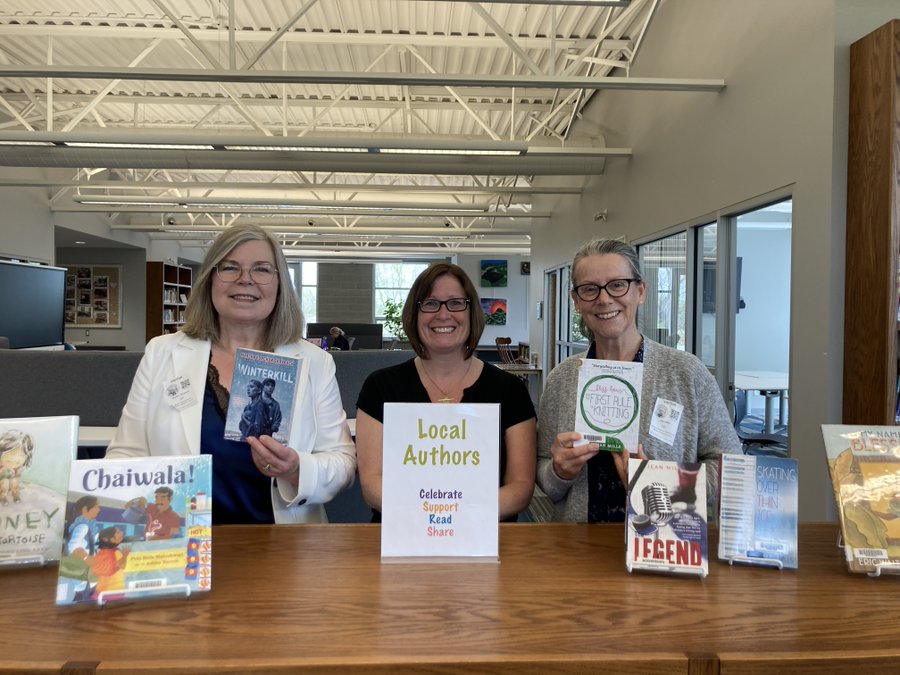
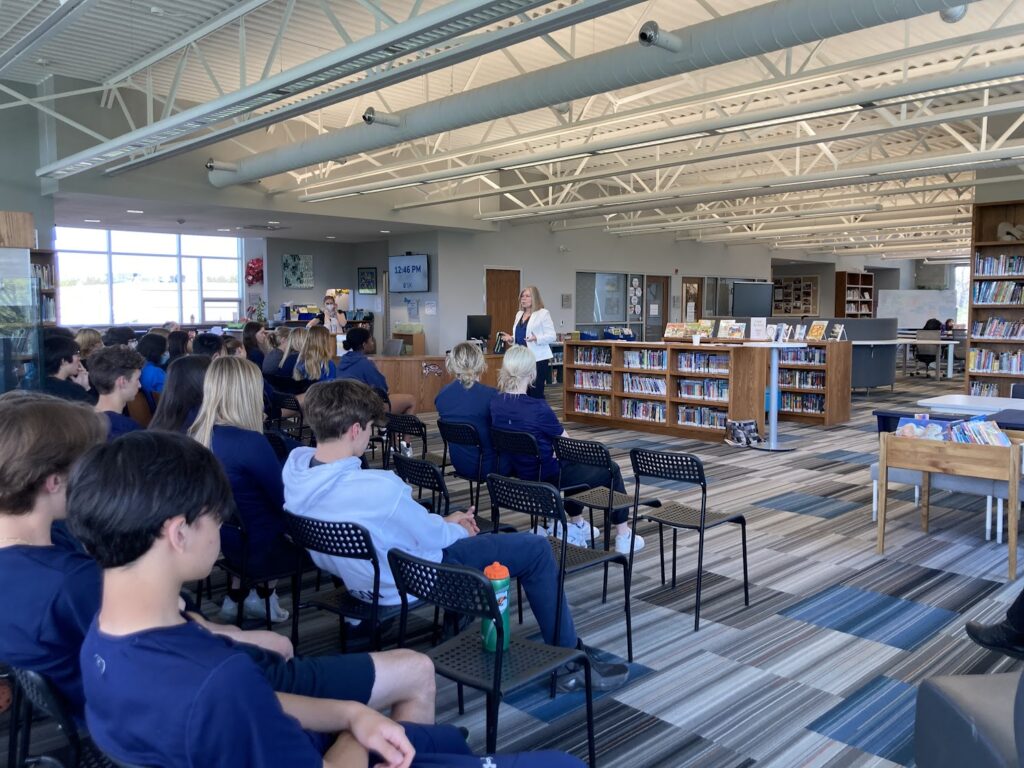
Today I had the pleasure of revisiting St. John’s Kilmarnock School in Breslau ON. I met librarian Carey Gallagher (middle) two decades ago when she was a teacher and I was the writer-in-residence for a year. Back then, I met with every class at least once but spent much time encouraging aspiring writers. I still keep in touch with some of them. Today’s session was very neat because it was the first time that I met in person with students since the spring of 2020. I’ve done a ton of virtual visits but it’s just not the same. Today’s group were 10th grade History and English classes — could it be more perfect? Discussed writing about victims of atrocities in a respectful way, how to do research on topics that have been ignored and suppressed, and why risking failure is the only way forward. My favourite question was: What do you consider your best book? My answer? Dance of the Banished, which I feel is very much under-rated, but also the story is so very relevant right now. In Turkey there is a monumentally important election going on and Erdogan, who is a Putin-wannabe is finally effectively being challenged by a combined opposition led by Kemal Kılıçdaroğlu, whose heritage is Alevi.
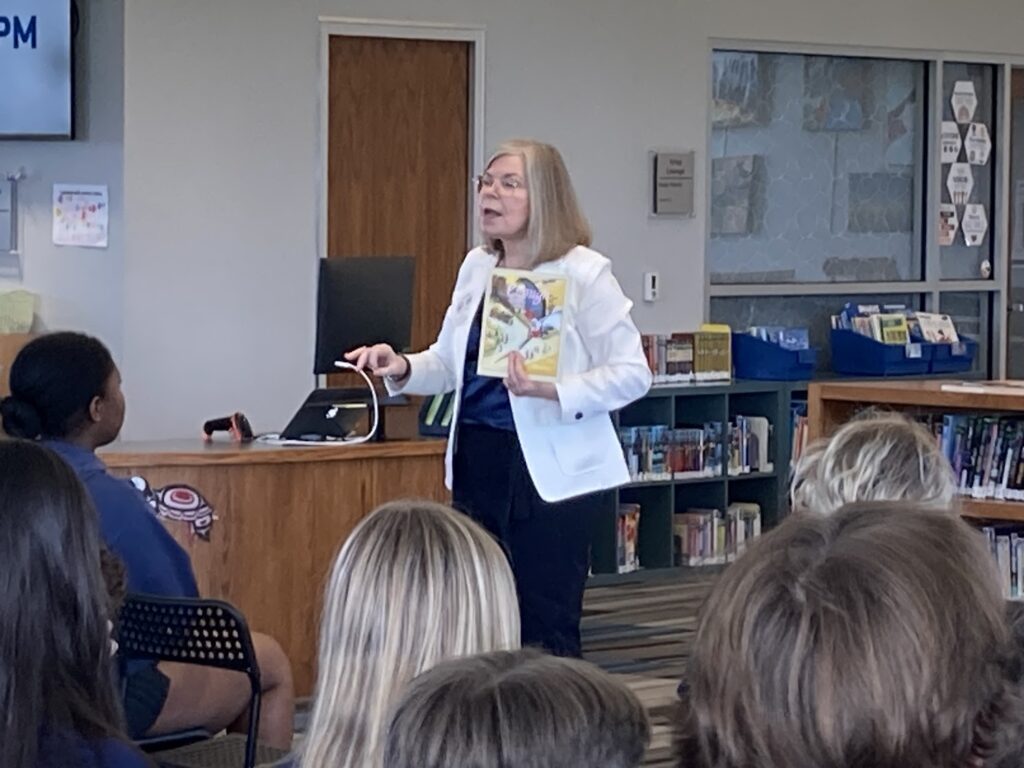
And then icing on the cake: Jean Mills, a writer I very much admire, came to sit in on the session. She’s on the right, holding up her newest novel.
I had the pleasure of visiting Arthurs MS in person in 2019 and so it was really neat to catch up with them again, albeit virtually. Those kids are now in high school but it was great to see the same wonderful educators and another crop of avid readers, including Alex, who described himself as my biggest fan. Also, they used the same Welcome Marsha sign! How cool is that?
Here are my fave questions from this session:
In Winterkill, Auntie Pawlina’s songbook is destroyed by the shockworkers. In real life, what was the fate of her collected songs?
Why were you banned by Russia?
When you write a novel, do you use an outline?
Why does Russia hate Ukraine?
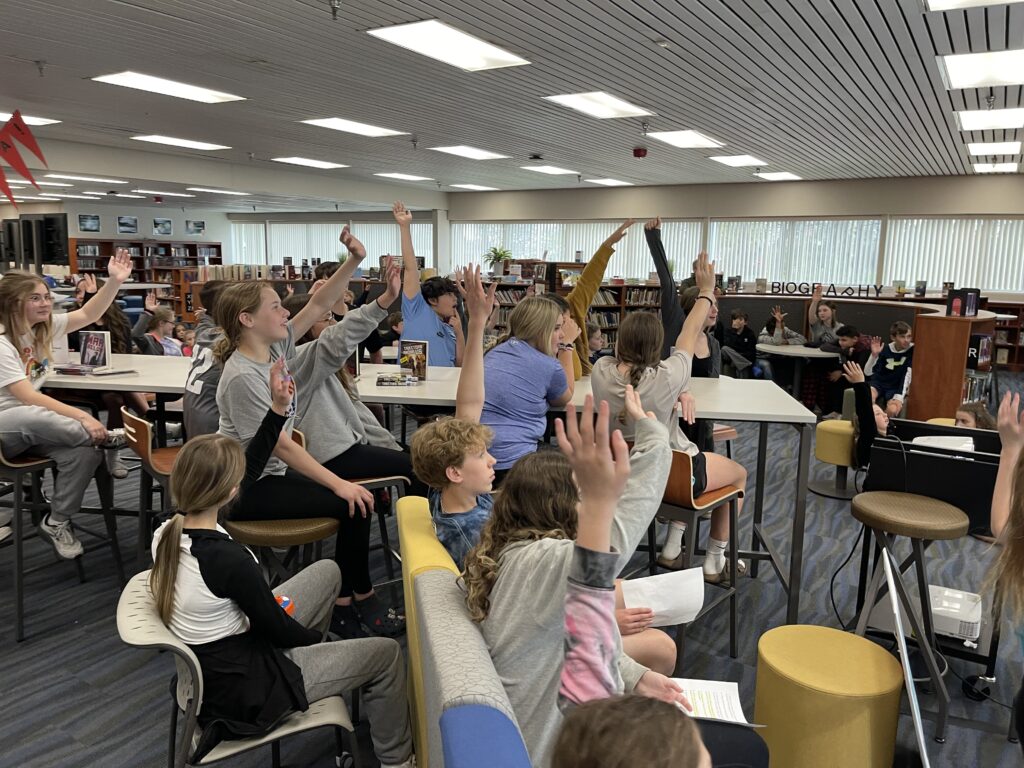
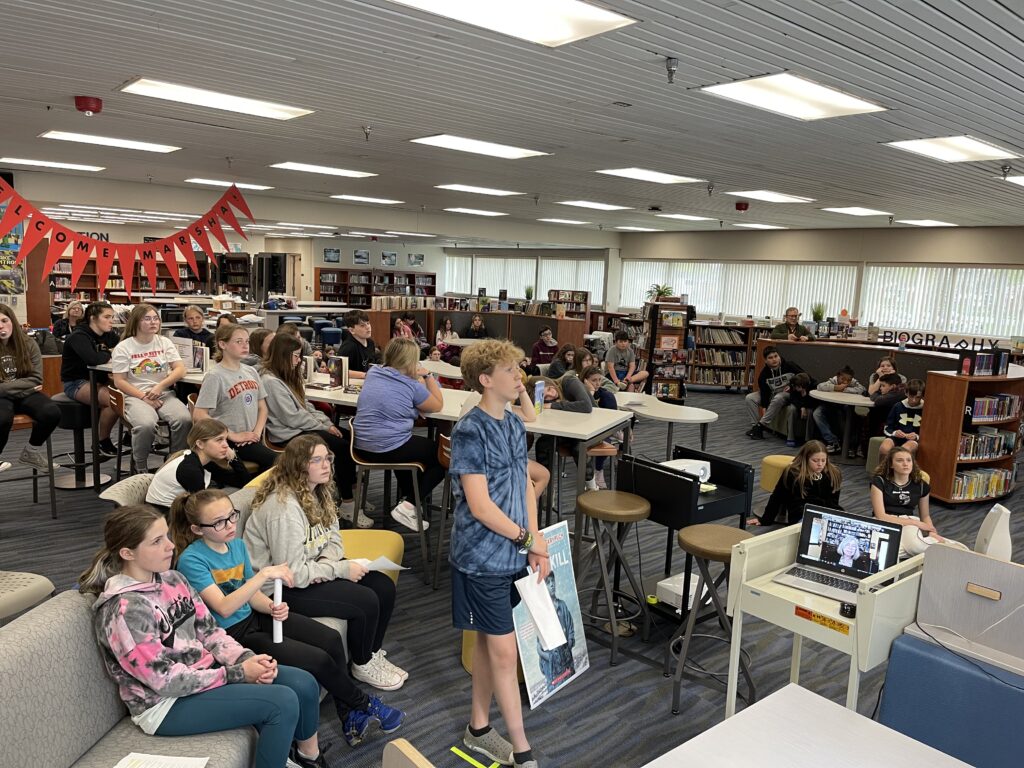
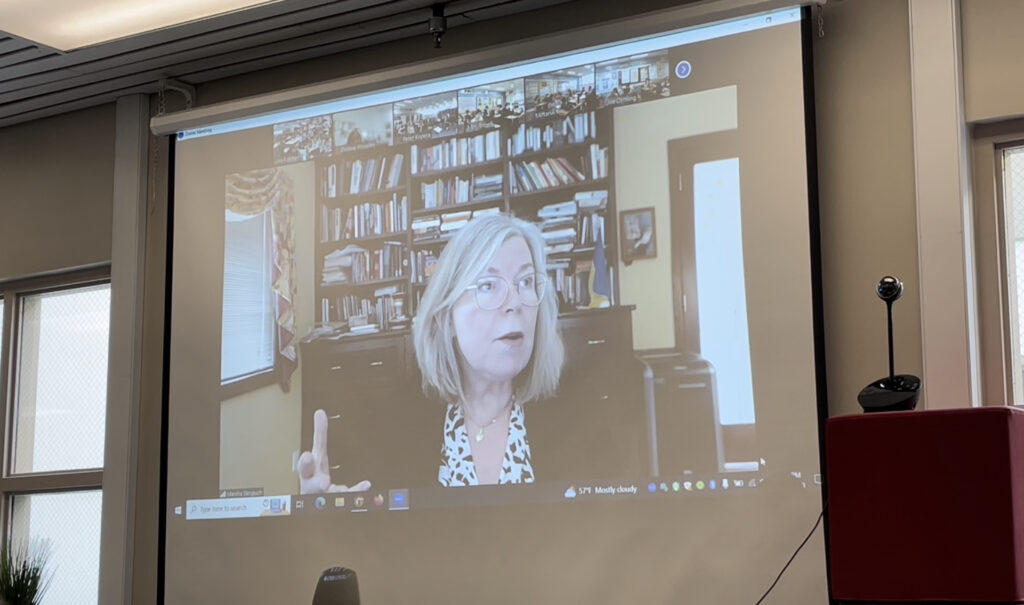
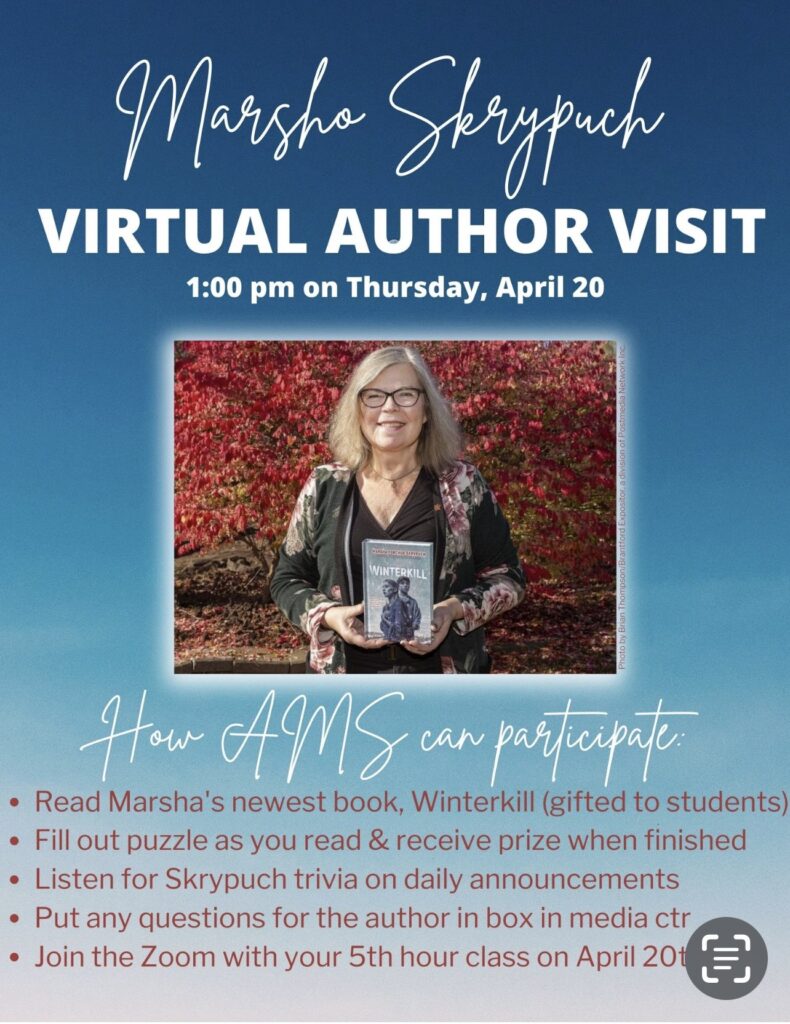
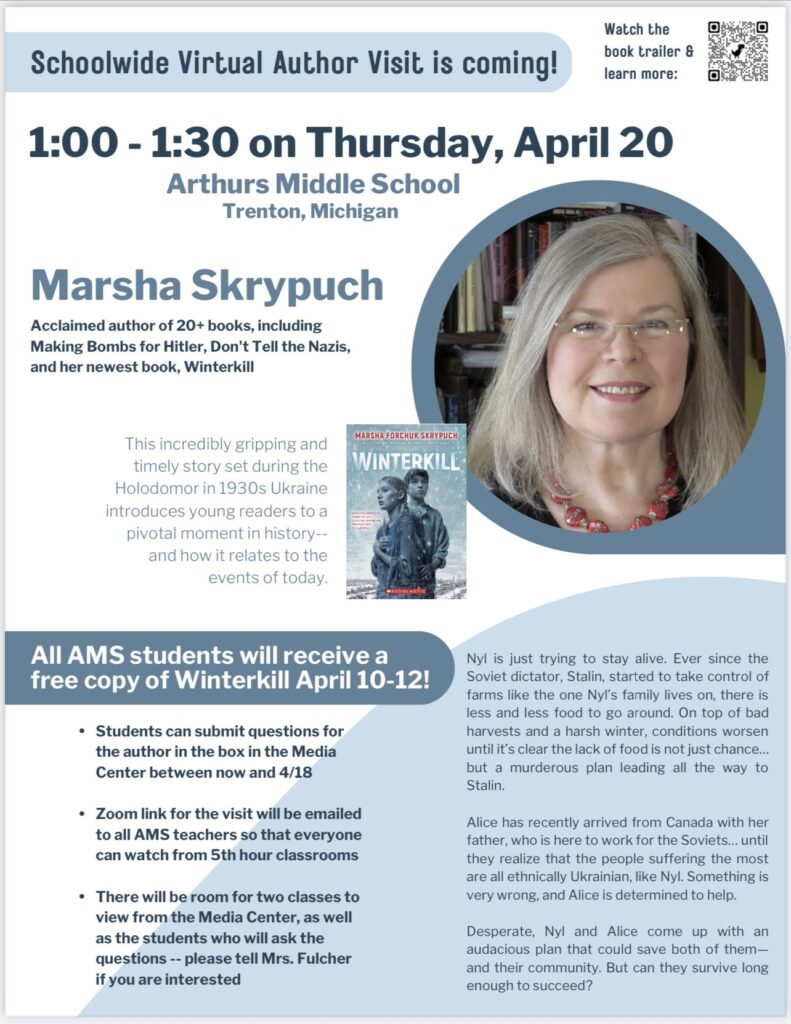
I like to leave lots of room for questions when presenting to students and this morning’s questions were superb! The topic was Winterkill, set during the Holodomor. Plus, I always talk about my own struggles as a kid, for example not reading til I was 9, and being bullied. Here are some of my favorite questions of the day:
If the Holodomor was such a huge event, how was it possible to hide it?
How did you deal with the bullying, and were you able to get it to stop?
Did you ever regret writing your first book about the Holodomor (Enough), seeing as you were subjected to so much hate because of it?
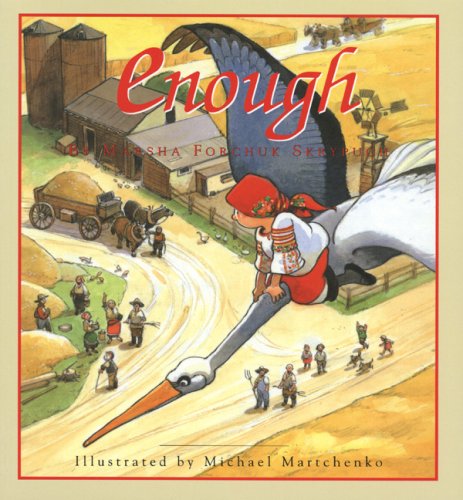
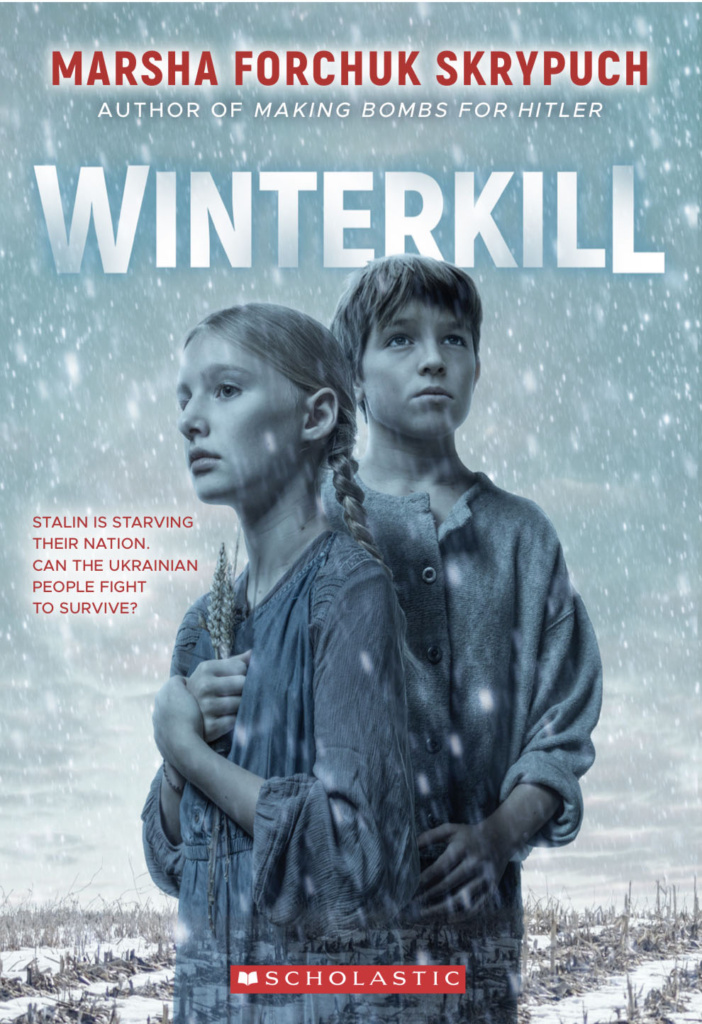

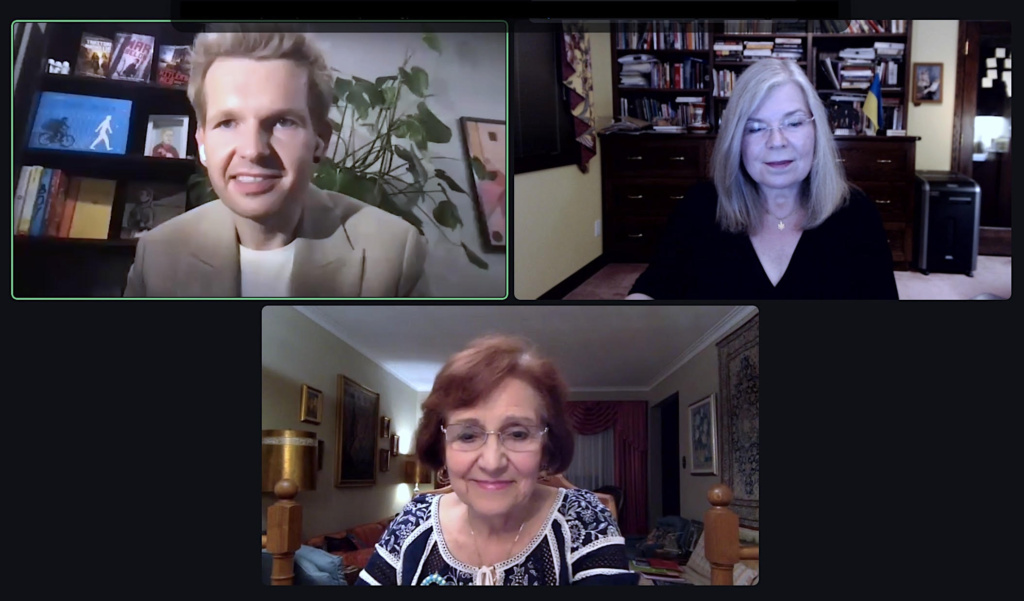
Congratulations to Mateusz Świetlicki on the publication of this groundbreaking work. Ukrainian historical themes have been sadly absent in most popular literature, including literature for young people. This book is a comprehensive and perceptive examination of Canadian works tackling the topic, including my own.

Thank you, Dr. Mateusz Świetlicki, for this thorough examination of Winterkill, particularly in terms of historical veracity and how the novel gives needed context to the Russian Federation’s current genocidal war against the Ukrainian nation and culture. This paper is a great resource for educators who are doing a novel study with Winterkill. Here’s the link.
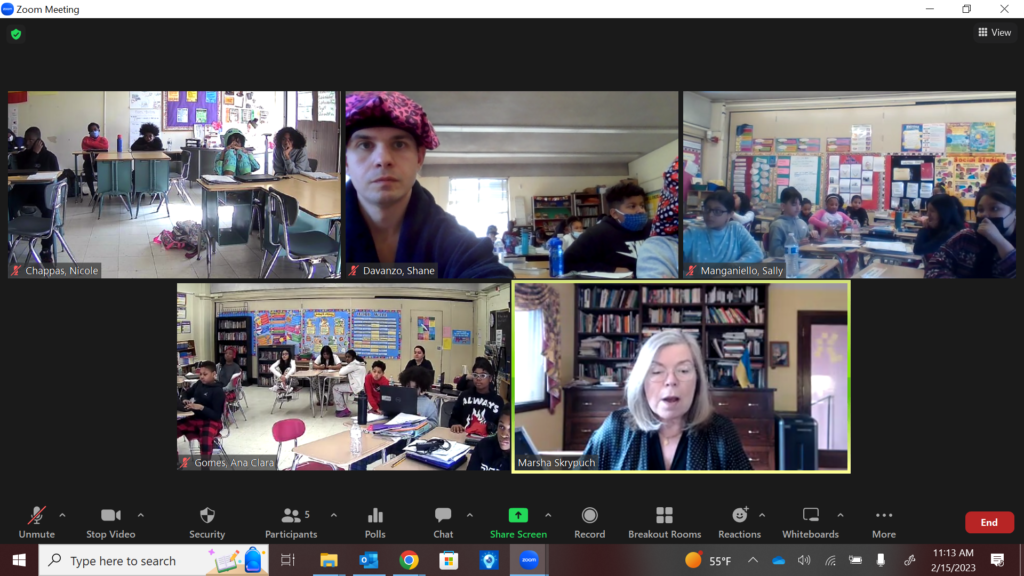
It was pajama day at Traphagen school on my Scholastic Book Fairs virtual visit. I decided to join in and wore my housecoat. Many of the students were partway through Winterkill so they asked me not to give away anything past chapter 11! Great questions, nice students! And now I’m considering wearing a hat to bed!
Thank you Susan Lowell and the Historical Novel Society for this review of Winterkill. You’d think an author wouldn’t like their book to be called terrible, but seeing as I’m immersing the reader in the midst of a largely unknown genocide that’s being replicated by Russia right now, the description is apt. Here’s how the review begins:
This is an excellent and terrible book.
Well-written, it includes convincing and sympathetic characters, and it bears witness to an awful historical event: Stalin’s partially successful attempt between 1930 and 1933 to starve Ukraine to death. Its author, Marsha Forchuk Skrypuch, is, in her own words, “fierce in her pursuit of truth.” Read more here.