Writing historical fiction

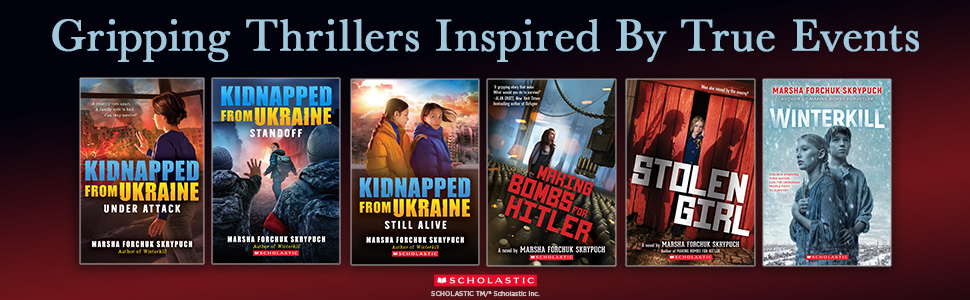
I finished the first draft of Making Bombs For Hitler in February and I’ve gone through two substantive edits since then. It is scheduled to be published by Scholastic in 2012. That first draft took four intense months.  The edits were easier, thanks to SB, my fabulous editor!

Many people are daunted at the prospect of writing historical fiction. Here are some suggestions on how to begin:

Do preliminary research of the era you want to write about and try to imagine yourself living in that time. Non-fiction children’s books are a great preliminary research tool. Also encyclopedias and textbooks. At this stage you just want to gather enough background to get the general lay of the land.

In order to come up with a premise for a novel, ask yourself: What would happen if…

Think in terms of a dilemma for a person in your historical era.

As an example, for my 2008 Armenian genocide novel Daughter of War, the question was: If you were pregnant by rape but survived a genocide, would you want your fiance to find you?

If you can’t boil your novel idea down into a question like that, it’s too unwieldy a concept.

Do an outline. I hate outlines, but it is amazing what you can pre-organize by doing a one or two page point form plotting of your entire novel.

Try writing a sample chapter or two. This will help you narrow down the point of view, as well as voice and tone.

After you’ve done the outline and initial chapters, do more research.

Do read memoirs, diaries, newspaper articles, recordings, interviews, maps, city directories of your era. Look at photographs. If people are still alive, talk to them.

Do not read novels set during your era. If you do that, you may unconsciously pick up inaccurate bits, or you could unwittingly copy the author’s style or turns of phrase.

Try to get opposing points of view of the same situation. As an example, when I was researching Daughter of War, I consulted both Armenian and Turkish memoirs, as well as those of missionaries and medical personnel of the time. Inter-library loan and abebooks.com are great resources for this sort of item.

Over-researching is great procrastination technique. Not only do you waste time, but you’ll also be tempted to use everything you learn, which makes for a very boring novel.

I like to do commando research — ie — only as much as I’ll need for the next 20 pages or so. When I dry out, I do more research.

Now start writing!

Think in terms of scenes. You don’t have to write the story in order. I like to start with the scene that is most vivid in my imagination. As I write each scene, I decide whether it comes before or after that first one. As the writing continues, the story develops like raindrops forming a puddle. Don’t worry about sticking to your outline. Let your characters take you to new places.

Goal one is to get the first draft finished.

Set yourself a schedule. It might be to write one new page a day, or maybe to write just one new paragraph a day. I like to write one scene a day. Butt in chair (or feet under tread desk) and get those words out. Don’t get up (or get off) til your goal is achieved.

Don’t give in to excuses. The most lame one is that you’re too busy to write. Writing can be done in a steno pad while waiting in line at the grocery store or watching your kids play baseball, or on the subway. My favourite writing place is at an airport.

Do not keep going back to page one in an attempt to make it perfect. That is just a procrastination technique. First drafts aren’t supposed to be perfect.

Once you finish your first draft reward yourself!

It is a huge achievement to be able to write The End. Go to the movies, Eat chocolate. Drink wine.

Let that first draft cool off for a couple of days before looking at it again. Once you’ve given your brain a chance to clear, print your draft and read it aloud, carefully, a few pages at a time. You will be amazed at what you can catch when you speak your words and read them on paper instead of the screen.

There are many more steps to revision, but that’s another post.

Last Airlift: A Vietnamese Orphan’s Rescue from War By Marsha Skrypuch

Info

Last Airlift is the true story of the last Canadian airlift operation that left Saigon and arrived in Toronto on April 13, 1975. Son Thi Anh Tuyet was one of 57 babies and children on that flight. Based on personal interviews and enhanced with archive photos,Tuyet’s story of the Saigon orphanage and her flight to Canada is an emotional and suspenseful journey brought to life by the award-winning children’s author, Marsha Skrypuch.
Continue reading “Last Airlift: A Vietnamese Orphan’s Rescue from War By Marsha Skrypuch”

coming in November!

/>
By Marsha Skrypuch
Pajama Press

A woman would come to see me. She would bring a young boy. I would sit on her lap for a while, and then they would leave. Maybe that was my mother; maybe the boy was my brother.

After a while, they stopped coming.

Like the other children in the Saigon orphanage, Tuyet dreams of a family of her own. But she is one of the oldest, and polio has weakened her and left her with a limp. Nobody will adopt a girl like her. Instead, Tuyet cares for the babies and toddlers, hoping that if she continues to make herself useful, the nuns will let her stay.

One day in April, the babies and toddlers are packed into small boxes and frantically loaded into a van.The driver places Tuyet in the back of the van as well. As she and the younger children are taxied to the airport through streets filled with smoke, artillery fire and frenzied refugees trying to escape, Tuyet believes that her job is to look after the babies until they are airlifted to safety. But when the huge Hercules C-130 takes off from the burning city,Tuyet is not left behind after all.What will happen to her when she arrives in Canada? Will she be sent to an orphanage to look after new children, or will the people return her to Saigon to take her chances with the Viet Cong’s invading forces?

Last Airlift is the true story of the last Canadian airlift operation that left Saigon and arrived in Toronto on April 13, 1975. Son Thi Anh Tuyet was one of 57 babies and children on that flight. Based on personal interviews and enhanced with archive photos,Tuyet’s story of the Saigon orphanage and her flight to Canada is an emotional and suspenseful journey brought to life by the award-winning children’s author, Marsha Skrypuch.

lovely letter

Hello Marsha,

My name is T, and I would like to tell you this wonderful story.

My mother had given a copy of your book, Nobody’s Child, to my teenage children about a year ago. Being an Armenian, and having read many books based on the Armenian Genocide, I was curious about the information contained in this little book. As I read it over the past summer, I fell in love with it and immediately got and read Daughter of War. I was amazed at finding all the delicate, small but important details in those two books, things that I had not seen in the many books I had come across before.

In our school district for 10th grade English class the children have to choose a book from a list of books, representing conflicts in the history of different nations, and write a research paper on that subject as well as present it to the rest of the class.

Last year, with my daughter being in that class, she wished to do her paper and presentation about the Armenian Genocide.
Since she had not yet read any books on this subject, and there were no books about this in the class list, I suggested Nobody’s Child and the teacher approved. She did an excellent job with both the paper and the power point presentation, scoring a perfect grade plus extra credits. We were thrilled with this; but there was more to come.

The teacher had liked the book and added it to the list. This meant that as of January 2011, for years to come, every 10th grader in our district will be told the true facts of the Armenian Genocide, based on your book.

Thank you for a beautiful book.

T

Making Bombs For Hitler

From today’s Quill & Quire:

Scholastic Canada director of publishing Diane Kerner has acquired North American rights to Marsha Skrypuch’s middle-grade novel Making Bombs for Hitler, about child labourers in Germany during the Second World War. Dean Cooke of The Cooke Agency arranged the deal.

Stolen Child wins Crystal Kite Award!!!

I am thrilled that Stolen Child has won the SCBWI Crystal Kite Award for the Americas — Canada, Mexico, Central & South America. What makes it especially wonderful is that this is a peer award.

The press release can be found here.

Congratulations to all of the winners!

nasty snail-mail

I guess I should chalk this up to things being better. It’s not hate mail. No death threat. Just someone telling me that no one is interested in reading about WWII and Ukraine. The handwritten letter — unsigned of course —  was snail-mailed to my husband’s office, addressed to me.  It was postmarked right after Stolen Child was shortlisted for Children’s Book of the Year.

Here it is, errors intact:

Dear Marsha Skrypuch

Many Actors and others are into writing short children’s books (some don’t have children)
Others — to fill in their empty hours are into the arts (Not for financial gain)

Your stories are emotional. Sad – and suffering = Related to you by older people, friends and close relatives and you are a good listener =
The War, Ukraine, Nazis (not Germans but NAZIS) – Today people do not know these history. War. Ukraine. Words.
Many other countries have suffered more even in to-days world=
Forget about The Nazis – Hitler=
let it go = What child or adult wants to read about Hitler? = Maybe only you and your Ukraine old friends – have you been there? I’ve been there =

Historical Fiction First Drafts


Just last week I finished the companion novel to my 2010 juvenile historical, Stolen Child. It is called Making Bombs For Hitler and is scheduled to be published by Scholastic in 2012. Writing it took four intense months.

Steps:

Do preliminary research of the era you want to write about and try to imagine yourself living in that time. Non-fiction children’s books are a great preliminary research tool. Also encyclopedias and textbooks. At this stage you just want to gather enough background to get the general lay of the land.

In order to come up with a premise for a novel, ask yourself: What would happen if…

Think in terms of a dilemma for a person in your historical era.

As an example, for my 2008 Armenian genocide novel Daughter of War, the question was: If you were pregnant by rape but survived a genocide, would you want your fiance to find you?

If you can’t boil your novel idea down into a question like that, it’s too unwieldy a concept.

Do an outline. I hate outlines, but it is amazing what you can pre-organize by doing a one or two page point form plotting of your entire novel.

Try writing a sample chapter or two. This will help you narrow down the point of view, as well as voice and tone.

After you’ve done the outline and initial chapters, do more research.

Do read memoirs, diaries, newspaper articles, recordings, interviews, maps, city directories of your era. Look at photographs. If people are still alive, talk to them.

Do not read novels set during your era. If you do that, you may unconsciously pick up inaccurate bits, or you could unwittingly copy the author’s style or turns of phrase.

Try to get opposing points of view of the same situation. As an example, when I was researching Daughter of War, I consulted both Armenian and Turkish memoirs, as well as those of missionaries and medical personnel of the time. Inter-library loan and abebooks.com are great resources for this sort of item.

Over-researching is great procrastination technique. Not only do you waste time, but you’ll also be tempted to use everything you learn, which makes for a very boring novel.

I like to do commando research — ie — only as much as I’ll need for the next 20 pages or so. When I dry out, I do more.

Now start writing!

Think in terms of scenes. You don’t have to write the story in order. I like to start with the scene that is most vivid in my imagination. As I write each scene, I decide whether it comes before or after that first one. As the writing continues, the story develops like raindrops forming a puddle. Don’t worry about sticking to your outline. Let your characters take you to new places.

Goal one is to get the first draft finished.

Set yourself a schedule. It might be to write one new page a day, or maybe to write just one new paragraph a day. I like to write one scene a day. Butt in chair (or feet under tread desk) and get those words out. Don’t get up (or get off) til your goal is achieved.

Don’t give in to excuses. The most lame one is that you’re too busy to write. Writing can be done in a steno pad while waiting in line at the grocery store or watching your kids play baseball, or on the subway. My favourite writing place is at an airport.

Do not keep going back to page one in an attempt to make it perfect. That is just a procrastination technique. First drafts aren’t supposed to be perfect.

Once you finish your first draft reward yourself!

It is a huge achievement to be able to write The End. Go to the movies, Eat chocolate. Drink wine.

Let that first draft cool off for a couple of days before looking at it again. Once you’ve given your brain a chance to clear, print your draft and read it aloud, carefully, a few pages at a time. You will be amazed at what you can catch when you speak your words and read them on paper instead of the screen.

There are many more steps to revision, but that’s another post.