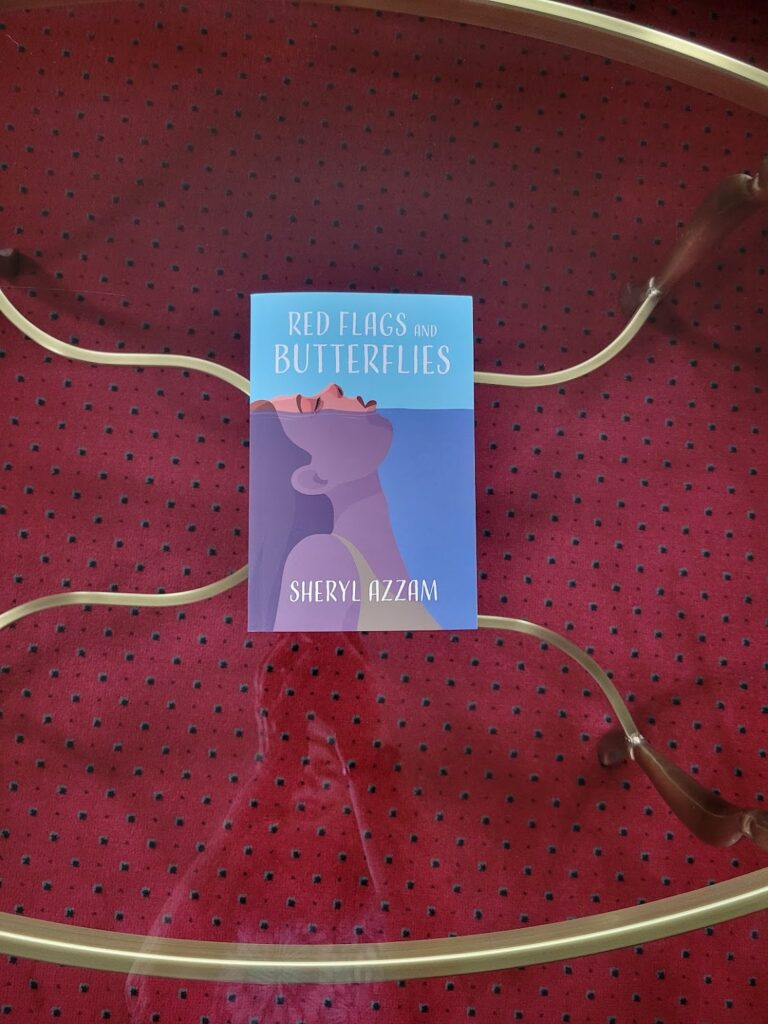
Sheryl’s book will be released on October 18, 2025. Five out of five stars from me!
“A tender, heartfelt, and intelligent coming-of-age story that celebrates quiet strength and trusting your instincts.” — Kirkus Reviews (starred review)
Straight A student, talented artist, swim team star — tenth-grader Lexie Moore is a shoo-in for Sunridge High’s prestigious fine art program, if only she can find the right words to tell her dad she wants to apply.
Lexie’s dad doesn’t see the point of some overpriced art school. He wants Lexie and her brother at home to help him launch his new renovation business. He says he can’t do this without her, so Lexie agrees to pitch in, just for a little while. If she supports his plan, then he’ll have to support hers, right? It’s only fair. But Lexie’s dad has a very different definition of “fair,” and as his demands increase, his means of getting his way become more and more suffocating.
Red Flags and Butterflies is an engrossing story about a young person facing the realities of emotional abuse.
The interview was originally published on Christine Kohler’s website here.
One piece of advice that writers are given is to write what we know. I disagree with that. I think it’s more important to write what you don’t know, but what you’d like to know about.
Before I became a writer, I got my Master’s degree in Library Science, not to become a librarian, but to learn what I didn’t know. Becoming a librarian helped me become a history detective. All of my books delve into some fragment of history that has been shoved under the carpet and forgotten.
Lidia, my mother-in-law, died in early 2008. A few weeks before her death she said to me, “You’ve written all these stories about bits of history that no one else has written about, but you haven’t written about what it had been like for me as a Ukrainian child in World War Two.”
Her comment stunned me, but there was much truth in it. She had told me so much her childhood, living on the Front, in the midst of where the battles were actually fought. In case you don’t know what the Front is, it’s where the two fighting armies confront each other— in this case, the Soviets and the Nazis. I asked her once how you could tell when the Front was upon you. “The ground trembles,” she said, “from the tanks.”
The Nazis moved through her home town of Zolochiv in Western Ukraine twice. Both times, they took over her house. They didn’t allow her or her parents to leave: The three were captive hosts, expected to cook and clean for the invaders. But they also listened in on conversations. Once, Lidia heard of an “Action” at her school the next day. “You’re staying home,” said her mother. When she went back two days later, all of the blonde and blued-eyed girls had been taken away, never to be seen again.
Years later, my mother-in-law found out that they were all dead. They had been taken for the “Lebensborn Program” where carefully selected Polish and Ukrainian children were stolen from their families and brainwashed into thinking they were German, then placed into high-ranking Nazi households as trophy children. When the Nazis lost the war, these children were no longer trophies. They were an embarrassment and a badge of guilt. Some were abandoned, never understanding why. Others will killed. Others continued as members of their “family” after the war, but sometimes remembered who they really were in their old age, realizing their whole life had been a lie, and those they considered family were actually the killers of their real family.
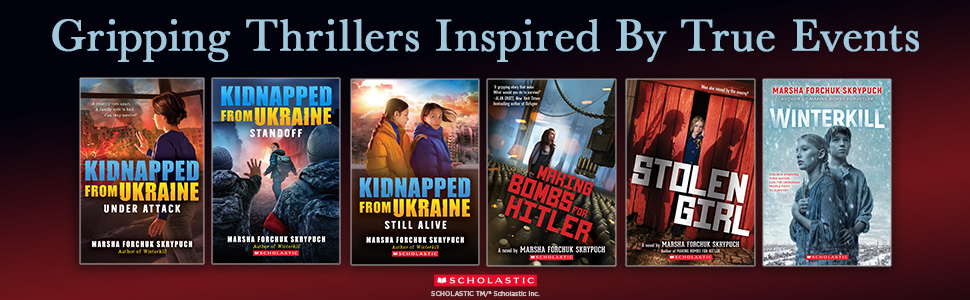
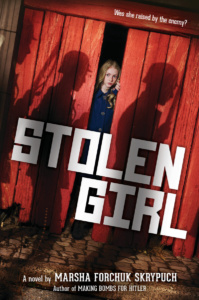
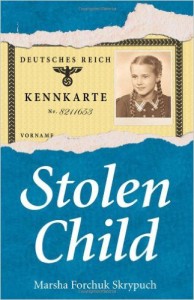
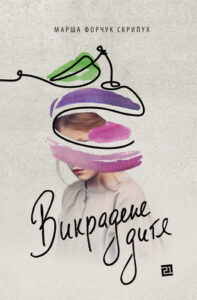
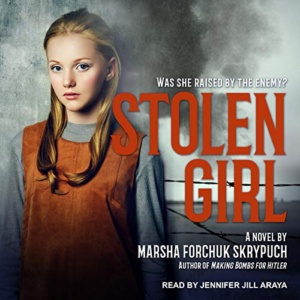
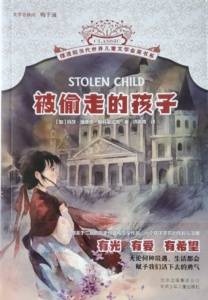
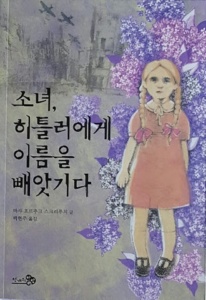
This was an aspect of World War Two that I had never heard from anyone beyond my mother-in-law. At her deathbed, I promised her that I would write about her experiences. The first novel of my WWII trilogy was Stolen Child— not about Lidia—but about a girl like one of her less fortunate classmates—stolen by the Nazis and robbed of her identity.
As I did the research for that novel, I realized how rare it was for a child to be deemed “worthy” of the Lebensborn program. The Nazis captured millions of Ukrainian and Polish children, but only a few hundred thousand were selected. The rest were labeled “not racially valuable” and were either killed outright or used as slave labour.
This fact became the inspiration for the second novel of my trilogy. What would it be like to be stolen with your sister, but separated for different fates because your sister was considered “racially valuable” while you were considered disposable?
Lida, the disposable sister, is the heroine of MAKING BOMBS FOR HITLER, the second novel of my trilogy.
While writing that novel, the character of Luka appeared, initially as nothing much more than a “wild-haired boy.” Soon, as good characters are wont to do, he took on a life of his own. Ultimately, he escaped from the slave labour camp. The third novel in the trilogy explored what he ended up doing after hiding in a wagon of corpses and jumping out in the middle of nowhere before the wagon got to the crematorium.
His story is based on real experiences as well—about the many escaped slave labourers and other survivors of the Front who just couldn’t take it anymore. They stole weapons from the Soviets and the Nazis and formed an army that hid literally under the ground. They fought the invaders on two sides—the Soviets and the Nazis—and hid under the mountains and forests. For that novel, I interviewed people who had done exactly this as children—took up arms and fought—realizing that they would likely die, but it was worth it if it meant that future generations might live in freedom.
The events unfolding in today’s Ukraine have chilling parallels to what I’ve written about in my World War Two trilogy. I pray that we are not on the brink of World War Three.
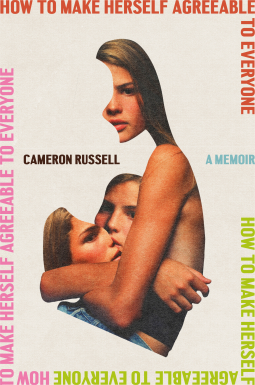
A compelling look at the seamy underside of the fashion industry, told from the perspective of a vulnerable young person who had more of a backbone than most right from the beginning but was still manipulated and abused. Instead of letting herself remain a victim, she used her visibility became an advocate for others in order to help change the system. This book will also go a long way in doing that. Thank you, Cameron Russell, for sharing your experiences in what must have been a very painful memoir to write.
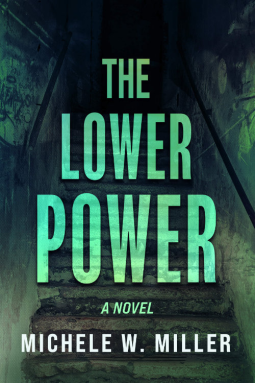
Reading this tense supernatural thriller set in NYC’s 1980s crack epidemic is like falling down a rabbit hole and hoping, praying that there’s some way out. Michele W. Miller creates an authentic cast of characters who will break your heart and make you sit up and cheer. Raven will stay with me for a very long time.
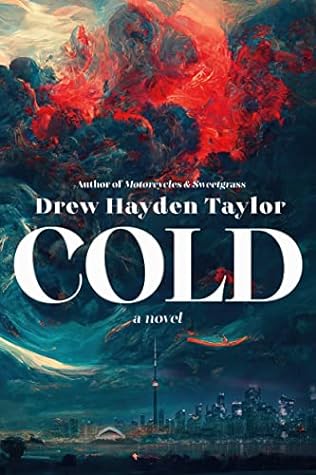
What could be more Canadian than a wendigo killer and an Indigenous hockey player hero? Wry, amusing, and so entertaining — this isn’t the usual description for a larger-than-life-horror-thriller but it fits Drew Hayden Taylor’s Cold perfectly. I loved the tight writing and the tension of this page-turning thriller. I also appreciated the homage to so many great Indigenous Canadian writers. This refreshing and entertaining novel will amuse every reader who is willing to suspend their disbelief for just a few hundred pages.
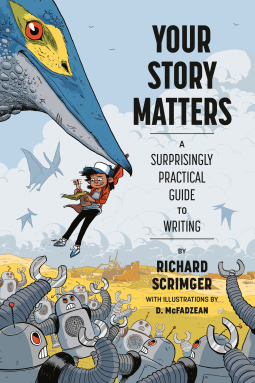
I can think of no author more qualified to write a book of this nature. Richard Scrimger brings his innate talent and humor to this practical guide that breaks down the elements of writing a good story. As informative as it is laugh out loud funny, anyone who wants to write stories will find his suggestions to be useful. Highly recommended
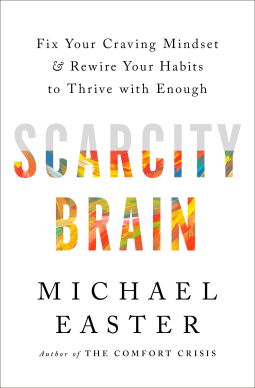
This highly readable self-help book delves into our addictive behaviors — what they are, how they originated and how to understand and ultimately overcome them. I like the way that each chapter is a vignette with Michael Easter going to people and their experiences that personify the issue. For example, with overeating, visiting a remote tribe where no cardiovascular problems exist, or when discussing gambling, visiting the scientists involved in transforming mechanical slot machines into video-gamified ones, and how this video-gamified model has been applied to so many other areas of our lives. Readable, refreshing and helpful. Thank you, Netgalley and Rodale books, for the ARC.
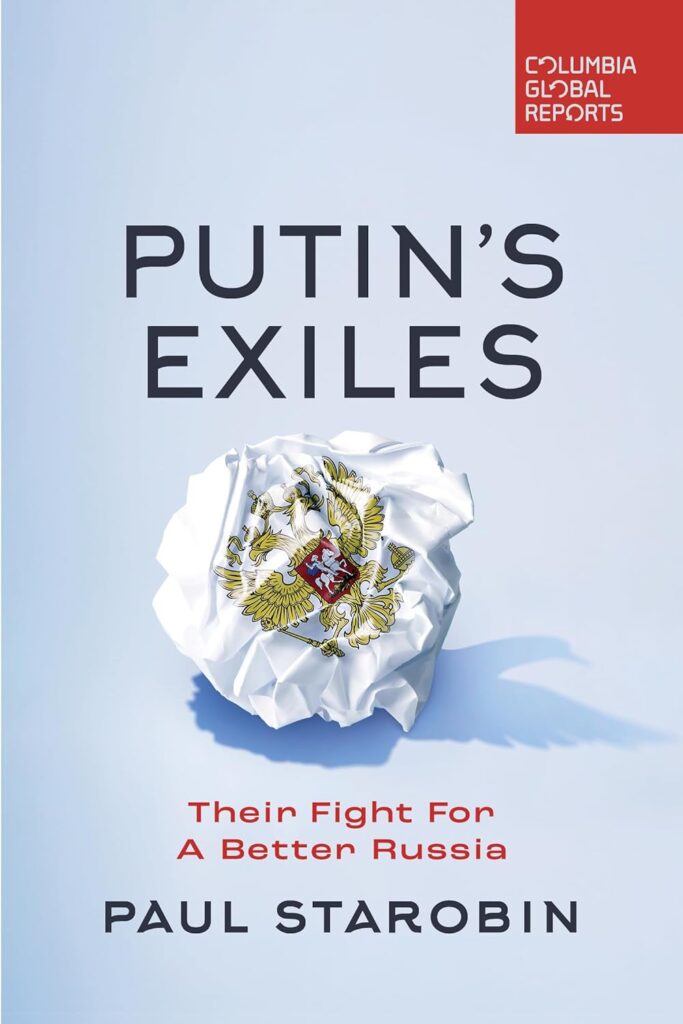
This is a quick book surveying Russians who abandoned their country once Putin began his “special military operation” against Ukraine. Granted, many of those who fled were thinking more of their personal comfort, but it was uplifting to read about those who where more principled. Even more uplifting was reading about some of the exiled Russians who are working behind the scenes to help Ukraine win the war, like the physicist who helped develop defensive equipment and was honored by Ukraine for doing so, and about those who have enlisted in the Ukrainian army and are risking their lives for Ukraine’s freedom. There are others working behind the scenes in Russia, assisting with sabotage. Those Russians willing to defy Putin are a small percentage of the whole. But even so, this book gives me hope that one day there might be a Russia that isn’t premised on killing one’s neighbors and isn’t premised on treating ones own citizens as medieval slaves.
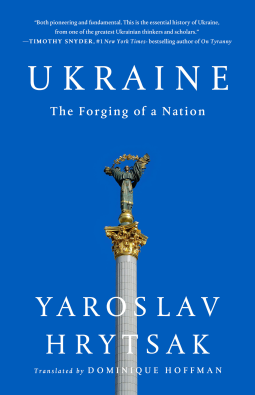
Hrytsak takes a holistic approach, focusing on large subjects with a storytelling technique rather than relying on dry chronology. It starts with the day Russia attacked Ukraine in the current war and describes the innovative and communal way individual Ukrainians successfully fought back the surprise attack from a massive force that should have been more organized. Individual Ukrainians took responsibility for the defense of their country and fought back with whatever weapons they had. Their creativity and dedication set them apart from the monolithic army of the Russians, whose every movement came from above, often from Putin himself, meaning individual soldiers and their commanders were frozen, waiting for orders. This vignette sets the tone for the rest of the book: how is it that neighboring nations can have such starkly different citizens in outlook, response and resourcefulness? Hrytsak’s book answers that question by delving back into the history of Ukraine and its record of protest against unjust rule vs Russia and its history of the populace being held down by despots. Anyone wanting to understand the current war should read this book.
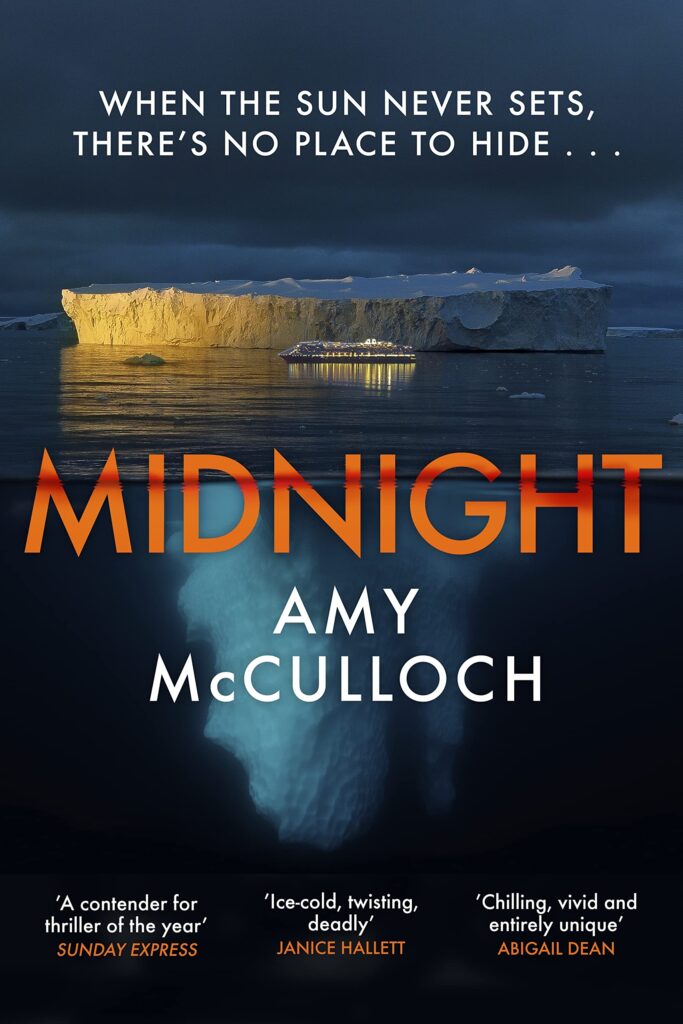
I loved Breathless and was looking forward to Midnight but didn’t find that McCulloch’s second novel was as strong as her first. There are a lot of the same engaging ingredients — murders, mystery and an expedition holiday — but the story bogged down. That said, anyone wanting to vicariously take a luxury expedition Antarctica cruise will love the authenticity of her setting.