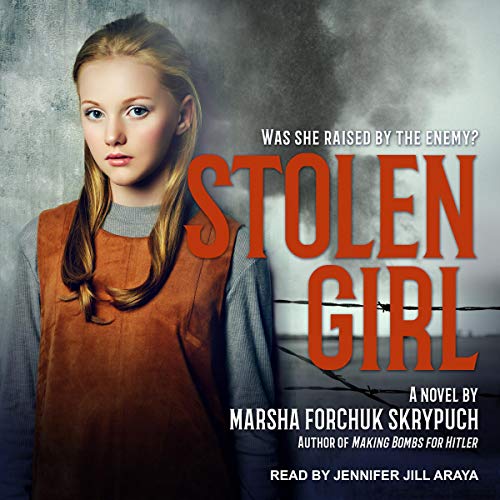
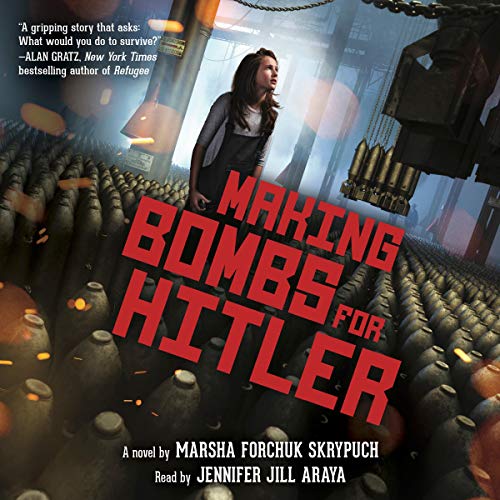
When the war in Ukraine began, Jennifer Jill Araya, the voice actor for the audio editions of Making Bombs for Hitler and Stolen Girl, approached me with empathy and an idea. She told me about a project that the Professional Audiobook Narrators’ Association was putting together, which was an audio anthology of Ukraine-related stories, with the proceeds going to support artists in Ukraine. She asked if I might have a work that she could be the voice actor for, with both of us donating our efforts to the project. I was grateful for the opportunity to assist. My story, The Rings, is set during the Holodomor. Thank you, Jennifer. Thank you, to all of the creators who contributed to this massive project. Press release is below.
Audiobook narrators launch audio anthology in support of Ukrainian artists impacted by war.
NEW YORK, NY – April 8, 2024
Artists in Ukraine have lost their livelihoods. The Ukraine Audiobook Relief Project was launched to support artists in Ukraine whose lives are threatened because of war.
It is a fundamental aspect of war to suppress story, language and the arts. Artists in Ukraine have lost their homes, their studios, their galleries, their communities, their livelihoods as a result of the war. Moved by this crisis of culture, members of PANA (the Professional Audiobook Narrators Association) created A Word Is Not A Sparrow, an audiobook anthology to raise money in support for artists living through war. The audiobook releases globally June 11 and will be available in CD as well as digital download formats.
Volunteer professional narrators, writers, and musicians have donated their creative work, and all profits generated through the sale of this audiobook will be donated to the Artists at Risk Connection in Ukraine through PEN America, a non-profit organization that endeavors to safeguard the right to artistic freedom of expression and ensure that artists and cultural professionals everywhere can live and work without fear.
The folk wisdom of Ukraine includes this expression: “A word is not a sparrow…once it flies out, you won’t catch it.” A Word Is Not A Sparrow is a diverse anthology of stories set amid Russian repression through the centuries; personal narrator testimony about the impact in America of immigrant grandparents from Ukraine and elsewhere; powerful fables and allegories that deliver universal messages about displacement, migration and human connection; and classic Cossack folk tales that are a touchstone of Ukrainian culture. Listen as we let these words fly out around the world.
Writers include Barry Abrams, Sholem Yankev Abramovitsh, Andrea Emmes and Karen Bogel, Vladislav Davidzon, Christopher Dewees, Thaisa Frank, Teresa Johnson, Alla Kudzieva, Taras Shevchenko, and Marsha Forchuk Skrypuch. Narrators include Barry Abrams, Jennifer Jill Araya, Dave Arlington, Rosemary Benson, Anna Crowe, Claudia Dunn, Andrea Emmes, Gary Furlong, Rebecca Gallagher, Caroline Hewitt, Susan Iannucci, Elizabeth Jasicki, Tom Jordan, Jennifer March, Janet Metzger, Rich Miller, Erin Moon, Sara Morsey, Traci Odom, Sheri Saginor and Tiffany Williams. Musical artists include Michael Nazaretz & the Samovar Russian Folk Ensemble, and Jeff Crompton, Roger French, and Kenny Raskin who have ties to Atlanta.
The Professional Audiobook Narrators Association champions the irreplaceable role of human narrators. In a world increasingly reliant on technology, PANA believes the human story is most powerfully told by human voices. Human narrators bring a depth of emotion, nuance, and lived experience that artificial intelligence simply cannot replicate. PANA is the only organization advocating for narrators in the public consciousness and leading the change we want to see in diversity, equity, and inclusion in the audiobook industry.
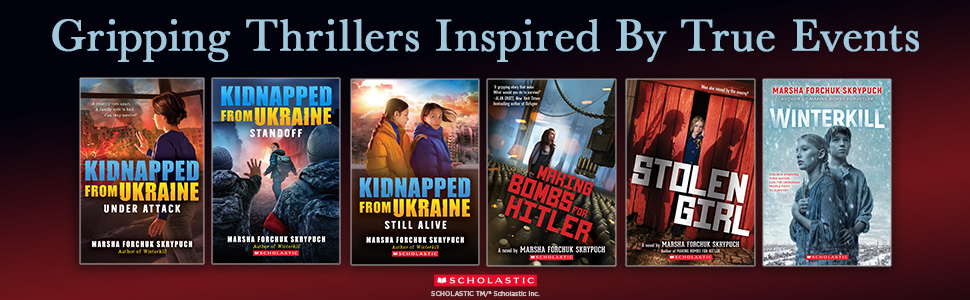
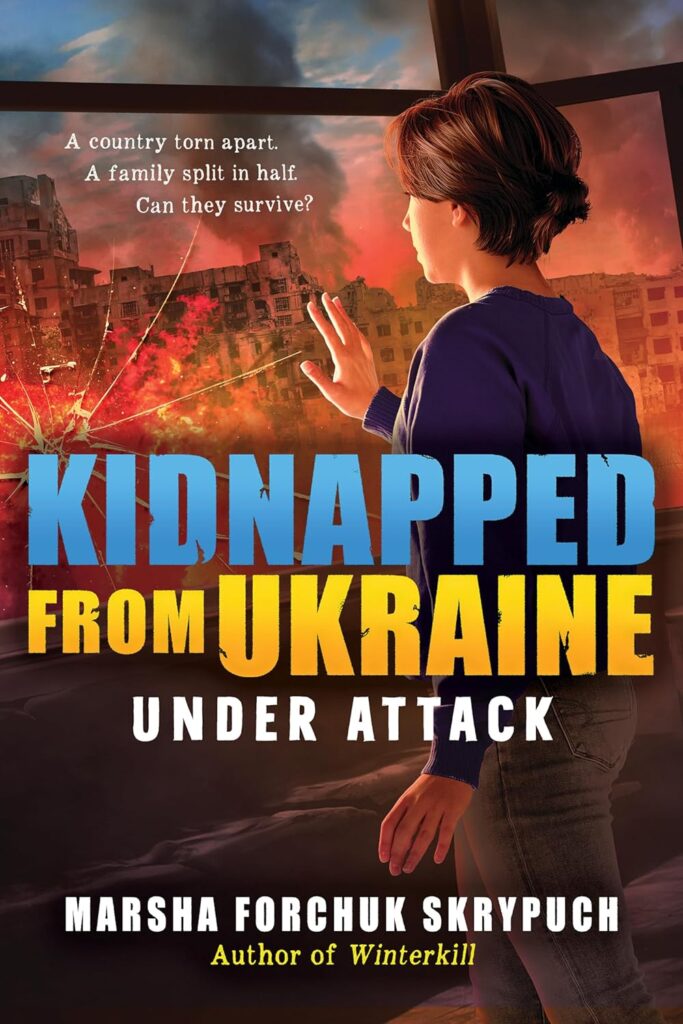
This gripping, accessible novel by celebrated Ukrainian Canadian author Marsha Forchuk Skrypuch follows two sisters as they struggle to survive the Russian invasion of Ukraine in February 2022.
12-year-old twin sisters Rada and Dariia Popkova couldn’t be more different. Dariia is outgoing and chatty while Rada is quieter and artsy. But what they have in common is their love for each other and their home. The family lives in the Ukrainian city of Mariupol, which is attacked by the Russians on Feb 24th, 2022.
The attack separates the family — Dariia is with her mom and Rada with her dad. Dariia and her mother are then separated by Russian officials and Dariia is sent to live with a Russian family. As the war rages around them, the sisters and their family must overcome unimaginable hardships. But they will learn how powerful hope is in the face of disaster.
Reviews:
*”Gut-punching: This is essential reading.” — Kirkus, starred review
*”Fans of Alan Gratz and Jennifer Nielsen will devour this fictional account of the all-too-real ongoing experiences of hundreds of thousands of Ukrainian children.” — Booklist, starred review
Starred Selection, Best Books 2025. Canadian Children’s Book Centre.
“important and tough to read novel, which fictionalizes, in harsh detail, true events from a child’s point of view.” — Publishers Weekly
“Despite its hefty 309 pages, this powerful tale of innocence lost moves along at an exemplary pace, engaging readers at every turn. Complete with two black-and-white maps, an author’s note and &A, Under Attack is an invaluable must-read and a must-have educational resource for public, school and home libraries everywhere. Lingering long after the last compelling page is turned, this timely book is inarguably a stirring catalyst for in-depth discussion, empowering readers to engage in further research and get involved in helping to rescue the thousands of Ukrainian children who’ve been kidnapped. Very highly recommended.” — Jennifer D. Foster, Canadian Children’s Book News.
“While a fictionalized story, Marsha Forchuk Skrypuch takes the time and effort to understand the truths, like the truth about how the war started, the propaganda levelled at both Ukrainians and Russians, and the impact of the war on Ukrainians, from children to workers to the elderly. It is a tough story because of these truths which are so distressing and disheartening. Still Marsha Forchuk Skrypuch is a master at telling such stories (e.g., Winterkill, Traitors Among Us, Dance of the Banished, and Making Bombs for Hitler), ensuring a sensitivity to her characters and her readers, and a thoroughness and accuracy of details.” — Helen Kubiw, Canlit for Little Canadians
“I just read this must-read and could not put it down. Thoughtful, gripping, well researched and nicely paced. A hell of an accomplishment. An important novel. A brave author.” — Pam Withers, author.
“Under Attack is fast moving and gut punching. It will appeal to a vast audience, hitting on current events, adventure, family and friendship.” Crackingthecover
“A must-have for all libraries, the perfect historical fiction!! A ‘can’t-put-down’ read!” Goodreads
“I loved the book. It’s my favorite book I’ve read so far. Some people rush through books, but I wanted to understand it, so I tried not to read it too fast.” Coco Kettmann, Growing Up in Santa Cruz.
“This is a must have for libraries serving grades 5 and up and readers should be encouraged to read the author’s note for information on the history that is still unfolding and reminded that this is why learning about world history is so important: If we do not learn from it, we are destined to repeat it as it is being repeated now.” Goodreads
“No one does historical middle-grade fiction like Marsha Forchuk Skrypuch. While “Under Attack’ is set in present-day Ukraine, I am sure fans of “Making Bombs for Hitler” and Skrypuch’s other historical books will enjoy it. The novel is captivating, meticulously researched, and heartbreaking. Another must-read by Skrypuch.” Netgalley
“Teachers and librarians will find this novel to be an important addition to any middle-grade collection. While the language remains straightforward and accessible for readers ages 8–12, the story doesn’t shy away from the harsh, real-life events of the war, making it a compelling way to introduce students to current events and inspire empathy and understanding. It also opens up opportunities for classroom discussions around resilience, survival, and the human cost of war..” Netgalley
What a novel!!!! Truly I cannot do the book justice. It’s an incredible read from cover to cover. I am not surprised–I’d expect nothing less from Skrypuch. She excels at everything–writing, plotting, characterization. But it is the characterization that particularly wows me every time. Because though it shouldn’t be rare, it mostly is. The depth of characterization is outstanding. It isn’t just that there’s depth and substance of the main character, but it is how expansive the characterization is. There’s no shortcuts, no character too small to not get treated as important. It makes it impossible not to get invested and thoroughly absorbed in the story. Becky’s Book Reviews.
Want to support Canadian Independent Bookstores? Use this link:
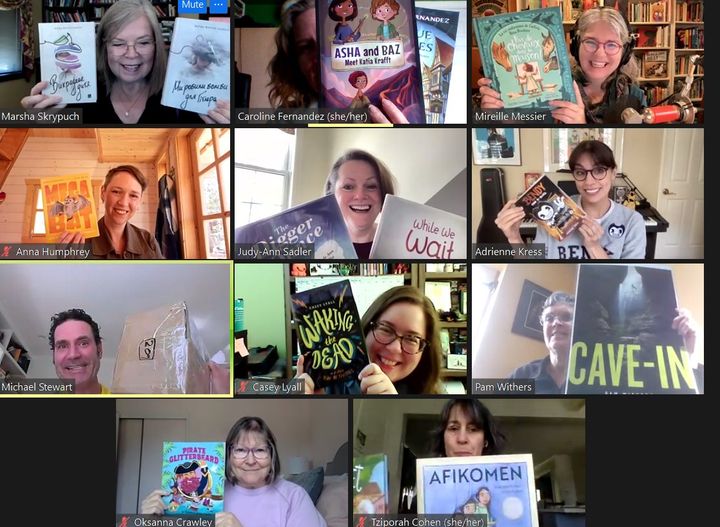
The wonderful Caroline Fernandez of Authors’ Booking Service asked me, Adrienne Kress and Mireille Messier to give a panel on how to do author visits via zoom last Friday. It was fun! We always try to nab a group photo so we can show off our latest books.
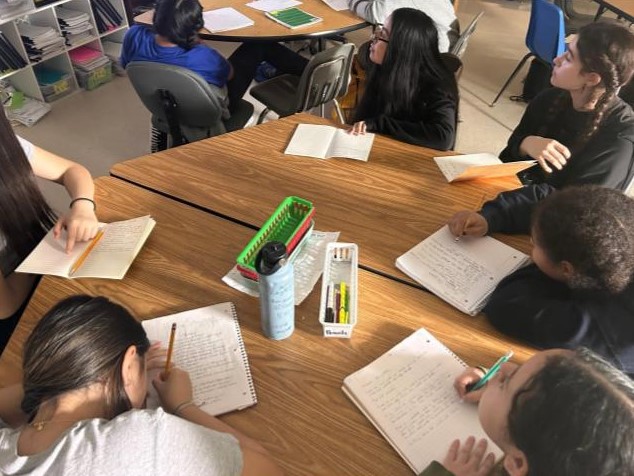
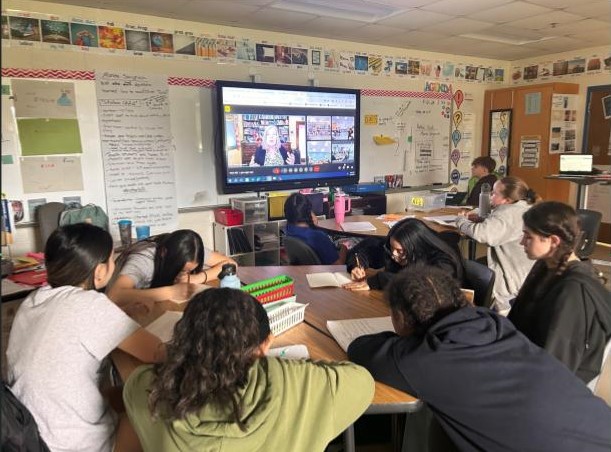
Last week I had the pleasure of meeting with 300 students in 7th grade at J.L. Simpson in Leesburg Virginia over the course of 6 virtual sessions. Jeannine, their media specialist extraordinaire cobbled together grants from the Nora Roberts Foundation and HREC ED to make this happen and also to purchase copies of Winterkill for the students. The planning had been in the works since April of 2023! Students asked great questions, and look at the notes they took!
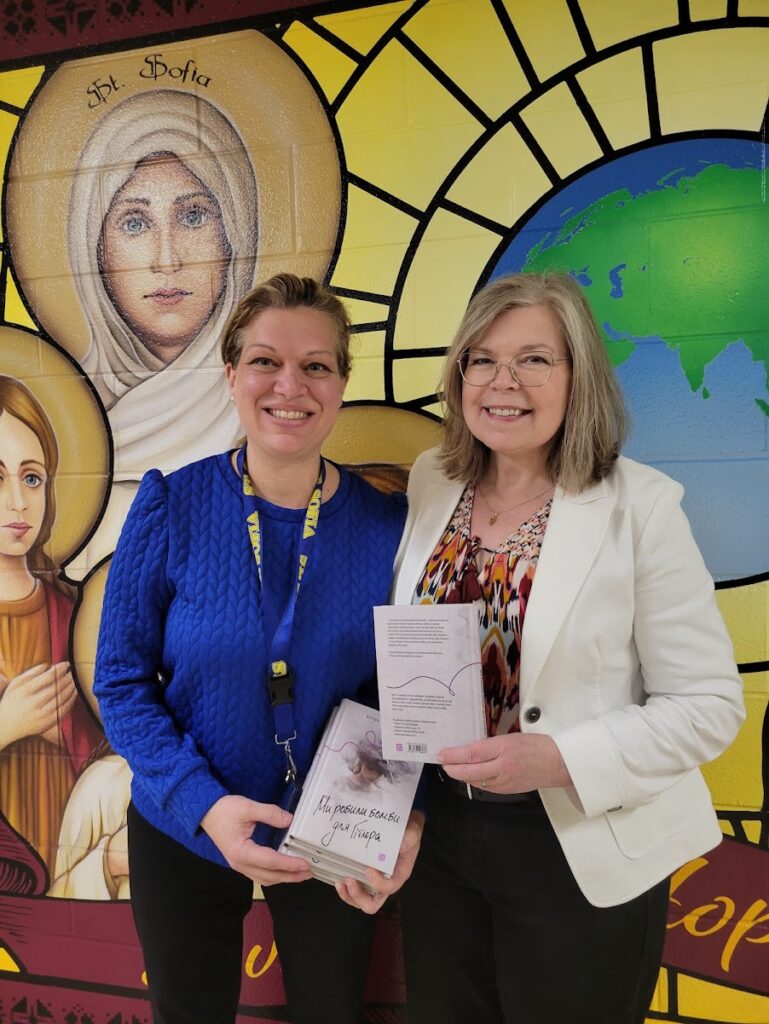
A totally non-writing day today! After presenting at St. Margurite d’Youville I popped over to visit two of my favourite schools. This is Holychka OH at Saint Sofia school. I surprised her with copies of Yulia Lyubka’s Видавництво 21 Ukrainian edition of Making Bombs for Hitler for her students, especially those from Ukraine. I then motored over to Halyna Kostiuk at St. Josephat and gifted copies for her students as well (no pic — I was illegally parked and got in and out in a flash). In case you’re wondering, St. Margurite also got Ukrainian editions.
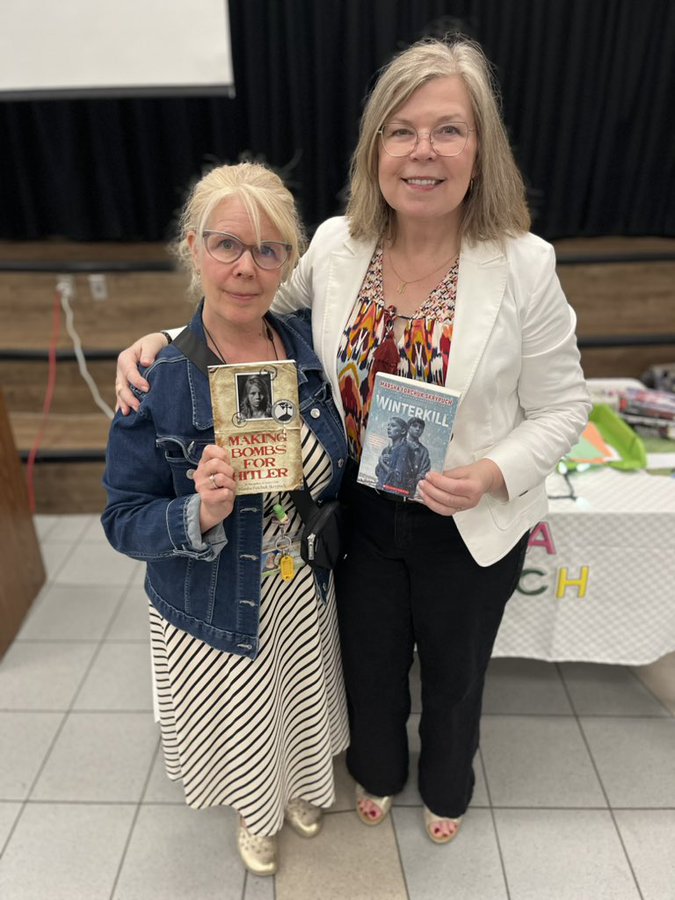
This is me with librarian Lisa Sousa at St. Marguerite in Oakville. Had a GREAT visit today with her students!!! Ms Sousa is in the midst of reading Winterkill to the students and so the questions were about disinformation, history that’s hidden, the bullying by dictators and more. Since there are Ukrainians at this school, I also donated a Ukrainian editions each of Stolen Girl and Making Bombs for Hitler.
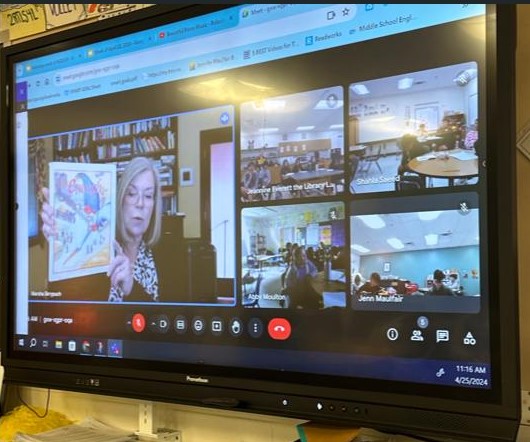
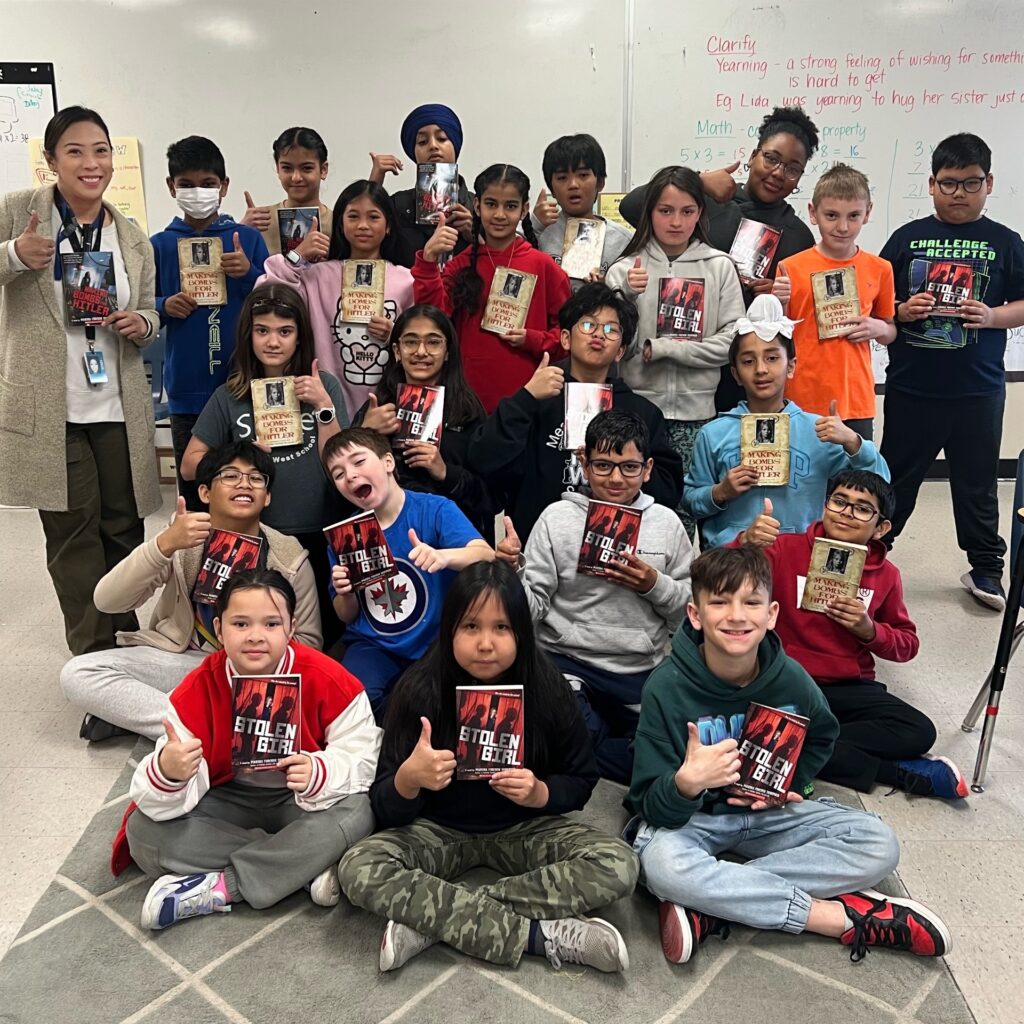
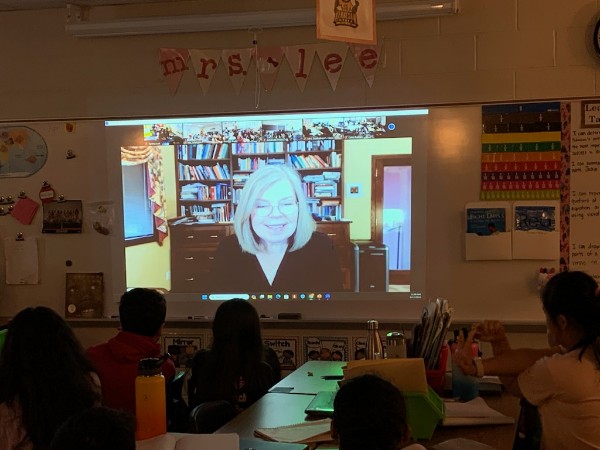
Here are students from room P5 at Meadows West School from the Winnipeg School Division. Their educator asked if I would send them a brief video greeting, which I did, and they sent this pic as thanks. So sweet!
Tiffanie from Roberts Elementary always lifts me up. After our author visit last week she emailed this feedback:
WOW! WOW! WOW!
You have a magical way of engaging our students sparking curiosity that lasts way beyond your visit! You answered their questions with such grace, care, and honesty. We loved it!