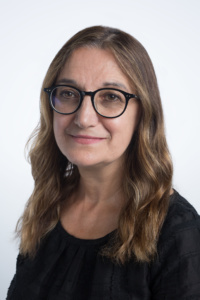
Meet the Professional: Maria Martella

maria_headshot_1
Can you tell me about Tinlids? / What should authors and illustrators know about Tinlids?
Tinlids is a Canadian book wholesaler that sells to schools and public libraries across Canada. We are the official wholesaler for the Ontario Library Association Forest of Reading program. In addition to our website (tinlids.ca) and other online presence (facebook, twitter, instagram), we also have a 5,500 sq ft showroom in north Toronto, that anyone can shop in from Monday-Friday. We purchase books from all major and many smaller publishers. We are also a strong supporter of Canadian authors, illustrators and publishers. We make good coffee.

What is your role at Tinlids? My main role is to make good coffee. I also help teachers and librarians with their selections, and make sure we’re carrying the very best books for our customers. I do all of the buying for our showroom and for special school board events. I also provide lots of booktalks and selection help on a daily basis.

What did you do before Tinlids? I worried less, worked shorter hours, had time for parties… I could go on. Okay, I was a social worker, working with children, adolescents and teenage moms. I really loved working with kids, but after eight years I decided I needed a change. One day while I was walking around Toronto and thinking about what I wanted to do next, I discovered The Children’s Book Store. I applied for a job and was hired the next day. It was a dream job. I ended up staying there for 17 years. When the owners (Judy and Hy Sarick) retired, they sold the educational division to Pegasus, which was a huge distribution centre, owned by Chapters. I was the Children’s Collection Development manager there. Pegasus closed after a year, and then I worked for another wholesaler for a couple of years. Two years later, in 2003 I started Tinlids.

Can you describe your typical day?
Contrary to what some might think, I don’t read all day! But I do read every night. A typical day often starts out with a morning meeting with either a customer who is shopping in our showroom, or a publisher rep who is selling me the next season’s titles. Whether I am purchasing for Tinlids, or helping a customer, that can take up most of my day. Sometimes my purchasing meetings last for 4 hours, and I can have 3 or 4 full days of buying in a week. If it’s “show season”, I will be out of the office selling at various school board events, or doing booktalks.

I usually have tons of email and lots of selection to do for customers. Often a customer will give me a budget and ask me to select books for them based on some specific needs. So most of my day is spent thinking about books, buying books for our showroom, selecting books for libraries, or making lists I especially love helping customers start their collection for a new library. It’s great to see new books, but I really love those backlist titles that are still strong core titles for libraries. There are hundreds of gems in the backlist.

What drives you nuts? The declining number of teacher-librarians in the schools. Customers who tell me they don’t want to buy books for their intermediate students because those students don’t read. Scaredy-cat librarians who worry about books that might have a “swear word” in them.

What are you grateful for? Authors and Illustrators who are brave enough to write about sensitive topics that kids want to know about. Publishers who are brave enough to publish those books. Teachers and librarians who are brave enough to buy them. I’m grateful that there are now many more Canadian authors and illustrators than when I started bookselling. And I love the diversity in our Canadian books. I hope it continues to grow.

What is your selection criteria for books? When I’m choosing fiction, especially YA fiction, I need to believe the characters and care about them. They need to have an authentic voice. I don’t like preachy fiction or books with an obvious message that hits you over the head. I love when an author really captures the realities of being a teenager. Authors like Susin Nielsen, Teresa Toten and Martine Leavitt do this well. Remember what you went through as a teen? Or what you wished you had gone through? All the bad choices you made? All the thoughts you had? Thinking about your future, drinking, sex, drugs, the world and how you do or don’t fit into it? I get anxious just thinking about it. I love when authors remember and are true to the crazy messed-up teenage psyche. Those are the brave authors.

Picture books are easier to buy of course, but I still say no to many titles that just aren’t good enough. I choose picture books where the illustrations and text work well together. That might sound simple but it’s not. I like when the illustration tells you a bit more about the character, and when the text is so great that you don’t even need the illustrations. I love books that are great read alouds – again, sounds simple but it’s not. I also love wordless picture books and “advanced” picture books. Advanced picture books are great for junior, intermediate or high school students, and usually provide great starting points for discussion or further exploration of an important subject.

Okay I could go on for hours about this. Don’t get me started on poetry (love it and want more of it), graphic novels (love) and non-fiction (love but pickier about non-fiction). I seriously want to keep talking but if I do, this will end up being a book instead of an interview.

The books I choose have to fit into what I believe our customers want. They have to work for a classroom or library. I want books that will engage our modern students. That doesn’t mean I only want new books. It means I only want fantastic books.

What advice do you have for a first time author or illustrator? If it’s a published author or illustrator, find out which stores or wholesalers are supporting you. If you have a website, mention these stores as a place to purchase. Independent stores and wholesalers that hand-sell your book need your support too. Find out what your bookseller likes about your book. Go see them and ask questions. Be open to honest and constructive feedback. I always say “If you want my honest opinion, you need to be ready to hear that your baby is ugly.” See what your competition is. If you’re writing a picture book about a little girl who is attached to her bunny, it better be as good as (or better than) Knuffle Bunny by Mo Willems! If I bought every book with a bunny in it, I would need to open up a separate store. And call a good shrink… ack! so many bunny books.

What do you see as the future for the book business?
I think booklovers will always need curated lists and a place that showcases them. Sometimes you don’t know you want a book until you see it in a store or a library. I’ve been around long enough to see many different new technologies challenge the physical book and bookstore. I think we will always have people who want that experience of walking into a bookstore or library and being in that social space. I hope that the future will include more diversity from voices we don’t hear from enough.

What I DON’T see is only a digital future in the book industry. Apparently neither does Amazon, since it opened up a bricks and mortar bookstore last year.
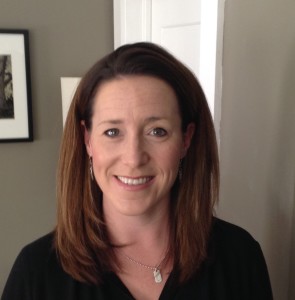
Meet the Professional: Karen Desjardins

karenslts
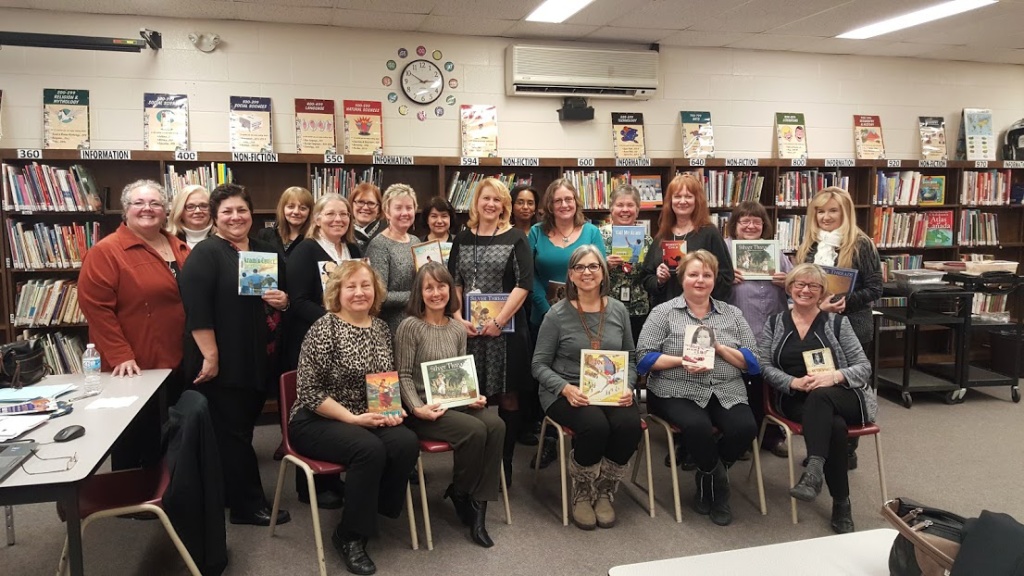
Karen Desjardins is in the middle, surrounded by her library tech colleagues.

Last January I had the pleasure to do a PD day presentation for the Library Technicians of Niagara Catholic District School Board. I had been long aware of the fact that many school boards had opted to employ Library Technicians in place of Teacher Librarians. The issue is controversial, that’s for sure, but I’ve met many amazing Library Technicians. What impresses me about the LTs of Niagara Catholic DSB is their passion for encouraging the love of reading.

It was Karen Desjardins who asked me to present. She asked for inspiration and encouragement, a talk that would help her LTs to understand how valued they are.

The staff person in the school library is the most powerful individual in the building. They hold the power to transform a kid into a lifelong happy person. The LTs of Niagara Catholic DSB have a committed and passionate advocate in Karen. She greeted me on that windy January day with a treat. On my author page she noted that I request an egg salad sandwich on whole wheat bread if I’m staying at a school for an entire day. I was only coming for the afternoon, but Karen had made me sandwiches to take home. Made with eggs from hens she had raised herself, on lovely fresh sunflower bread plus treats that she’d baked herself. It was a thoughtful gesture and the sandwiches were delicious, and for me, because of the care, consideration and craft that went into them, they became a symbol of all that’s right with Karen.

Once the sessions were over, Karen and I sat down over a cup of coffee and she answered my questions.

You are the Coordinator of Library Information Centers for the Niagara Catholic District School Board. What does this position entail?

I report to the Superintendent of Education-School Effectiveness Programs (Student Achievement K-12) with a goal to support and coordinate the Library Information Centre staff across the system. My role is to provide knowledge, vision, leadership and support to all the school board Library Technicians and to organize meetings and professional development for the group. I participate in departmental meetings, which often involve planning system-wide events, bringing the library element into play. For example, offering a Library Information Center component to the Junior Literacy Day event including a read-aloud to a very large audience. I also liaise with personnel from other school boards, vendors and outside community organizations and agencies for all things related to school libraries such as arranging transportation and registrations to get a group of us to the OLA Super Expo. To sum it all up, I do everything I can so that the library staff are enabled and empowered to provide the best service possible to our Niagara Catholic students and school communities.

Can you tell me about your typical day?

On any given day, I spend some time communicating via email or telephone with our Library Technicians on a variety of issues that come up. Anything from troubleshooting Destiny issues (our automated library system) to discussing library organization and tasks. I also take time to go out and visit the LTs at their work sites. Depending on the calendar and what’s going on, I prepare library meeting agendas, write up the minutes afterwards; prepare and submit Program updates on system library activity; answer calls from vendors and services. I research and read articles on libraries: innovations, trends, ideas. While working on various tasks throughout the day, my mind is always thinking, mulling over ideas and ways to promote the wonders of the school library

How did you first get involved in Library Services?

Well, life is a journey, isn’t it? After high school, I worked at a bakery, got married and began raising a family. I had always enjoyed my English classes and planned to pursue higher education, but bills needed to be paid.  After having two children, I decided that piping birthday messages on bakery cakes wasn’t exactly the writing career I wanted; I signed up for my first college courses in English and Creative Writing. After a while I began to take courses that applied to a diploma program – Library Technician. I thought this would lead me to work that I liked and I would be surrounded by literature to keep me focused on my own writing potential. It took me a few years to complete the program, as I continued my part time bakery work and had another baby. Just before graduating from college, I began working as a casual for the school board. After graduation I had a short stint at a medical library, then landed casual long-term assignments with the school board until finally gaining permanent status (a year after baby number four)

What was your position before this?

Before becoming Coordinator, I was the Library Technician at one of our elementary schools. In my previous life I worked as a cake decorator and managed a small bakery shop.

What are your biggest challenges?

One is advocating for school libraries and the Library Technicians that do such wonderful work within them. Another is the ever-shrinking budgets that make it very difficult to provide quality service. Library Technicians provide such added value for the school community, yet we still have to advocate to keep them from being reduced even more so in their numbers and hours.


Does every school have their own library technician?

Most of our schools do. Our schools with enrollment less than 250 are paired-up to share a library technician between the two sites. However, even though the LT might have only one school, they are only paid to work a six-hour day, so it’s a challenge to provide the best possible service within the time constraints.

Can you tell me about a typical a day in the life of a Niagara Catholic District School Board library technician?

Yes! Days are busy! Under the direction and supervision of the school Principal, the LT is solely responsible for the operation of the Library Information Center. Typically in the elementary setting, they have a schedule in place for classes to visit for book circulation and a read-aloud. Any open periods can be accessed by classroom teachers for additional activities such as research, study, use of technology, group collaboration, student enrichment, scrabble, chess, etc. In between classes, the LT continuously performs technical duties: acquisitioning, cataloguing and processing new material, maintenance and repair of books, searching and selecting material requests, shelving returned material, working on displays and bulletin boards. They also plan and administer activities such as Forest of Reading programs, Book Fairs and author visits. They track down missing items, help students and teachers search the library catalogue and locate books and material, help students find that just-right book and make everyone’s day with their chipper “good mornings” and smiles. To add to their already very busy days, elementary school Library Technicians also spend many, many minutes conducting supervision or yard duty outside the school library.

Our secondary school Library Technicians also work individually in the high school library information center performing all technical duties like their elementary counterparts.  They look after scheduling when teachers request the use of the library, but they also manage the constant stream of individual students and staff accessing the library space, material, computers, copiers and printers. Whew!

What are you most proud of?

In terms of my work, I’d have to say I’m quite proud of the advocating that I’ve done for Library Technicians in the school system. I’ve done this over the years through my involvement with a professional association, support staff union, and on my own by writing letters to Ministers of Education. Our reality is that the Ontario Government’s Ministry of Education is trying to curb costs and school boards have less dollars to work with for all expenses including staff salaries.  Some financial difficulties in the education sector can be overcome with the implementation of differentiated staffing in specific areas. Library Technicians have the education and training to be fully capable of operating a school library. Much like the specialty training an Early Childhood Educator has which allows the education system to offer full-day kindergarten at a more reasonable cost to the province, Library Technicians can offer a full range of services specific to a school library setting. Since 1995, Library Technicians at Niagara Catholic have been performing all duties required to operate the school library. LTs support literacy needs of students, collaborate with classroom teachers, support the curriculum with well-developed library collections and foster the love of reading in children.

I’d also like to add that I’m very proud of my work as a school Library Technician. Not only do we impress students and teachers alike with our ability to pull the exact book they are looking for without even looking it up in the database, we share what is unique in our lives to enhance the learning of the students. Because I have a small farm and managed forest, students visiting my library have seen and touched pussy willows, fall harvest vegetables, bird’s nests, baby rabbits, chicks and ducklings. Among our group of LTs we have those that excel at science, art, music, dance, crafts, performing, writing, history and technology; I am pleased to be working with and supporting such a capable and dedicated group of individuals.

What drives you crazy?

The notion that libraries and print material are old and obsolete, and that new technology is an excuse to reduce libraries and their place in our community. It seems to me libraries have always evolved with the times; but, as importantly, preserved the past. There is every possibility that children who are thrilled with the latest technology, will still want to move away from it at some point. Those children who after playing with the toy, discover the box and how it becomes a fort, or time machine, or toboggan. Lately, I’ve been reading much about 21st century schools and libraries and watching Internet videos of many examples. Even in these “modern” schools with various furniture and space options, I still see children all about the rooms reading with books in hand.


If you had one wish, what would it be?

Oh, boy. If I could ever win a big lotto draw, then I could help out so many people and build a really big barn for more goats on my farm! In terms of my work, I wish that I wouldn’t have to advocate for school libraries anymore; that the day would come when everyone realizes their importance. It should be so obvious that no one would ever think of cutting back staff or the budget for books and material and new technology. The only thoughts should be investing more in school libraries. I believe that is an investment in our children and our future.

Meet the Professional: Meredith Tutching, Director of the Forest of Reading®


MeredithTutchingIs there an author or illustrator in Canada who doesn’t wait with bated breath for the annual Forest of Reading® shortlists to be announced? A Forest of Reading® nomination can make a book an instant bestseller and can transform a children’s author into something like a rock star. Continue reading “Meet the Professional: Meredith Tutching, Director of the Forest of Reading®”

Meet the Professional: Rebelight Publishing

 Melanie Matheson, Melinda Friesen, Suzanne Leclerc, Deborah Froese
Melanie Matheson, Melinda Friesen, Suzanne Leclerc,
Deborah Froese

Rebelight Publishing had been off my radar until this past spring when I was a juror for a book prize. Amidst the dozens of great and not so great books that I read and rated, I noticed that three good books came from one publisher – Rebelight.

What impressed me about the Rebelight books is that they seemed to be taking a risk in one way or another. For example, Larry Verstraete is well-known for his many award-winning true life adventure stories but Rebelight had published Verstraete’s Missing in Paradise, a treasure hunt mystery novel for middle grade boys. Those of us with many books under our belt know how hard it is to find publishers who let us risk breaking out of our established genres. Suzanne Costigan’s Empty Cup is another example of risky. This outstanding first novel deals with teen pregnancy and sexual abuse in a way that is breathtakingly direct.

But what really impressed me was seeing Gabriele Goldstone’s novel, Red restoneStone, land on their list. Red Stone is based on the author’s own family‘s experiences in the 1930s Soviet Union when they’re exiled to Siberia as “enemies of the people”. This is an era that is puzzlingly off the radar for most publishers despite the fact that millions of Canadians have ancestors who escaped to Canada during Stalinist times.

The following interview was done via email with Rebelight’s four person team.

What did you do before creating Rebelight Publishing Inc.?

  • Melinda Friesen was a student and continues to be a writer and mother to four children.
  • Deborah Froese explores life through stories rooted in truth and fiction.
  • Suzanne Leclerc is a treatment foster parent.
  • Melanie Matheson has been a graphic designer for 25 years and is currently the Executive Director at the Manitoba Writers’ Guild.

What made you decide to create Rebelight Publishing?

A desire to create new opportunities for writers in a changing publishing environment fueled the creation of Rebelight Publishing Inc. We saw great manuscripts overlooked and opportunities for new writers dwindling. At the same time, we found the quality on bookstore shelves declining.

How is Rebelight different from other publishers?

1) We are writers first, so we strive to treat our authors as we want to be treated. We offer fair contracts and open communication. Our authors are actively involved in the decision making processes; their opinions and ideas matter to us.

2) We have a team approach to everything we do. Although we each specialize in different areas of the business, we help each other out continuously.

3) At Rebelight, we take chances. We seek out new and talented writers and give established authors the opportunity to venture outside their established genres. Rebelight looks for good stories, well told, and is open to submissions across genres.

4) We see marketing as a partnership between author and publisher. We market books long term, continually seeking out new opportunities for each book on our list to meet readers.

What has been the response from authors, the public, readers?

We have received such wonderful feedback from everyone. Rebelight seems to be living up to its goal of publishing quality novels for youth. We are honoured by the attention we’ve received from the Manitoba Book Awards, the Canadian Children’s Book Centre Best Books for Kids and Teens Spring 2015 edition, and Manitoba Young Readers Choice Awards 2016.

We couldn’t be happier with our author line-up. One of our mandates is to publish new talent, and so far we’re meeting that goal. Forty-five percent of our novels are from first time authors. Our authors tell us they are impressed with our thorough editing process, our attention to social media and our flexibility.

What are the biggest challenges that you face?

There’s a lot of book noise out there, and it’s difficult to be heard over the clamor. This early in our company’s life, it’s challenging to get people who haven’t heard of us to take us seriously. However, reading one of our books is usually all it takes for people to realize that we’re serious about living up to our tagline, to produce “crack the spine, blow your mind” novels for young people.

What do you look for in a manuscript?

We seek well-developed and dynamic characters, plots with building momentum, and a balance between internal reflection and outward action. We love strong protagonist voices, well-developed antagonists and clean, concise writing.

Can you describe the qualities of a dream author to work with?

A dream author shares our end goal: a great reader-experience. We want readers to love Rebelight books and know that they are buying a well-written enjoyable read. A dream author is open to working through our intense editing process. We publish the best.

And now describe an author from heck.

Someone resistant to the editing process and uninvolved in the marketing efforts.

What is your manuscript selection process?

  1. We review the submission package.
  2. If we like what we see, we request the full manuscript.
  3. The full manuscript is reviewed by multiple Rebelight readers.
  4. If our readers agree that the manuscript meets Rebelight’s publishing goals, the Rebelight team discusses the manuscript and determines whether or not to move forward.

Once a manuscript is chosen, what steps come next?

We touch base with the author by phone to express our interest in the manuscript and our thoughts about it—the first step toward establishing a working relationship. If the author is open to our initial editorial vision, we offer a contract.

What do you expect from your authors, and how is that different from other publishers?

One key word: interaction. We keep in touch with authors by telephone and email throughout the editing process and beyond, and we invite them to interact with us on Twitter and Facebook. We love to hear from our authors! Rebelight is all about creating a writing community, so let’s get to know each other.

What advice do you have for a first time author?

Publication is a marathon, not a sprint. Settle in for the long haul because nothing happens fast in this business. Don’t rush. Take all the time you need to ensure your manuscript is the absolute best it can be before you submit it anywhere. Join a writers’ group and acquire some beta readers. Critique is invaluable. All serious artists seek critique on their work. Never forget that writing is an art, while publishing is a business. Rejection is not personal, it is simply a business decision.

What would be the most common problem with a manuscript you decide not to publish?

One of the biggest problems we encounter is the lack of an authentic middle grade or teen voice. The narrative sounds like the author is speaking, not the protagonist. A middle school boy should not sound like a middle-aged woman. A strong voice always stands out.

What do you see in the future of children’s publishing?

This is an exciting time in the publishing industry. No one knows where the future is headed, but we are confident that we have structured our company for flexibility within the ever-changing publishing climate.


Meet the Professional: Diane Morriss of Sono Nis Press

Diane&ElsaWhat did you do before you became the publisher and owner of Sono Nis Press?

My dad and grandfather, Richard (Dick) and Charles (Charlie) Morriss, owned Morriss Printing in Victoria, B.C. They were well known for producing beautifully designed and finely printed and bound books. My dad rarely took a day off, so many of my childhood memories are of playing at “the shop” and helping my dad around the office. He bought the publishing company Sono Nis Press (founded in 1968) in 1976, the same year I graduated from high school. After working at various government jobs, I ended up working at Morriss Printing full time, starting in the bindery, learning the craft of making books. In those days, most books were hardbound, book covers were made by hand, and each book was individually sewn on special sewing machines. In 1979 I graduated to typesetting on the first computerized typesetting machine in Victoria – people were fascinated with this new technology because until then, everything had been typeset using hot lead. Then I discovered my passion: Sono Nis Press. I loved working at Sono Nis until marriage led me away and motherhood became my main focus.

How did you become the publisher and owner of Sono Nis Press?

When my dad died in 1994, my brother, sister, and I inherited his two companies. My brother, as executor of the estate, sold Morriss Printing to a former employee and was going to shut down Sono Nis but I couldn’t stand the thought of Sono Nis disappearing. Although I was divorced with two young children, I made a deal with my siblings to take over the press. Despite knowing very little about running a publishing company, I was determined to give it my best shot and bring Sono Nis back to life.

I didn’t realize how much work was involved! Because it was important to me to be with my daughters as much as possible, I bought a large house in the Rockland area of Victoria and moved us and Sono Nis in. I lived there until 2002 when our book designer Jim Brennan and I decided to get married and move to his house and acreage in Winlaw, near Nelson, B.C. Using the money from the sale of my Victoria house, I built my office building, which also includes a large warehouse and guestroom with a kitchenette for visiting authors.

Can you describe your typical day?

My husband and I live on 33 acres on a mountainside overlooking the beautiful Slocan Valley in the Kootenays, and my office is a stone’s throw away from our house. Every day is different, but one constant is invoicing and shipping book orders. Sono Nis distributes our own titles (over 140) which is unusual in the publishing industry but it works for us. I love handling the books and having direct contact with our customers. The rest of my day can be anything from working on grant applications; rereading manuscripts in the works; sending books and catalogues off to printers; submitting books for review or award consideration; consulting with our editors, designers, authors, and illustrators; working with our publicist to promote our books, including planning launches and book signings; processing book returns; reading (and mostly rejecting) submissions; warehouse maintenance; getting print quotes; preparing catalogues and material for conferences with our sales reps; and writing and designing advertisements. On top of all of this is the everyday running of the business which includes paying bills, bank deposits, calculating and paying commissions and royalties, debt collection, month-end and fiscal year-end accounting, inventory, website and various database maintenance, and ordering office and shipping supplies.

For the last few years, I’ve been the only in-house employee, so sometimes work can get a bit hectic. Fortunately, my youngest daughter Elizabeth has just started working for me. She’s a natural, just like her sister Jen, who recently, to my absolute delight, became a new mother. I’m looking forward to the day I can ask my granddaughter Elsa if she wants to play publishing with Gran!

What are the biggest challenges that you face?

Trying to keep up with the enormous, out-of-control volume of email I get every day is always challenging! One of the things I like best about the business is the wide range of jobs and responsibilities I have, but needing to know so much about so many aspects of the industry and running a business is also one of my biggest challenges. 

What do you look for in a manuscript?

A well-told and thoroughly researched story that’s universally appealing. If someone can make me smile or move me to tears, I know that author is on to something good.

Can you describe the qualities of a dream author to work with?

Sono Nis is more than a business—it’s a family, so it’s important to me to publish authors I can work closely with. I love working with team players who are able to receive and act on constructive critique without becoming defensive, but who also have a strong, unique, creative vision. Authors who can balance passion for their work and be open to making changes are great to work with and will wind up with stronger final manuscripts than those who balk at suggested changes. It’s also important that authors be committed to meeting project deadlines and are willing to participate in launches and help with book promotion. The more authors help promote their books, the better their books will sell.

And now describe an author from heck.

I try to stay away from those! If I publish an author who turns out to be troublesome, I refuse to publish them again – even if I felt their next book would sell a million copies. Life is too short to deal with difficult people!

So just what is an author from heck from my perspective? An author who holds on to every word they write and is unwilling to work with their editors; they don’t help promote their book or are unpleasant to work with. Sometimes they are authors I have or haven’t published but whose manuscripts I’ve turned down—I’m amazed how nasty some authors can be when that happens!

How many steps are there in choosing a manuscript for publication?

Pretty much just one step: I read each submitted manuscript and decide if it’s something I like and want to publish, and feel I can promote with our other books.

Once a manuscript is chosen, what steps come next?

Sono Nis is committed to hiring the highest-quality contributors for each book we publish – from editors and artists to designers and printers. We publish an average of five books a year and work in close partnership with our authors, keeping them well informed and involved in all decisions about their books.

1. After a contract is signed, the manuscript is forwarded to the substantive editor who helps the author shape and develop the story into the best book it can possibly be.

2. The author and I decide what we’d like to see on the cover and then I either hire an illustrator (with the author’s approval) or give our ideas to our designer who comes up with several designs for us. Some covers come easily; others can take months to get right.

3. Once the substantive editor and I are happy with the manuscript (sometimes this takes three or four rewrites by the author), it’s sent to the copy editor who corrects spelling, punctuation, and grammar, and checks for accuracy and consistency.

4. The manuscript is sent to a historical or special reviewer, if that step is required.

5. The copy-edited manuscript is sent to our designer to lay it out in page form.

6. The laid-out book is sent to a proofreader to proofread.

7. The author gives final approval of their laid-out book before we send it to the printer.

What advice do you have for a first-time author?

Don’t rush into signing a contract. Have a professional with experience in publishing look over the contract to make sure it is fair. It’s exciting to have a contract for a new book, but that contract will be in effect for years, so take time early on to make sure you are being treated properly.

Network. Social media has made it much easier to find other authors working in your genre. Take advantage of this and become an active participant in ongoing online conversations. Virtual relationships and discussions are great, but also go to writing conferences, join a local writing group, or take workshops or classes. Having others read your work and provide feedback is a great way to grow as a writer, and the support you get while going through the sometimes difficult process of finding a publisher, then revising your manuscript and navigating the whole publishing process, is invaluable.

If you are interested in writing for children, attend meetings of the local Children’s Literature Roundtable (there are many chapters across the country), join organizations like SCBWI, the Canadian Children’s Book Centre, CANSCAIP, and IBBY: all of these organizations provide excellent information and support for both newcomers and more experienced authors. Read blogs—there are thousands of children’s books out there so find the gaps and where your work might fit. And, of course, read, read, read. If you don’t love reading children’s books, you probably shouldn’t be writing them.

If you could generalize, what would be the most common problems with novels that you decide not to pursue?

Plots that don’t go anywhere and characters I don’t care about.

Peer into your crystal ball and tell me what you see in the future for children’s publishing…..

Technology is changing so quickly I haven’t a clue what’s next! Though the format for delivery may evolve and change, what will never go out of style is a good story. I hope we never see the end of physical books, but even if they become less common (it is handy to be able to cart around a whole library on an e-reader), writers and other creative people will always be needed to tell the stories we love to read and hear.

Meet the Professional: Jeff Burnham, book wholesaler

Meet the Professional: book wholesaler, Jeff Burnham

My hometown of Brantford Ontario is rich in Six Nations culture and history. I goodmindsstafflove to go on long bike rides and one of my favourite routes takes me behind the Mohawk Chapel and past the Woodland Cultural Centre. Right beside the Woodland Cultural Centre on Mohawk Street and tucked into an industrial mall is Goodminds.com. I had passed it many times and took note of it, meaning to drop in.

Last June, I did.

Jeff Burnham is the president and he operates Goodminds.com with his wife Linda and their staff. He took me on a tour.

The warehouse is huge. Jeff showed me through the section where Aboriginal materials are organized – shelves upon shelves of curriculum texts, language instruction books, fiction and non-fiction for the school market, but also for academic and general reading. This is the largest and broadest selection of Aboriginal books in North America.

Goodminds.com second specialty is the school library market. Marlene Turkington, a former teacher-librarian from London Ontario, is their curriculum consultant and that part of the warehouse is massive as well.

Jeff took the time to sit down with me and answer a few questions.

Can you tell me about GoodMinds.com?

GoodMinds.com is an Aboriginal, family owned book wholesaler, based on the Six Nations of the Grand River Reserve, at Brantford, Ontario, Canada.  The business now stocks more than 6,000 titles including school library books and a strong Aboriginal collection. 

Although GoodMinds.com technically opened its “doors” in April 2000 to distribute Aboriginal educational resources, the roots of the business extend to a combination of events in 1987 and 1995.  Today, GoodMinds.com is operated by Linda and Jeff Burnham and 10 staff to date, including Sheila Staats, Marlene Turkington, Rosemary Lunau, Josiahs Cook, Sandy Nagy and others.

What is your role in GoodMinds.com?

As President, I focus on long term planning. Up until recently, we focused on Aboriginal books, but we identified a need for non-Native high quality children and youth books for the school library market, so we’ve expanded to include that as well. With that change, we’ve been making it easier for schools to purchase from us. We implemented automated shopping carts at book fairs, in our office and our website.

We have also been working with publishers directly with some projects – assisting in the production of books where we have the expertise and we see a need.

Implementation of the new SALT program is something I am passionate about.

What is SALT?

SALT stands for Supporting Aboriginal Libraries Today. It is a fund started in 2013 by GoodMinds.com, initially to raise money for the Six Nations Public Library, for their $15 million dollar new building and archives. We almost immediately realized that a huge need for a library existed in hundreds of Aboriginal communities across Canada. More than 90% of Aboriginal communities do not have any public library at all.

GoodMinds.com is donating 10%, of Canadian public library sales to the SALT fund and will do the same for all other sales upon request. For complete details please see the SALT information on the web site at www.goodminds.com.

Wow. I had no idea that most First Nations communities do not have public libraries.

SALT is a literacy issue and an education need.

Currently no funding exists in First Nations communities to start a public library. What scarce dollars there are has to compete with obvious needs such as housing, water and sanitation, roads, and education. Given that competition, it is easy to understand why most First Nations communities do not have a public library.

SALT is ultimately a campaign to get the Federal Government to recognize the need for public libraries in Aboriginal communities, and to provide funding for public libraries, so that literacy can improve in Aboriginal communities. At GoodMinds.com we see this as an important social justice concern. With everyone’s help we can make a difference!

Can you tell me about your book selection process at Goodminds.com?

Books are selected by our two professional selectors. Sheila Staats selects all Aboriginal Books from Grades K-12, and also for our College, University and Adult collections.

Marlene Turkington selects all other books for the library collection, which also includes Early Education, Graphic Novels from Grades K-8 and YA books. Marlene is a former head librarian for a large school board in Ontario.

Both have had years of experience and are knowledgeable about choosing books that support curriculum needs.

Can you describe your typical day?

My day ranges from administrative accounting functions and consultations with staff in the office, to very interesting meetings with authors and customers at book fairs, conferences and other events. There really is not a “typical” day. It can range from packing 100 bins of books for a major display, to setting up at a show, to selling, then packing up again and returning to the office to put the books back on the shelf, only to repeat the process the next day.

What kind of writing are you passionate about?

I recently enjoyed reading The Inconvenient Indian by Thomas King.

Is there something you wish people would ask you, but they never do?

I would love to be invited to speak about the need for public libraries in Aboriginal communities.

Peer into your crystal ball and tell me what you see in the future for children’s publishing.

GoodMinds.com sells books that for the most part are written and published by others. We are dependent on writers who put their heart and soul into the books they write.

As for the future, I hope there will continue to be growth in children’s multicultural books and in particular Aboriginal books. I hope that the general public will read more multicultural titles. That would be the best way that I know for everyone to become more informed about our global village.

Let me close by using Aboriginal books as an example. A book about residential schools is written more for the non-Aboriginal reader than for the Aboriginal reader. Most Native people already know about Residential Schools, but non-Native readers can learn about the issue by reading such a book. They may not already know that the real intention of Residential Schools was to get rid of the “Indian Problem”. We know now that the Residential School policies didn’t quite accomplish their goal. In some cases they did more damage by creating a whole new set of problems that we are still living with today. By reading a book on that topic, a non-Native reader can gain empathy.

Marsha Skrypuch won the Silver Birch Fiction Award last year for Making Bombs for Hitler. Her narrative non-fiction, Last Airlift: A Vietnamese Orphan’s Rescue From War won the BC Red Cedar Award for non-fiction and was a Red Maple Honour book. This year, One Step At A Time: A Vietnamese Orphan Makes Her Way is a Silver Birch non-fiction nominee, and Making Bombs for Hitler has been shortlisted for the Kobzar Literary Award and the Geoffrey Bilson Award for Historical Fiction for Young People.

Meet the professional: Denise Anderson, Director of Marketing and Publicity, Scholastic Canada


My CANSCAIP Interview with: Denise Anderson, Director of Marketing and Publicity, Scholastic Canada

How did you become the director of marketing and publicity for Scholastic Canada?

My background is journalism and public relations. My first job in the book industry was with Coles Bookstores in corporate communications, first as an assistant to Kelly Duffin (a great mentor) and then as the editor of their bi-monthly consumer magazines.

I then moved to Scholastic as their publicist briefly before heading to Vancouver to work at Raincoast and Douglas & McIntyre. When I returned to Toronto in 1998, I worked at D&M, managing special sales and Candlewick Books, which they distributed at the time.

I returned to Scholastic in 2002 to work in marketing. Scholastic Canada had decided to focus on growing its trade presence. Many of the people I’d worked with were still there and now running the company, and the others brought on board were people I knew from so many years in publishing –it made for a very comfortable transition!


What advice would you give to someone who wanted a career in marketing or publicity for a publisher?

You have to be willing to do anything: work nights, weekends, get coffee, lift boxes. If you go to an industry party, you’re not there as a guest. You have to be alert and make sure things go smoothly. You have to be a multi-tasker who pays attention to detail.

When hiring, I will look for people with retail experience who have also taken publishing courses. But the most important factor is that you have a passion and knowledge of books. You are surrounded by book people and if you don’t love that, it’s hard to take the pace.


Can you describe the qualities of a dream author to work with?

These days, it is crucial to be connected on social media. An author must have online presence. They must be accessible to their audience. Having said that, they don’t have to spend all of their time on Facebook, Twitter, and blogs, but there are so many exciting possibilities for promotion and this is often the way readers find you.

In the world of children’s books, it’s really important to have a website where teachers and librarians can go to get information about you: your books, your biography, whether you do school visits.

Authors who are “out there” doing events and appearances are fantastic. The ones who tell their publishers what their doing and when, with plenty of time for us to help promote and get books where they need to be are even better!

Dream authors also know that there is a fine line between promoting a book and harassing about a book. They are respectful of everyone’s time. It’s great to let the local bookstore know you have a new book out, offer to sign stock or whatever they’d like, but going in every day to see if they’ll bring more in doesn’t generally earn you any friends.


And now describe an author from heck.

An author from heck is one that plans events on their own but doesn’t let us know until a day or two before and then expects us to somehow have books in place and do promotion for them.

They are too aggressive with their needs. There is a fine line between promoting and irritating, and the author from heck is blind to that line. I don’t know any publicist who doesn’t wish there were more hours in a day and who doesn’t do everything possible to get the word out about their books.

It is completely understandable that not everyone is super tech-savvy these days, but it’s very important to at least have a basic knowledge. “I don’t have email” doesn’t instill confidence in an author’s ability to help spread the work about their books.


Authors are almost by definition introverts. Do you get frustrated by authors who won’t do publicity things for you?

It does no one any good to put an author into an uncomfortable situation. We respect the various personalities of authors and try to make sure that what we ask them to do is in keeping with their comfort levels. While not everyone looks forward to getting up and talking in front of a crowd, I would say most of the authors I’ve worked with are as happy as I am to get out of the office and talk to people.


Can you describe your typical day?

There isn’t really such thing as a typical day, although every day seems to involve a lot of email and meetings! It could involve meeting about our websites, signing off on ads and catalogues, working on authors’ tour schedules.

Our department tends to get a lot of general questions and complaints sent our way, on top of the usual tasks. It varies at the time of year as well. If a sales conference is coming up, I’m preparing presentations and gathering sales and marketing materials; meeting with our team to create marketing plans; and organizing the “social” part of conference.

September is “book festival” month, so we are arranging for author appearances, getting promotional materials to our retail partners at the events and manning booths on weekends. It’s also when we have a lot of authors on tour. Summer is also surprisingly busy, prepping for the fall events.


What advice do you have for a first-time author?

Join CANSCAIP.

Connect with other authors and illustrators. It is a small but generous community and there are lots of mentors who are willing to share their own experiences.

Be nice to everyone. Canadian children’s publishing is a small community. You never know where someone may turn up next. Also, word gets around, so make sure the words about you are positive ones.

Hone your presentation skills. Being able to do school and library presentations is absolutely key. The first step may be doing one for free at your own kids’ school.


If you could generalize, what would be the most common problems you run into?

Many new authors have unrealistic expectations about bookstore signings. We read about line-ups out the door with mega-author bookstore signings, but unless you’re Dav Pilkey, the reality is that most authors will get few people out. Even relatively well-known authors will get few people out. But if that happens, appreciate those who showed up and spend some quality time with them. Sylvia McNicoll wrote a great blog about book launches recently.

A better way around it is to plan a community event that is creative and interesting. Invite your friends and family, neighbours, students, teachers, and the local media. And ask your local independent bookseller to be the vendor. This brings attention to you and your book, and it helps your local bookseller as well.

We are always on the lookout for new ways to connect authors with bookstores in a successful way.

Peer into your crystal ball and tell me what you see in the future for publicity in children’s publishing…..

Now is like the wild west. It’s an exciting time in book publicity. There are so many new opportunities and they are constantly changing. It is crucial to be flexible and adaptable.

I love the bloggers. In the last couple of years, they have become the new way to promote books. I have had more fun marketing books in the last two years than ever. There are so many cool new venues out there and hardly enough hours in the day to keep up with it all. Not necessarily every new online venue will be successful, but it is so fun to try.

Some of the challenges? We need to support authors and illustrators more with training on Skype and other online tools. Ebooks are on the rise, even in the children’s book industry. I hope that means people will just buy more books in different formats.


Marsha Skrypuch is the author of sixteen books for children and young adults. Her two most recent are One Step At A Time: A Vietnamese Child Finds Her Way (Pajama Press, 2012) and Making Bombs For Hitler (Scholastic, 2012). She is thrilled to have two Forest of Reading 2013 nominated books: Silver Birch Fiction for Making Bombs, and Red Maple non-fiction for Last Airlift.

--