Sanok, Poland

If you ever go to Sanok, do stay at Hotel Jagiellonski. Natalia and I shared a beautiful room with hardwood floors and comfortable double beds, a huge airy window, a sofa and two ottoman chairs. The room was 160 zlotys a night, which worked out to $73, or less than $40 for each of us. Eugene’s room was 130 zlotys and it looked very nice too, although of course smaller. Breakfast was included, and it was huge and yummy. And they have free wireless internet.

After breakfast, we walked up the hill to the main part of town to get some maps from the tourist bureau and also to get more money from the bank machine that worked for our cards.

Our first stop was an outdoor folk museum. This part of Poland was Ukrainian until Operation Wisla after WWII, when all of the Ukrainians in the area were deported to the Soviet Union. The folk museum displayed traditional houses and churches from that earlier era. It was interesting to see and touch artifacts that we had just read about. For example, Natalia had heard about wooden cemetery markers. They had some here:

We were both struck by the beauty and elegance of the cemetery marker. Later, when we were in the museum gift shop, we noted several carved figures similar to the ones used in the markers.

Our next stop was a small village close to the Ukrainian-Polish border. We saw more of these carvings:
Something else that we noticed as we were driving through this rural area was ornate road markers every half kilometer or so. Natalia speculates that these are markers commemorating the end of serfdom from Austro-Hungarian times. I would be curious to find out more information about them. They’re beautiful:


We found it easy to navigate in rural Poland. Everything is well marked and many people speak English. Our next stop was Krakow, so we backtracked and drove through Sanok again and had an early supper at Hotel Jagiellowska and then continued on to Krakow.

We got into town quite late at night and the street we needed to take to get to our hotel was under construction. Hotel Wielopole is just a few steps away from the city centre of Krakow and so very convenient. It was the most expensive place on our entire trip, so Eugene had booked himself into a hostel to save us money. Our room was clean and comfortable, but tiny. We met Eugene the next day at the hotel for breakfast.

Krakow

We lucked out. Krakow was commemorating the 300th-plus anniversary of the Battle of Vienna. There was an open air market with all sorts of food and crafts, and there were people walking around wearing cardboard Viking-looking hats. We wandered around, taking in the sights and sounds.

A friend’s mother was born and raised in Krakow and lived on Josepha Street, in the old Jewish district, so Natalia and I trekked over there to take photos for her.

Eugene

If you ever want to do a trip like we did, I would highly recommend that you get in touch with Eugene. Here is a photo of him with his trusty Ford Freestyle:

Eugene has the patience of Job and he’s very knowledgeable re good hotels and restaurants and apartments, and places to see off the beaten track, especially in Crimea. You can reach him through this link.

Just before our flight, I asked Eugene if there was something he wanted us to bring from Canada, and he said maple syrup. Once we got here, I found out what he really would have liked is 5W20 motor oil. So if you connect with Eugene, be sure to pack motor oil for him!

More on internment recognition

On May 9th, when the federal government signed the internment recognition bill, I had the opportunity to speak with Jason Kenney and to thank him for his work on getting a number of historical injustices recognized. As a small token of my appreciation, I presented him with my two internment books, as well as my one book on the Holodomor.


Marsha’s 5 word rule for dialogue

Polly Ryon Middle School

As a writer, I have found that one of the best ways of getting good feedback on works-in-progress is to join a critique group. I run a free  online crit group here. The group I run is hidden from public view and to get in, one must ask for permission.

In our online crit group, we all give and get feedback on our works-in-progress. I find that doing crits teaches the critter as much as the crittee.

One of the things that I have noticed after over a decade of critting and being critted is that dialogue is often used as a crutch in early drafts. I have come up with a self-editing technique that I like to call Marsha’s 5 word rule for dialogue. Here goes:

 Anytime a character says more than five words at a time, look carefully at what you’re trying to accomplish with the dialogue. Often, you’re using dialogue as:

— an information dump
— backstory
— scene avoidance
— saying something instead of showing it
— saying something you’ve already just shown

Long dialogue always slows the story down. Pare whenever possible and when necessary replace with a scene. Alternately, pare out that dialogue altogether and save that information for later on in the story. Doing so can add suspense.

cake book and an amazing teacher-librarian

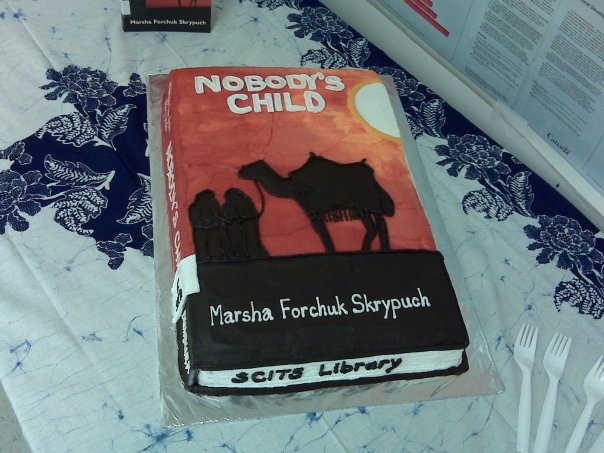
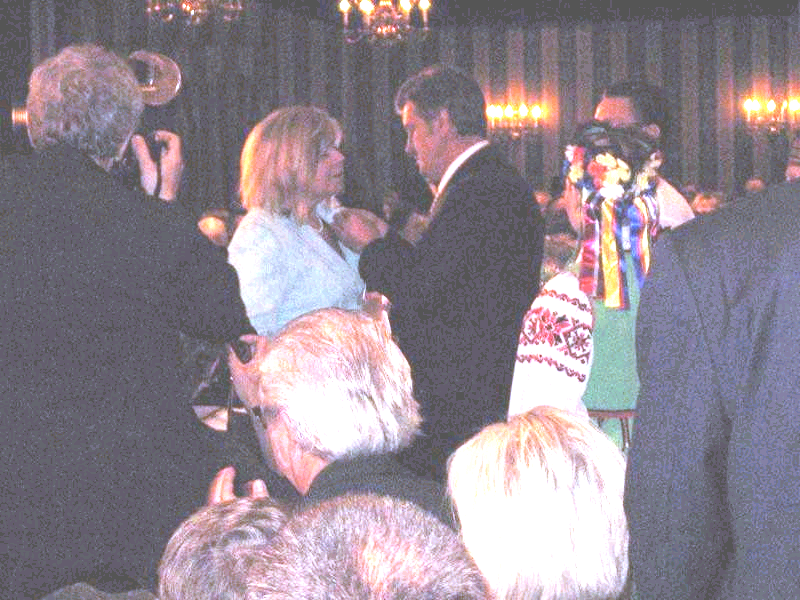
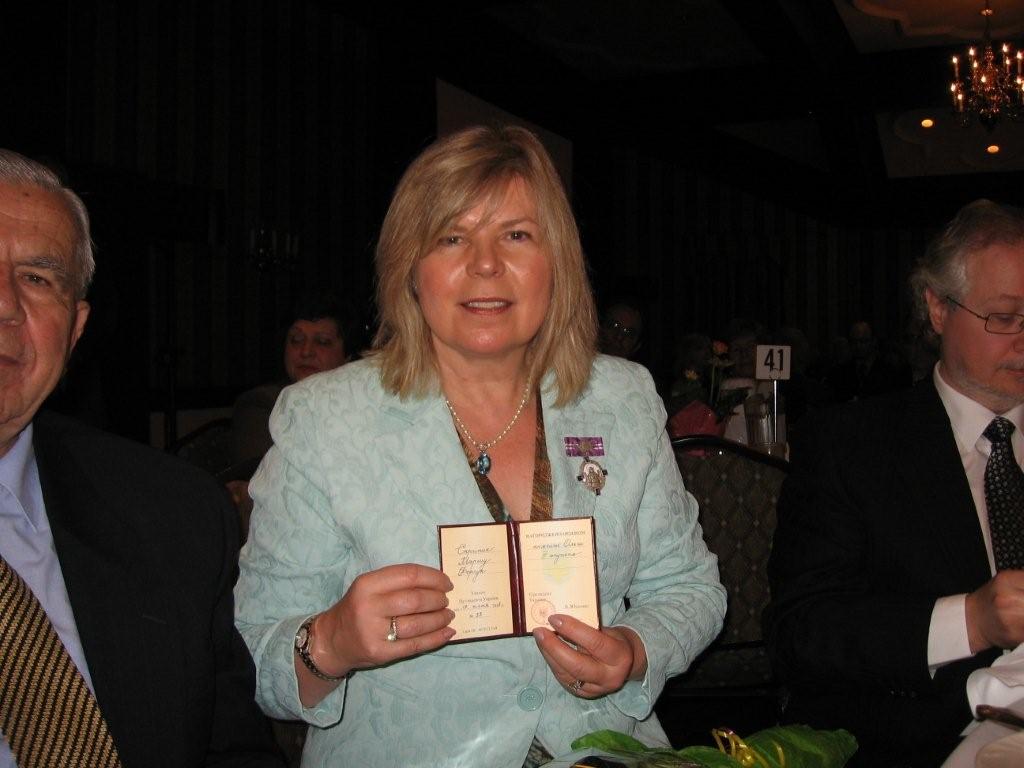
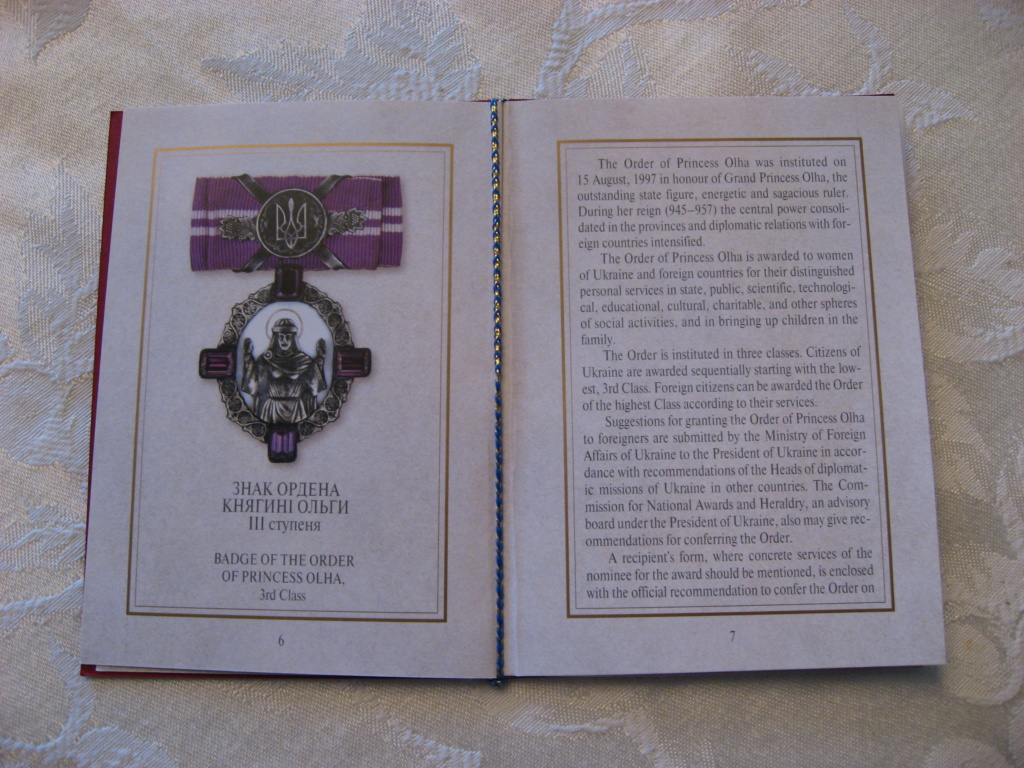
The day before I was bestowed with the Order of Princess Olha, I did a school visit to Sarnia Collegiate Institute and Technical School. Jan Turnbull, the teacher-librarian, was amazing! She had adorned the library walls with images of my books and had printed off a bio of me for each participant of her coffee and book club.

The students were wonderful too. They asked excellent questions and seemed really to enjoy having an author visit.

Jan had lunch brought in for the entire book club and me too. And she brought in this amazing cake! Check it out:

Georgetown Boys play was amazing!

The Georgetown Boys play was last Wednesday. The run in the little theatre was from May 1 to 10, and then they re-jigged the set and performed it at the John Elliot Theatre in Georgetown for a final gala event. I wish I could have seen some of the shows in the little theatre for comparison sake because the stages were different. In the little one, it was theatre in the round, but the main stage is a standard stage.

Each night sold out and the wine and cheese reception on Wednesday was packed. A number of the writers in my online critique group came out and I brought 21 people with me from Brantford in the obese limo. The descendants of the Georgetown Boys were out in force, and there were lots of people from the Toronto, Oakville and Cambridge Armenian communities.

Kate from the Freckled Lion Bookstore was selling all of my Armenian books hand over fist and she wanted me to sit down and sign during the wine and cheese reception. Instead, I got out a pen and told her if people wanted me to sign books, they could come in and ask me, but that I wanted to chat with friends and drink wine. 🙂

In retrospect, I should have listened to Kate. I was surrounded by layers of people with books for autograph in the reception room, and barely had time to find my son and husband, let alone introduce my family to various friends. And I was wearing high heels on a hard floor, holding books and signing. When we finally got home and got to bed, I realized that I had done a number on one of my knees. Kept on waking up all night with stabbing pain. My husband says I’ve pulled a tendon.

But the play itself was amazing! They included archival footage on a screen behind the stage of Armenians being expelled from Turkey in 1923, and of the burning of Smyrna. They had photos of the orphans arriving in Canada and news clips and telegrams all integrated into the narrative of the play. Sam Hancock, who wrote the script and produced the play, kept strictly to my storyline, using my own words. He had developed one additional character to act as a foil and that was interesting to see as well.

One challenge he had was to convey the fact that the boys couldn’t understand anything that was said to them after their teacher went into hiding in Montreal. In the book it’s clear because it’s from Aram’s perspective. The way Sam resolved it was to have the boys speak actual Armenian when they were in the presence of Canadians, but to revert to English when they were speaking among themselves. This meant that the kids who were playing the roles had huge chunks of Armenian to learn! I introduced Sam to an Armenian teacher from Oakville and she taught the kids Armenian.

There was one scene where a character had to speak about a minute’s worth of Armenian. There was a sigh of appreciation from the audience, and then vigorous applause. Apparently, the pronunciation was superb. When the show ended, there was a standing ovation.

When I was writing the Aram books, I happened upon the fact that it was the real Aris Alexanian of Alexanian Carpets who came to the boys’ rescue to act as an intirim interpretor until a replacement for Mr. Chechian could be found. I had contacted the Alexanian sons to see if they would agree to have the character based on their father be called Mr. Alexanian. I sent them my manuscript so they could see for themselves what I was doing. Well, the Alexanian family attended the play in force! Both sons, their children and grandchildren were there and they were all so proud!

At the end of the play, Sam asked if the descendants of the Georgetown Boys in the audience would stand up. There were about 25 of them. It was awesome!!
Redress for WWI Internment of Ukrainians in Canada

My grandfather, George Forchuk (Yurij Feschuk) was imprisoned at Jasper Internment Camp during World War I. He wasn’t interned for doing something wrong. He was interned for being Ukrainian. The conditions at the camp were so brutal that he escaped as bullets whizzed past his ears. He went into hiding, changing his name from Yurij Feschuk to George Forchuk. When the war ended, he went back to his homestead, but it was his no more. It had been given to another family. So penniless and broken, he had to start anew. It took him three decades to recoup his loss.

My grandfather’s heartbreak was just one of many. 80,000 immigrants were branded “enemy aliens” during WWI and had to carry papers and report regularly to the police. 8,000 immigrants were unjustly interned, including women, children and even babies born in Canada.

Today, the Honourable Jason Kenney, Secretary of State (Multiculturalism and Canadian Identity) signed an agreement with the Ukrainian Canadian community for a 10 million dollar endowment to the Shevchenko Foundation. This endowment will be made available in perpetuity to support educational and research projects about WWI internment.

Kudos to UCCLA, UCC and the Shevchenko Foundation for their dogged negotiations.

Huge thanks to Inky Mark, whose independent member’s bill C-331, got the whole thing rolling.

Congratulations to Prime Minister Harper, Jason Kenney, and the Conservative government for doing the right thing.