Creating realistic characters

Do a brainstorming exercise. Get a piece of paper and write down the
names of the two key players.

Ask yourself such things as:

What does this person love? Want? Need?

What bad habit does this person have?

What secret?

What shame?

Something that would make others hate them

Write all of this down on your bit of paper.

Now go to a fast food restaurant and get an application form (or two).
Try to fill the application out as if you were one of those characters.
You’ll be surprised at what they tell you.

Now think of the relationship between your two key characters. Think of
each of their wants/needs/loves. How do they interact? If one character
achieves a want/need/love, does that mean the other character loses the
same? That is a story.

Now set that all aside and write a simple scene with one of these
characters. Don’t try to do too much with it. Show the character
involved in a daily task. Give the character the opportunity to reflect
on things and react to things. It is what happens inside that most
counts, not the outer journalistic stuff. Readers want to step inside a
character’s head and live that person’s life for awhile. Your job is to
enable that.

Once you’ve written that scene, ask yourself “and then what happens?”
Write that. When you write yourself into a corner, try stepping into the
head of your other key character. Repeat.

Writing historical fiction

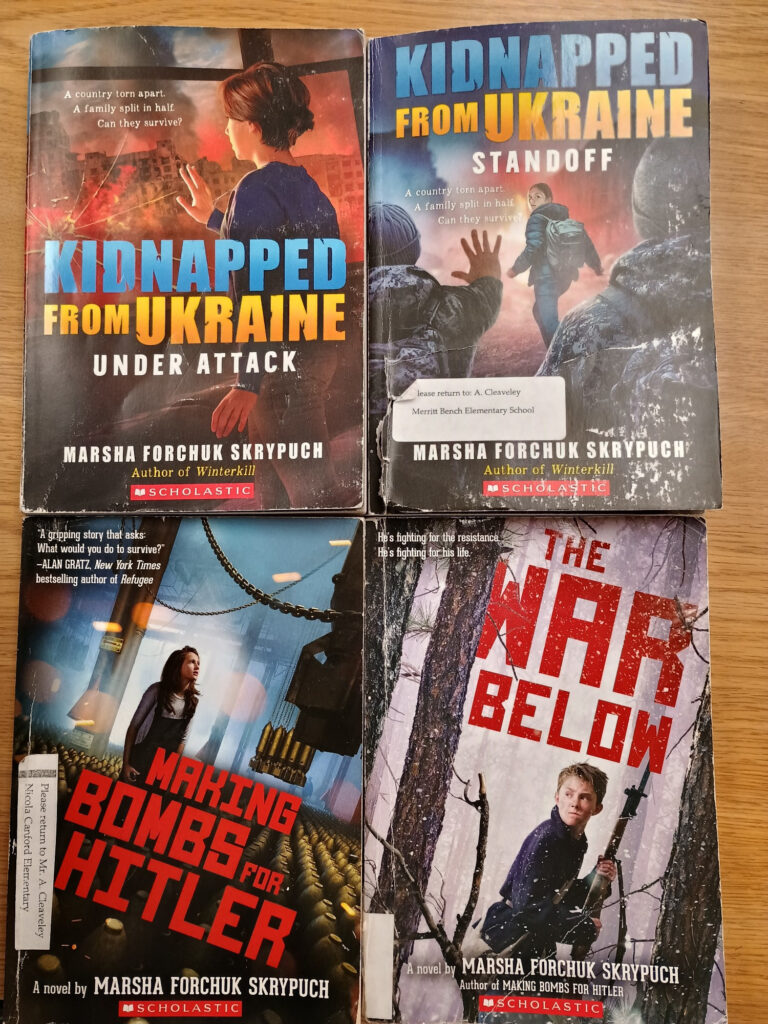
I finished the first draft of Making Bombs For Hitler in February and I’ve gone through two substantive edits since then. It is scheduled to be published by Scholastic in 2012. That first draft took four intense months. The edits were easier, thanks to SB, my fabulous editor!

Many people are daunted at the prospect of writing historical fiction. Here are some suggestions on how to begin:

Do preliminary research of the era you want to write about and try to imagine yourself living in that time. Non-fiction children’s books are a great preliminary research tool. Also encyclopedias and textbooks. At this stage you just want to gather enough background to get the general lay of the land.

In order to come up with a premise for a novel, ask yourself: What would happen if…

Think in terms of a dilemma for a person in your historical era.

As an example, for my 2008 Armenian genocide novel Daughter of War, the question was: If you were pregnant by rape but survived a genocide, would you want your fiance to find you?

If you can’t boil your novel idea down into a question like that, it’s too unwieldy a concept.

Do an outline. I hate outlines, but it is amazing what you can pre-organize by doing a one or two page point form plotting of your entire novel.

Try writing a sample chapter or two. This will help you narrow down the point of view, as well as voice and tone.

After you’ve done the outline and initial chapters, do more research.

Do read memoirs, diaries, newspaper articles, recordings, interviews, maps, city directories of your era. Look at photographs. If people are still alive, talk to them.

Do not read novels set during your era. If you do that, you may unconsciously pick up inaccurate bits, or you could unwittingly copy the author’s style or turns of phrase.

Try to get opposing points of view of the same situation. As an example, when I was researching Daughter of War, I consulted both Armenian and Turkish memoirs, as well as those of missionaries and medical personnel of the time. Inter-library loan and abebooks.com are great resources for this sort of item.

Over-researching is great procrastination technique. Not only do you waste time, but you’ll also be tempted to use everything you learn, which makes for a very boring novel.

I like to do commando research — ie — only as much as I’ll need for the next 20 pages or so. When I dry out, I do more research.

Now start writing!

Think in terms of scenes. You don’t have to write the story in order. I like to start with the scene that is most vivid in my imagination. As I write each scene, I decide whether it comes before or after that first one. As the writing continues, the story develops like raindrops forming a puddle. Don’t worry about sticking to your outline. Let your characters take you to new places.

Goal one is to get the first draft finished.

Set yourself a schedule. It might be to write one new page a day, or maybe to write just one new paragraph a day. I like to write one scene a day. Butt in chair (or feet under tread desk) and get those words out. Don’t get up (or get off) til your goal is achieved.

Don’t give in to excuses. The most lame one is that you’re too busy to write. Writing can be done in a steno pad while waiting in line at the grocery store or watching your kids play baseball, or on the subway. My favourite writing place is at an airport.

Do not keep going back to page one in an attempt to make it perfect. That is just a procrastination technique. First drafts aren’t supposed to be perfect.

Once you finish your first draft reward yourself!

It is a huge achievement to be able to write The End. Go to the movies, Eat chocolate. Drink wine.

Let that first draft cool off for a couple of days before looking at it again. Once you’ve given your brain a chance to clear, print your draft and read it aloud, carefully, a few pages at a time. You will be amazed at what you can catch when you speak your words and read them on paper instead of the screen.

There are many more steps to revision, but that’s another post.

How do you get your ideas?

A reader emailed me today with a question that all writers get asked all the time, but this reader was so polite and thoughtful by the way he asked, that I’m sharing both Q and the A:

Q:

Dear Marsha,

I really enjoy your books. I’m currently reading “The War Below,” and I really admire your writing. You make your work come alive, and I can visualize every little bit in my head.

I have considered writing a novel of my own, and I’ve decided I am going to do it. But there is one problem, and that is that I cannot think of an idea.

Did you ever experience writer’s block? If you did, I was wondering how you thought of ideas. I would really love your help.

Thank you very much, and I love your work.

A:

Dear __,

A really good way of getting ideas is by talking to people about their lives. I asked a lot of questions of all of my grandparents, my parents and my husband’s parents. That kickstarted a lot of my stories. I also ask a lot of questions when I meet someone new. I want to know what it would be like to be them. To be a writer, you need to be able to step into another person’s (actually, many different people’s) shoes and figure out what it would be like to be them on a day to day basis.

You generally can’t just start asking a total stranger to tell you everything about them, but you’ll be amazed by what you learn by asking open ended questions and just listening. People who have lived through war or trauma often have a world of story bottled up inside but you can’t just come out and ask them. I like to get around it sideways. For example, if I’m talking to someone much older than myself or from a different cultural background, I ask them something about their past that will evoke a comfortable memory, like the first day of school, or a memorable celebration. Their anecdotes about that can give you ideas for other questions.

That’s not all there is to writing a book, but that’s a way to get some ideas. You may have noticed that a lot of writers are not big talkers, and that’s because they’re asking questions and listening.

I have other tips for writing on my website here:

Three bad writing habits

There are lots of bad habits that can mess up a manuscript, but here are three that often show up in early drafts.

ONE: Exclamation marks

Don’t use them. 

You can always go back and sprinkle some in later but try to get away with as few as possible. They are a crutch and each time you use one their effect is diminished. Avoiding them will force you to be a better word-selector.

TWO: Fancy and extended dialogue tags


Don’t laden your dialogue tags with description, (ie she said angrily as she took a sip of her hot cider). The words you put in your character’s mouth should imply the power of their wants/needs/loves/hates and the dialogue itself is implicit action, or SHOWING, whereas dumping info into the dialogue tag is by definition TELLING — and should be avoided. 

A quick way of cleaning up about 60% of this is to do a global search on “ily” because you’ll find a lot of the adverbs that way and adverbs are all about telling. Trust your power of good dialogue and avoid the temptation of second-guessing yourself by adding into the dialogue tag what you already make clear with your choice of words and tone in what your characters say. Less is more.

THREE: Dialogue instead of scenes


Do you have pages of solid dialogue? This is a red flag for action that happened in the past. If you find sections of your story that are almost entirely dialogue, check it to see if you’re using dialogue as a scene avoidance technique. While conversation is nominally action, over dependence on dialogue is a way to unconsciously avoid writing a scene. 

Every paragraph in a story should include at least one powerful action event. Don’t waste action potential on a scene with two heads yakking at each other after the fact. Plunge your scene in the middle of the action, and then chase your characters, keyboard in hand. Your readers will thank you for that.

An aspiring writer asks ….

Hey Marsha! I’ve contacted you before about a book, and decided to write a new one about XXX, this is what I have for now:

 Chapter 1 (page or two of story ….)

My response:

Dear xxx,

First, congratulations on plunging into a story! So many people say they want to write but never get around to actually doing it. But I cannot read your story. If I read every story readers sent me, I wouldn’t have time to write. Years ago, as a solution to wanting to help aspiring writers but not having the time to do it, I created a private online critique group for writers.

You would be welcome to join it once you write the first draft of an entire chapter book and you are age 16 or over (I’d want an email from a parent to confirm permission). The critique group is free, but in order to stay in it, you give other participants feedback on their work in exchange for feedback on yours. 

So, in the meantime, happy writing. I look forward to hearing from you in the future.

all the best

Marsha

A young reader asks how to get published: my answer

Dear xxx,

Congratulations on being such an avid reader and writer. That’s wonderful! As to the process of having a book published, it is a long and complicated thing. If you google how to get a book published you will encounter all sorts of scammers who just want to steal your money with the end result that your book might get printed, but that’s not the same as getting published. The difference is this: anyone can write a story and get the story printed and bound into book form, but the only people who would ever read that are the people you give it to. When a book is published, the writer crafts a unique story with wide appeal that a publisher (which is a category of business) buys and the publisher has the author work with editors to make the story even better. That part of the process alone can take several months. The publisher also works with marketing people and designers etc etc, and then gets a printing company to do the actual manufacturing of the book. The publisher also sends out advance review copies of the book to reviewers across the country. They read the book and then give it a rating and they write a review of it and those reviews get published in various places and readers read those reviews and it makes them decide whether they want to buy the book or not. The author doesn’t pay for any of that to happen and they’re really not involved in the business end of it. The author gets paid. How much? On a $10 book, an author would be paid $1. So the way to have an income as an author is to write a book that a ton of people will buy. Publishers are very picky about the books they publish because it’s such a complicated and expensive process for them. In fact, a publisher might get thousands of people sending them book manuscripts in a year and they only publish one out of maybe 10,000.

To put it another way, what if you were interested in being a veterinarian? No matter how gifted you were in science, you still wouldn’t do surgery on a dog, right? You still need all the training. It’s the same thing for being an author. There are lots of people who are talented in writing, but they still need the training.

My advice to you is to take your time and learn about the craft of writing now, rather than trying to get published right off the bat. A good way to prepare yourself to be an author is to read widely, which I know you’re already doing. Set yourself a goal of reading 1000 books in the same genre as what you’d like to write. I know that sounds daunting, but reading widely is the way to expose yourself to all sorts of story techniques and give yourself ideas of what may work for you. It’s a pathway for you to develop your own unique writing voice. People who haven’t read widely risk sounding like the last author they read.

The other thing to do is to write every day, which I suspect you’re also already doing. Keep up the good work! Just like a marathon runner trains for a race by running, an aspiring author trains by writing.

If you get your whole book written, the next thing to do is join a critique group where others who are writing books give you feedback on your story and that helps improve it. Writers need to be humble and to realize that they can always improve. It’s a hard profession.

I knew I wanted to be a writer since I was in 4th grade and I wrote my first novel in 8th grade but my first book wasn’t published until I was 42 years old. I did have other stuff published before that though. For example, I was the editor for the school yearbook in 8th grade and wrote for the high school newspaper and was a freelance writer for newspapers and magazines before writing books. I also went to college and did a bachelor’s degree in English Literature and a master’s degree of Library Science. When publishers look at manuscript submissions, they also look at the writer’s background. They are more likely to be interested in a story written by someone who has been published before and who takes their writing so seriously that they study in college to improve themselves, so taking these steps at the beginning can lead to long time success.

Good wishes with it all and big hugs to you

Marsha

Overwriting

I run a private online crit group where participants “pay” by giving critiques in order to get them from other participants. Recently, one participant posted this question after my feedback on her work-in-progress

Question: I’m not sure if I totally understand something you advised me on. You said, “No second stage directions in one sentence.”
an example of this is when I wrote a triple stage direction:
“Maria crossed herself, picked up her spoon and said
X”

Why, Marsha is 2 or 3 stage directions not to be done? Is it because it is “over-writing?” I looked that term up and I think that is why you advised this. And yet, in novels it seems common to do multiple stage directions. For example:
“Laila kneeled before her mother and took her hand.”
“He coughed, cleared his throat.”
“He hunkered down, pulled her to him, and held her for a long time.

Answer: It’s overwriting when the actions aren’t necessary to move the scene forward.

The examples you posted from published books are not equivalent to the example from your own work. Maria crossing herself, picking up a spoon and saying something are not three significant actions. One of those actions will move the story forward with fewer words and in a less distracting way.

In this example:
“Laila kneeled before her mother and took her hand.”

Both of Laila’s actions are separate and significant. If you took one of them out, the meaning would change. The writer has used an economy of words and action to progress the story. It’s a beautifully pared down sentence that’s infused with action and emotion.

An overwritten version of the above would be:
Laila smoothed the wrinkles out of her skirt, then looked into her mother’s blue eyes. She knelt down onto the small embroidered cushion at her mother’s feet, then reached out and took her mother’s hand.

In this example:
“He hunkered down, pulled her to him, and held her for a long time.”

Again, the actions are quite separate and vivid with an economy of words. You couldn’t remove any of the actions and have the same progression of story. And again, this is a beautiful sentence, infused with meaningful action. Actually three significant actions, vividly shown, in just 14 words.

For more writing tips, go here.

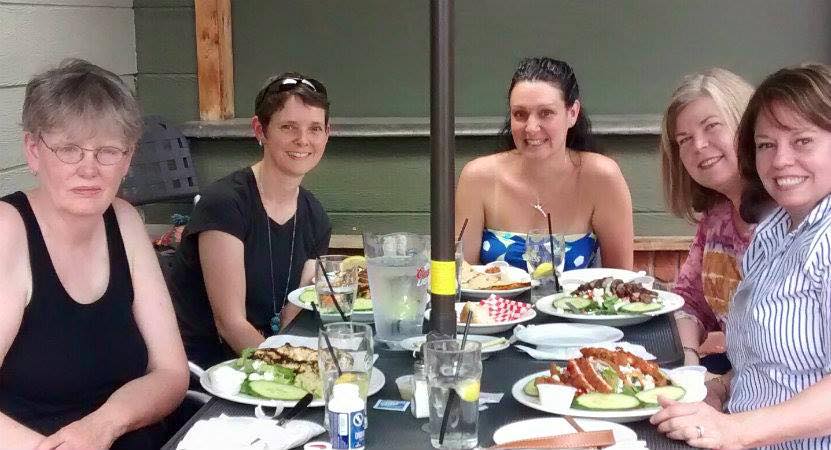
some former kidcrit particpants

Dealing with Writer’s Block

Regarding your question about writer’s block, don’t worry what you write when you start out because by the end of the writing process, it will be changed a lot. The goal at first is to write what authors call the terrible first draft. You can’t write anything good until you write something terrible. So blat out what’s in your head at first and don’t worry that it sounds terrible. My first drafts are terrible too!

I force myself to sit at my laptop for a set period of time each day with just Word open and all other apps closed. I write for that time and stop when the time is over. The next day, during my writing time, the first thing I do is read over what I wrote the day before and do some revisions, then I write some more. The next day, I do the same — so revising and writing forward during each writing session.

When I begin a novel, my writing periods are 3 hours yet sometimes I only manage to write 200 words. Sometimes when I revise, I end up with fewer words than when I started — that’s okay, it’s part of the process. After I get about one third of my manuscript written in first draft, I’m off and running and can write one or two thousand words during those three hours. Towards the end of the manuscript, the three hours goes out the window. Sometimes I write all day and into the evening without noticing the time flying by because the story is writing itself.

Hope this helps!

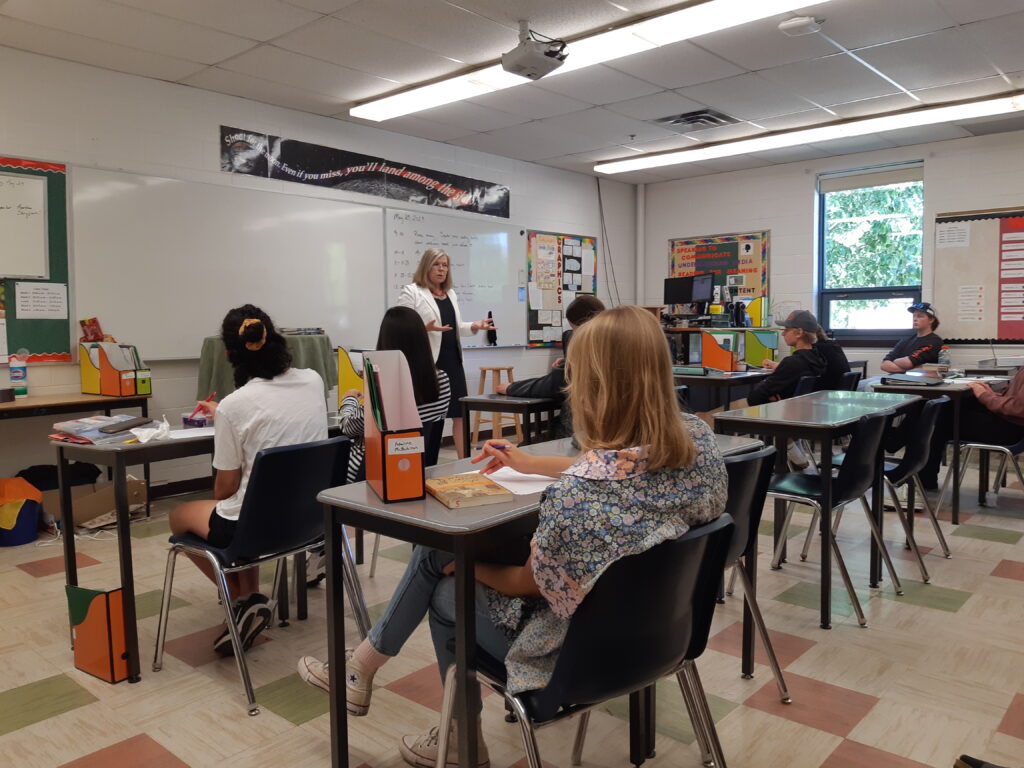
Tips on getting author visits, doing them, and getting paid!

These are notes from my talk for the SCBWI Canada East The Art of Story 2017 conference in Montreal:

Author visits are an excellent way to augment income, but how can you carve your own niche in this competitive market?

Once you get a yes, what happens then? And how do you create the content of the visit itself?

Is there a way to transform a single request into more?

How do you become a dream visiting author?

What is an author visit?

Venues for these?

Who books?

And now the meat:

How do you contact these people?

don’t look needy.

Start small, start local – clubs, organizations, TL, literacy

Figure out how your books solve their problems.

Transforming from a non-presenter to a presenter:

  • do a book launch
  • DONATE a presentation
  • Raise money for a cause
  • Book store presentation that’s offered to your target market.

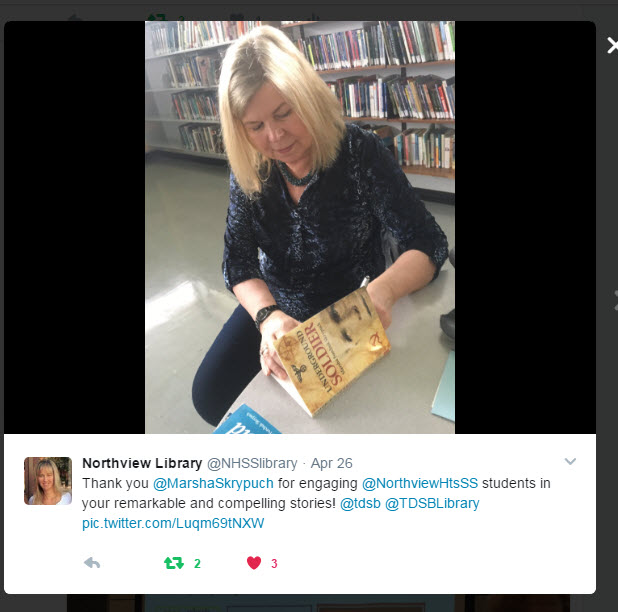
Take pictures of the above and blast it around social media

During the above gigs, make sure people take pictures of you presenting. These pictures should go up on your website, get tweeted, blogged and facebooked around.

There is an added bonus to doing the above – you will intuitively and organically find out what it is that you should be talking about in your presentations and for each of us it’s something different.

Now, join the Writers’ Union. They offer subsidies for readings and they also have a listing of authors who do presentations. This makes you look professional.

Once you’ve done the above for awhile, you’ll notice requests coming to you. But be patient. It can take months or years. You need a critical mass of books, and you need people buzzing about you.

And now comes the trickiest part. The request for a FREE visit.

Everyone will want a freebie. All librarians and teachers will tell you that there is no budget, that they’d love to pay you but they cannot afford it. Don’t fall for it and don’t give them a freebie. If you do this, you will not get paid visits. If you’ve joined the Writers’ Union, you have an excuse. You can tell them that your union strictly forbids you doing free presentations. You can compare it to their profession. They wouldn’t teach for free no matter how much they’d love to, right?

It’s better to turn down a gig than to do it for free. They get what they pay for. If you do a freebie, they won’t prepare the same and they will not value you. Worse, word will get around that you do freebies. Freebies are the kiss of death for an author.

Confirming a paid visit:

Once you’ve settled on a date and time and you’ve talked about the pricing, send an invoice by email in a pdf attachment with the due date as the date of the presentation. You should be handed the cheque as you’re leaving the school. If you’re a Writers’ Union member, do send them a link to the subsidy and urge them to quickly apply. You can invoice them two ways – one subsidized, the other unsubsized – then tell them to ignore the one that doesn’t apply.

About a week before the presentation, email again to make sure that everything is on track.

More information about the content of your presentation:

Your presentation is basically about filling their needs with your niche topics.

  • your presentation is NOT about selling books or talking about how great you are.
  • You are presenting HOPE.
  • No matter what the topic or who you are, it’s about inspiring the audience, not bragging about you.
  • Many people have always wanted to write a book, or find out something really interesting and there you are, the embodiment of that dream. Your talk should be about your audience – ie – find yourself in them.
  • How? Ask questions. Tell embarrassing stories about yourself, and then relate that to your books.
  • Show your audience that the difference between you and them is overcoming challenges, practice and time and stick-to-itness, not intelligence or privilege.

Your presentation should be flexible, made up of modular parts that can be presented in various orders and sometimes left out altogether. When a teacher or librarian contacts you, you want to know the grade level, the topic they’re interested it, and the size of the audience. Ask if there’s a particular theme that they’d like emphasized and then work it in.

Leave lots of room for white space – questions from the audience.

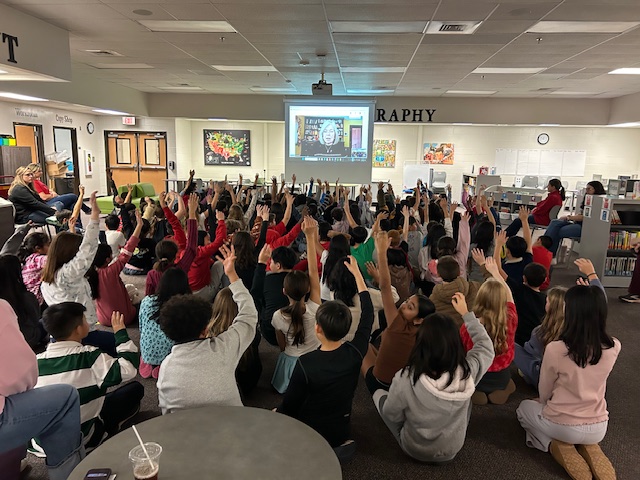
While you can certainly bring media, don’t depend on it. The problem with power point and other devices is you have less of a chance to read your audience because you’re interacting with the hardware instead. Think of your presentation as a conversation with your audience.

One thing I like to do is make an aisle down the middle of the room. That way I can pace and make eye contact. Most importantly, I can get to the kids in the back row who have the spitballs.

Limit readings. During an author visit you don’t HAVE to read from one of your books. You can story-tell about them instead. If you do read, choose a very short punchy passage. Don’t read again unless the audience begs you to.

When you do a visit, you cannot watch the clock, so ask a teacher to watch the time for you and let you know when you have 5 minutes left. Those last five minutes are perfect for Q&A.

How do you deal with stonewall silence? This will happen from time to time. One sure way to get people to talk is to ask questions. An example, who here likes writing? Then give some quick and amusing writing tips. Another one: ask your audience how long it takes THEM to edit a story they’ve written. Then tell them your process. The teachers will love you for this.

Be prepared for the unexpected, like presenting WWII to babies, or having a leak in the ceiling and water pouring down upon you as you present. Having a student throw a chair at another student or fart loudly as you’re reading a moving scene. Don’t ever get angry. Usually, just pausing and pleasantly waiting for the teacher to handle it is all that’s required.

Is there a way to transform a single request into more?

Your pricing should encourage the kinds of bookings you want. For example, if all you want is a single booking a day, then just offer that on your Author Visit page. If you love doing full days but hate all the travel for a single visit, price a single visit on the high side and a full day economically. If you’re booked for just one or two sessions, ask the teacher if she’d like to share with a neighbouring school and offer her a discount or perk for doing so.

At the end of your visit, ask the TL to spread the word about you to her colleagues.

If you’re just starting out, a single session should be about $200.

The bulk of Canadian visits take place in the GTA. Sad but true. This is also where the bulk of authors live. If you want to break into this market, consider incorporating your travel costs into the cost of the visit. For example, it’s more attractive to offer a full day for $1000 than a full day for $800 plus travel. Or charge a flat fee for gas rather than per km.

Another way is to get a grant from some organization that will offset visit costs. For example, one writer got a grant from Greyhound and that paid for her travel. I’ve got a grant from Internment Canada for specific topic presentations. There are tons of foundations and organizations that would love to have spokespeople for their issues and if you’ve written a book about it, you already know your own organizations. I only offer my grant to venues that have already booked me for a part day of presentations.

How do you become a dream visiting author?

A dream author is one who can cover an entire elementary school in the course of a single day for approximately $1000 + travel and HST if applicable. Schools have a mandate to bring programming to all students. How can you cover an entire school? For JK to grade 2, offer two 30 minute half sessions for the price of a full session. You need to have material that’s geared to all grades and I don’t mean talking about your YA to the grade 4s. The dream visiting author has published a vast array of books and so can entertain any grade level. If you’ve got a bit of a gap in your array, offer a lunchtime writing workshop or a meet-the-author informal Q&A over lunch with select avid student writers.

If you can’t cover a whole school in a single day, figure out what you can offer what others can’t. It’s all about finding that niche.

A dream author arrives on time.

A dream author emails an invoice at least two weeks in advance.

A dream author advises the teacher or librarian of any grants or subsidies available.

A dream author finds out which door to enter and where to park ahead of time, or if taking public transit, figures it all out ahead of time.

A dream author always brings something as a gift.

This can be bookmarks,

a book for the library,

links to free downloadable teacher guides,

a cup of coffee for the librarian,

a 15 minute drop-in to JKs

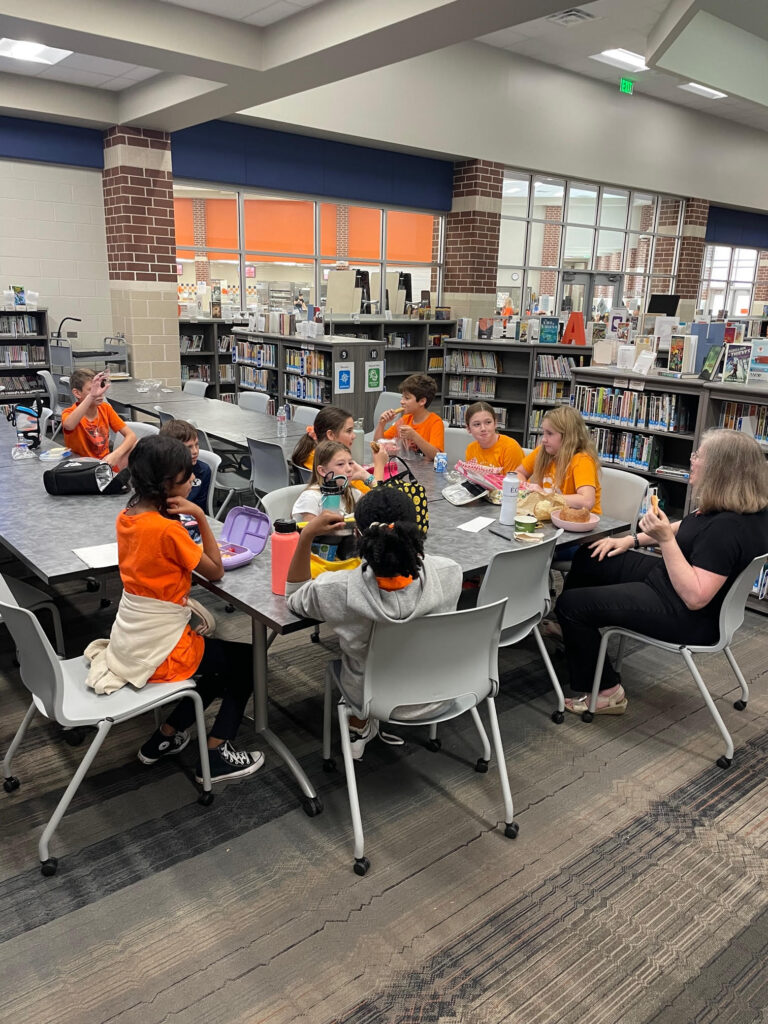
or sticking around for an extra ten minutes at the end to sign library copies of your books

or to graciously meet with that parent who is an aspiring author.

Illustrators can do a demo and then donate the artwork to the venue

A dream author is flexible and can change a presentation at a moment’s notice when the audience suddenly changes.

A dream author has a recent book, and likely has a number of books out.

Brand new authors are less likely to get bookings unless there’s something very buzzy about them

Do awards help? Yes and no

Age and sex matters — unfortunate but true. So try to be tall, young and male.
Historical Fiction First Drafts


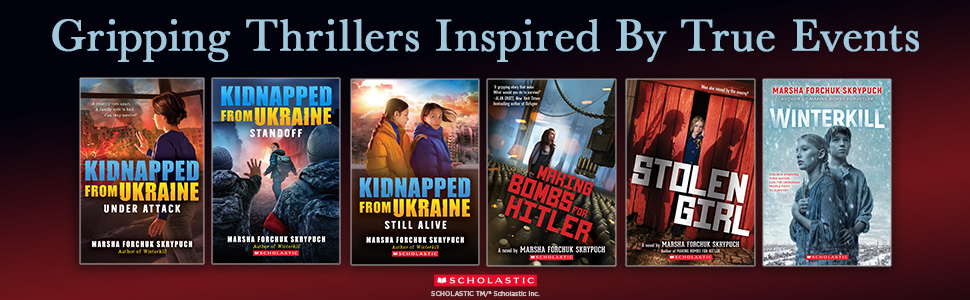
Just last week I finished the companion novel to my 2010 juvenile historical, Stolen Child. It is called Making Bombs For Hitler and is scheduled to be published by Scholastic in 2012. Writing it took four intense months.

Steps:

Do preliminary research of the era you want to write about and try to imagine yourself living in that time. Non-fiction children’s books are a great preliminary research tool. Also encyclopedias and textbooks. At this stage you just want to gather enough background to get the general lay of the land.

In order to come up with a premise for a novel, ask yourself: What would happen if…

Think in terms of a dilemma for a person in your historical era.

As an example, for my 2008 Armenian genocide novel Daughter of War, the question was: If you were pregnant by rape but survived a genocide, would you want your fiance to find you?

If you can’t boil your novel idea down into a question like that, it’s too unwieldy a concept.

Do an outline. I hate outlines, but it is amazing what you can pre-organize by doing a one or two page point form plotting of your entire novel.

Try writing a sample chapter or two. This will help you narrow down the point of view, as well as voice and tone.

After you’ve done the outline and initial chapters, do more research.

Do read memoirs, diaries, newspaper articles, recordings, interviews, maps, city directories of your era. Look at photographs. If people are still alive, talk to them.

Do not read novels set during your era. If you do that, you may unconsciously pick up inaccurate bits, or you could unwittingly copy the author’s style or turns of phrase.

Try to get opposing points of view of the same situation. As an example, when I was researching Daughter of War, I consulted both Armenian and Turkish memoirs, as well as those of missionaries and medical personnel of the time. Inter-library loan and abebooks.com are great resources for this sort of item.

Over-researching is great procrastination technique. Not only do you waste time, but you’ll also be tempted to use everything you learn, which makes for a very boring novel.

I like to do commando research — ie — only as much as I’ll need for the next 20 pages or so. When I dry out, I do more.

Now start writing!

Think in terms of scenes. You don’t have to write the story in order. I like to start with the scene that is most vivid in my imagination. As I write each scene, I decide whether it comes before or after that first one. As the writing continues, the story develops like raindrops forming a puddle. Don’t worry about sticking to your outline. Let your characters take you to new places.

Goal one is to get the first draft finished.

Set yourself a schedule. It might be to write one new page a day, or maybe to write just one new paragraph a day. I like to write one scene a day. Butt in chair (or feet under tread desk) and get those words out. Don’t get up (or get off) til your goal is achieved.

Don’t give in to excuses. The most lame one is that you’re too busy to write. Writing can be done in a steno pad while waiting in line at the grocery store or watching your kids play baseball, or on the subway. My favourite writing place is at an airport.

Do not keep going back to page one in an attempt to make it perfect. That is just a procrastination technique. First drafts aren’t supposed to be perfect.

Once you finish your first draft reward yourself!

It is a huge achievement to be able to write The End. Go to the movies, Eat chocolate. Drink wine.

Let that first draft cool off for a couple of days before looking at it again. Once you’ve given your brain a chance to clear, print your draft and read it aloud, carefully, a few pages at a time. You will be amazed at what you can catch when you speak your words and read them on paper instead of the screen.

There are many more steps to revision, but that’s another post.