
Thanks, Renata, for this wide-ranging interview about Trapped in Hitler’s Web, and why I write what I write.
writes about war from a young person's view #bannedbyrussia
Thanks, Renata, for this wide-ranging interview about Trapped in Hitler’s Web, and why I write what I write.
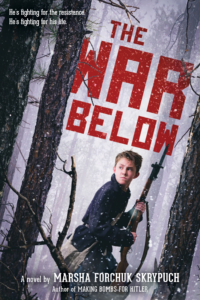


A companion to the award-winning books Stolen Child and Making Bombs for Hitler.
Fourteen-year-old Luka works as an Ostarbeiter in Nazi-occupied Eastern Europe, alongside Lida from Making Bombs for Hitler. Desperate to escape the brutal conditions of the labour camp, he manages to get away by hiding in a truck under a pile of dead bodies.
Once free, Luka joins a group of Ukrainian resistance fighters. Caught between advancing Nazis in the west and Soviet troops in the east, they mount guerilla raids, help POW escapees, and do all they can to make life hard for the Nazis and Soviets. After the war, Luka must decide whether to follow Lida to Canada — or stay in Europe and search for his long-lost mother.
Underground Soldier is a companion book to Stolen Child and Making Bombs for Hitler, and a perfect entry point into the series for new readers, as the books can be read in any order.
Continue reading “The War Below (previously: Underground Soldier)”
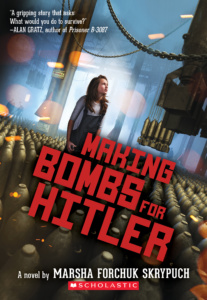
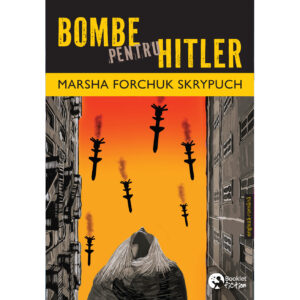
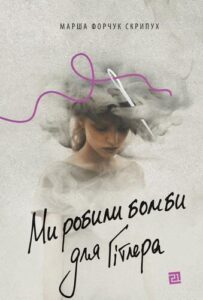
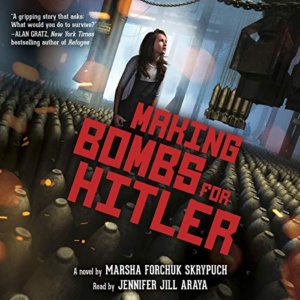
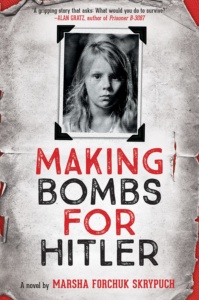
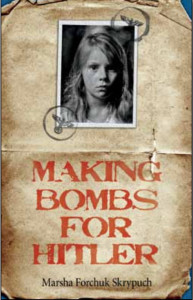
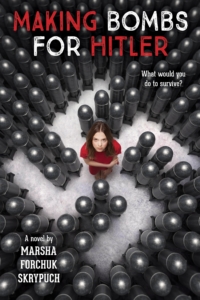
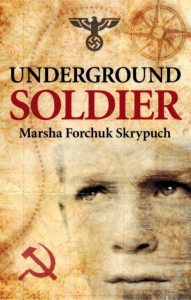
In this companion book to the award-winning Stolen Child, a young girl is forced into slave labour in a munitions factory in Nazi Germany. In Stolen Child, Marsha Forchuk Skrypuch introduced readers to Larissa, a victim of Hitler’s largely unknown Lebensborn program. In this companion novel, readers will learn the fate of Lida, her sister, who was also kidnapped by the Germans and forced into slave labour — an Ostarbeiter.
In addition to her other tasks, Lida’s small hands make her the perfect candidate to handle delicate munitions work, so she is sent to a factory that makes bombs. The gruelling work and conditions leave her severely malnourished and emotionally traumatized, but overriding all of this is her concern and determination to find out what happened to her vulnerable younger sister.
With rumours of the Allies turning the tide in the war, Lida and her friends conspire to sabotage the bombs to help block the Nazis’ war effort. When her work camp is finally liberated, she is able to begin her search to learn the fate of her sister.
In this exceptional novel Marsha Forchuk Skrypuch delivers a powerful story of hope and courage in the face of incredible odds.
Continue reading “Making Bombs for Hitler”
Lida thought she was safe. Her neighbors wearing the yellow star were all taken away, but Lida is not Jewish. She will be fine, won’t she?
But she cannot escape the horrors of World War II.
Lida’s parents are ripped away from her and she is separated from her beloved sister, Larissa. The Nazis take Lida to a brutal work camp, where she and other Ukrainian children are forced into backbreaking labor. Starving and terrified, Lida bonds with her fellow prisoners, but none of them know if they’ll live to see tomorrow.
When Lida and her friends are assigned to make bombs for the German army, Lida cannot stand the thought of helping the enemy. Then she has an idea. What if she sabotaged the bombs… and the Nazis? Can she do so without getting caught?
And if she’s freed, will she ever find her sister again?
This pulse-pounding novel of survival, courage, and hope shows us a lesser-known piece of history — and is sure to keep readers captivated until the last page.
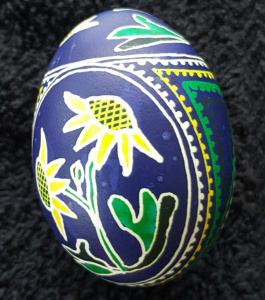
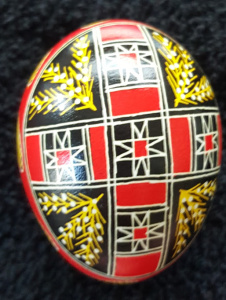
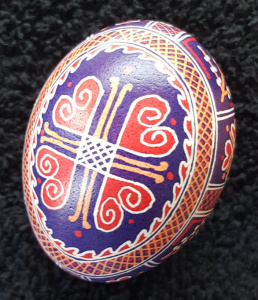
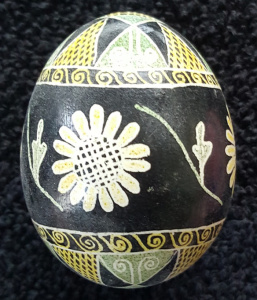
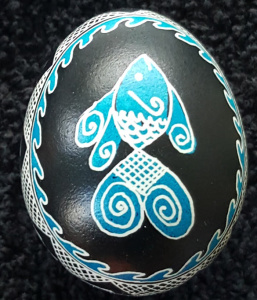
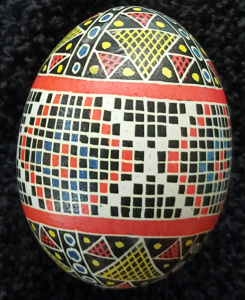
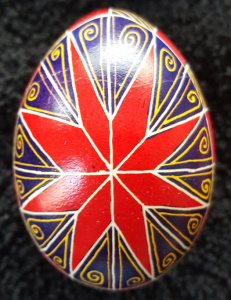
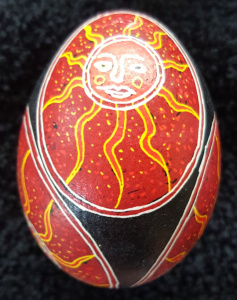
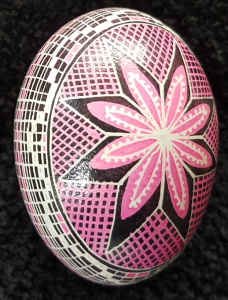
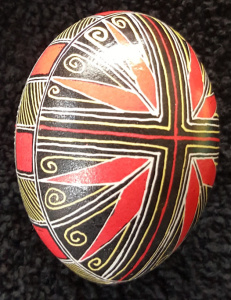
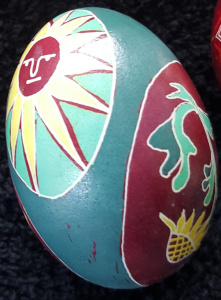
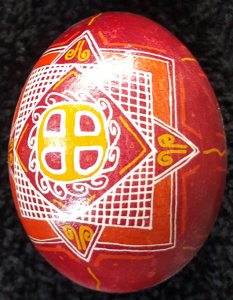
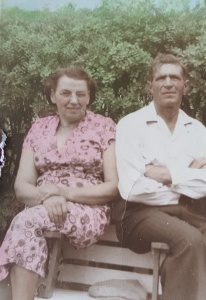
Shared with Toronto’s Great War Attic.
As a child, curious by nature, Marsh Forchuk would often ask his father George why he had left good farm land in southern Alberta to move north to Lake Eliza, a harsh place to establish their family farm. When old friends would come by for a visit, they would suddenly speak in whispers. But years later, after hearing of a news story about Canada’s internment of enemy aliens during the First World War, Marsh began to get his answers.
At the encouragement of the Canadian government, George Forchuk, a Ukrainian farmer from Werechenko, Austria, arrived in 1913 to settle and farm in southern Alberta. When war started he registered as an “enemy alien” and reported regularly as required by the War Measures Act in 1914. Despite this, he was arrested and forced into hard labour, eventually ending up in an internment camp in Jasper Alberta, which opened in February 1916. He laboured through dire conditions and escaped as “bullets whizzed by his ears” that same year. He moved around, hiding and working where he could. In 1918, Forchuk was spotted by police through the window of a restaurant in Calgary.
At the time, people were required to wear face masks in public to prevent the spread of the deadly Spanish flu pandemic. George thought he was being arrested as an escaped internee, but to his relief, he was informed that it was because he had lowered his mask to speak more clearly to the other person at his table. He also found out that the internment camp had closed in August 1916, shortly after he had escaped.
His farm was not returned to him, and so he had no choice but to purchase land where he could. The repercussions of the war continued. By the 1940s, ill health made it impossible for George to farm. Marsh dropped out of school at the age of 12 to take over. Marsh did not want to be a farmer, eventually selling the land his father gave to him, and moving east to make his own way. George Forchuk’s pride in being a staunch Canadian made the shame of his internment all the more difficult to bear. Right up until his death in 1967, he spoke of the injustices suffered for crimes he did not commit.
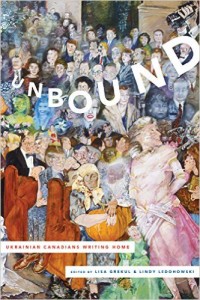
What does it mean to be Ukrainian in contemporary Canada? The Ukrainian Canadian writers in Unbound challenge the conventions of genre – memoir, fiction, poetry, biography, essay – and the boundaries that separate ethnic and authorial identities and fictional and non-fictional narratives. These intersections become the sites of new, thought-provoking and poignant creative writing by some of Canada’s best-known Ukrainian Canadian authors.
To complement the creative writing, editors Lisa Grekul and Lindy Ledohowski offer an overview of the history of Ukrainian settlement in Canada and an extensive bibliography of Ukrainian Canadian literature in English. Unbound is the first such exploration of Ukrainian Canadian literature and a book that should be on the shelves of Canadian literature fans and those interested in the study of ethnic, postcolonial, and diasporic literature.
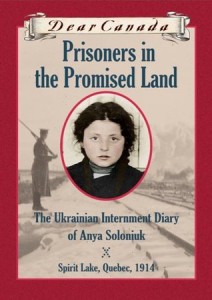
The heart-wrenching story of one girl’s experience at a Ukrainian internment camp in Quebec during World War I.
Anya’s family emigrates from Ukraine hoping for a fresh start and a new life in Canada. Soon after they cram into a tiny apartment in Montreal, WWI is declared. Because their district of Ukraine was annexed by Austria — now at war with the Commonwealth — many Ukrainians in Canada are declared “enemy aliens” and sent to internment camps. Anya and her family are shipped off to the Spirit Lake Internment Camp, in the remote wilderness of northern Quebec. Though conditions are brutal, at least Anya is at a camp that houses entire families together, and even in this barbed-wire world, she is able to make new friends and bring some happiness to the people around her.
Author Marsha Skrypuch, whose own grandfather was interned during WWI at Jasper Internment Camp in Alberta, travelled to Spirit Lake during her research for the book. “When we got to the cemetery, I was overwhelmed with emotion. Imagine seeing a series of crosses, all grown over with brush and abandoned, and knowing that the real person you based a character on had a little sister buried there? That real little girl was Mary Manko. She was only six years old when she and her family were taken from their Montreal home and set to Spirit Lake Internment Camp. Her two-year old sister Carolka died at the camp. Mary Manko is in her nineties now and is the last known survivor of the Ukrainian internment operations.” explains Skrypuch.
Continue reading “Prisoners in the Promised Land”


This story, set during the Famine of the 1930s, tells of a young girl’s attempts to save her village from starvation. Marusia’s ingenuity gives her the opportunity to go on a magical journey to the North American Prairies to find more food for her village. Generosity triumphs over greed in this spirited Ukrainian folktale.
Continue reading “Enough”