Tag: skrypuch
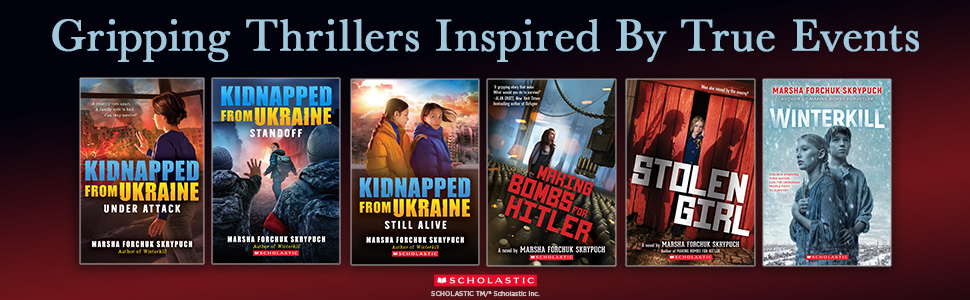
Stolen Girl
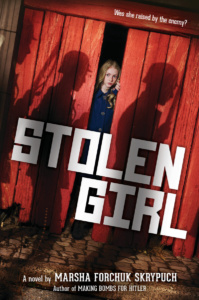

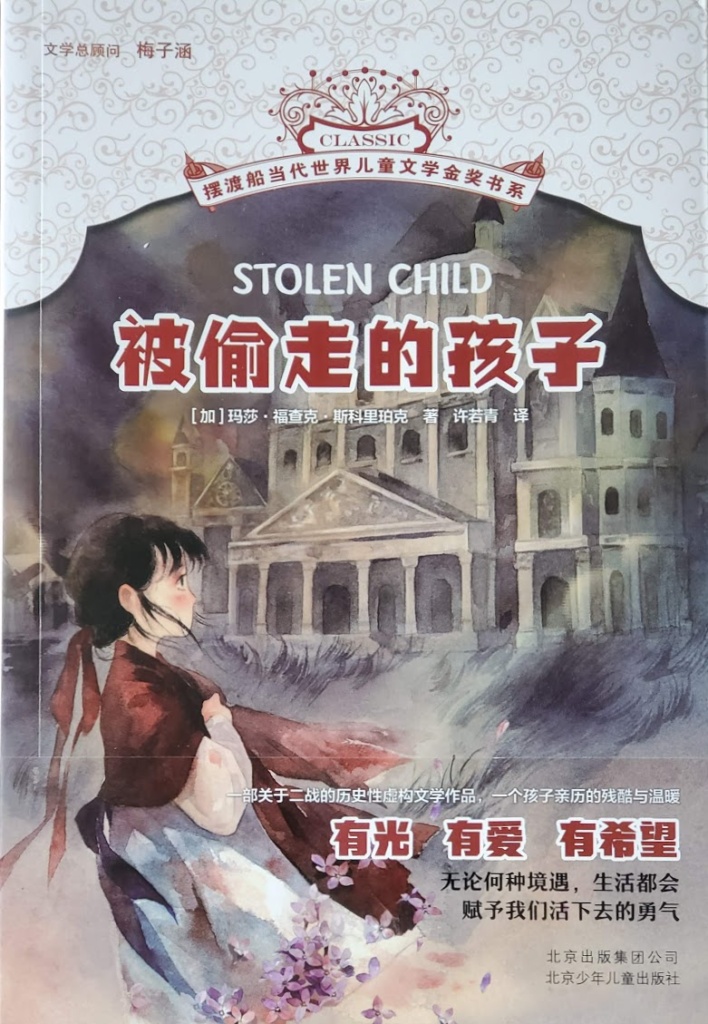
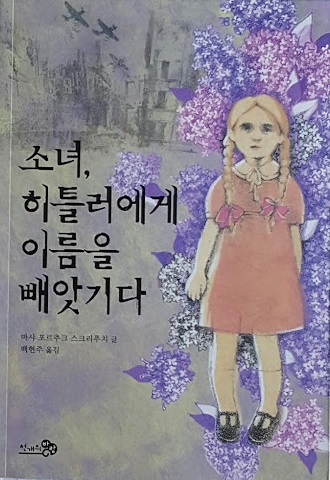
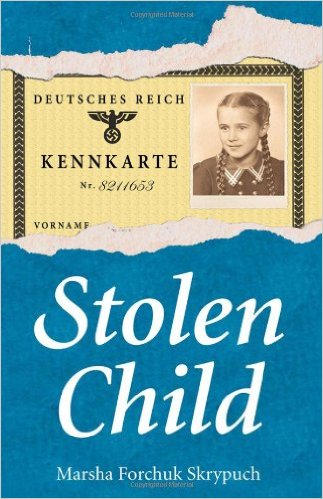
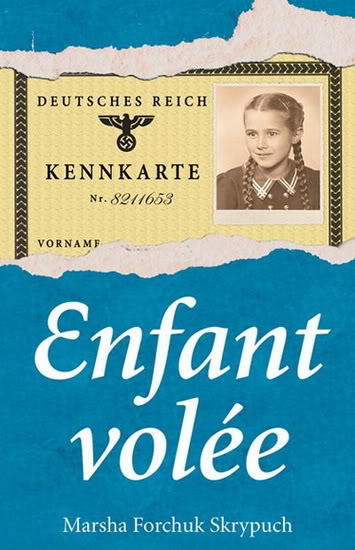
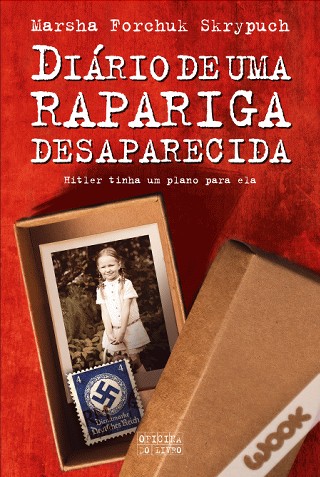
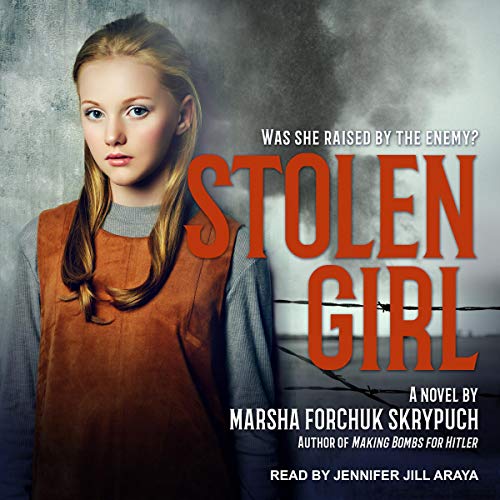
Nadia is haunted by World War II. Her memories of the war are messy, coming back to her in pieces and flashes she can’t control. Though her adoptive mother says they are safe now, Nadia’s flashbacks keep coming.
Sometimes she remembers running, hunger, and isolation. But other times she remembers living with a German family, and attending big rallies where she was praised for her light hair and blue eyes. The puzzle pieces don’t quite fit together, and Nadia is scared by what might be true. Could she have been raised by Nazis? Were they her real family? What part did she play in the war?
What Nadia finally discovers about her own history will shock her. But only when she understands the past can she truly face her future.
Inspired by startling true events, Marsha Forchuk Skrypuch delivers a gripping and poignant story of one girl’s determination to uncover her truth.
Reviews
Kirkus: “The author once again deftly sheds light on lesser-known aspects of the Ukrainian experience during WWII. . . A gripping exploration of war-induced trauma, identity, and transformation.”

Making Bombs for Hitler
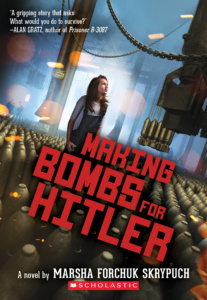
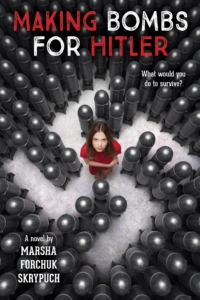
In this companion book to the award-winning Stolen Child, a young girl is forced into slave labour in a munitions factory in Nazi Germany. In Stolen Child, Marsha Forchuk Skrypuch introduced readers to Larissa, a victim of Hitler’s largely unknown Lebensborn program. In this companion novel, readers will learn the fate of Lida, her sister, who was also kidnapped by the Germans and forced into slave labour — an Ostarbeiter.
In addition to her other tasks, Lida’s small hands make her the perfect candidate to handle delicate munitions work, so she is sent to a factory that makes bombs. The gruelling work and conditions leave her severely malnourished and emotionally traumatized, but overriding all of this is her concern and determination to find out what happened to her vulnerable younger sister.
With rumours of the Allies turning the tide in the war, Lida and her friends conspire to sabotage the bombs to help block the Nazis’ war effort. When her work camp is finally liberated, she is able to begin her search to learn the fate of her sister.
In this exceptional novel Marsha Forchuk Skrypuch delivers a powerful story of hope and courage in the face of incredible odds.
Continue reading “Making Bombs for Hitler”
Stolen Girl — excerpt and more reviews
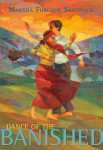
Dance of the Banished
Based on true events, a compelling story of love and hope published on the 100th anniversary of World War I.
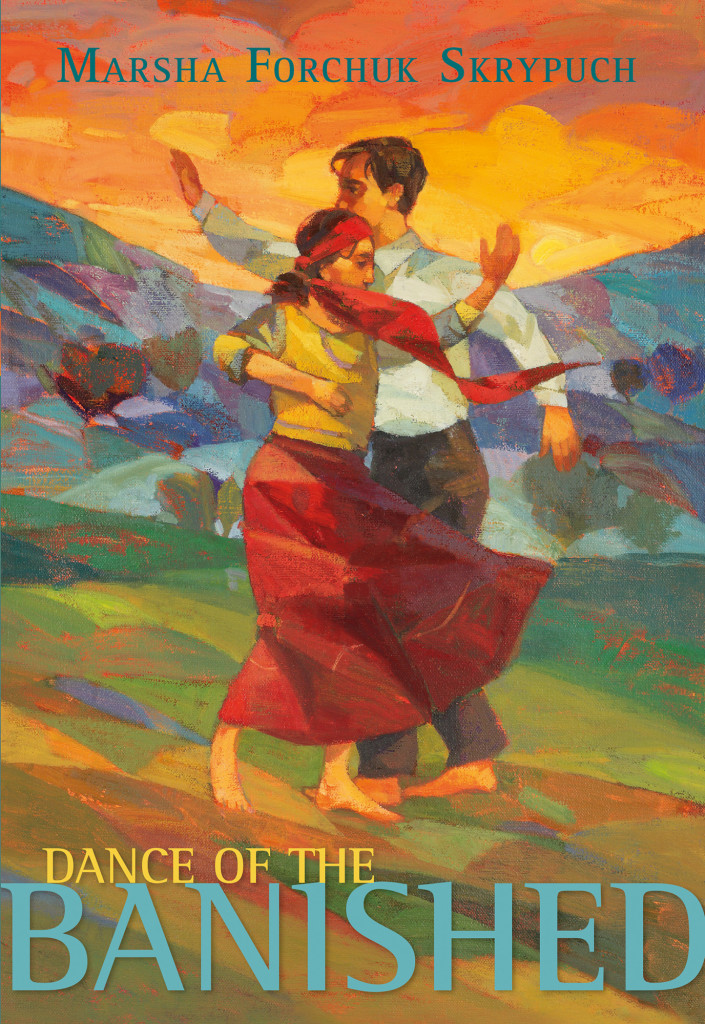
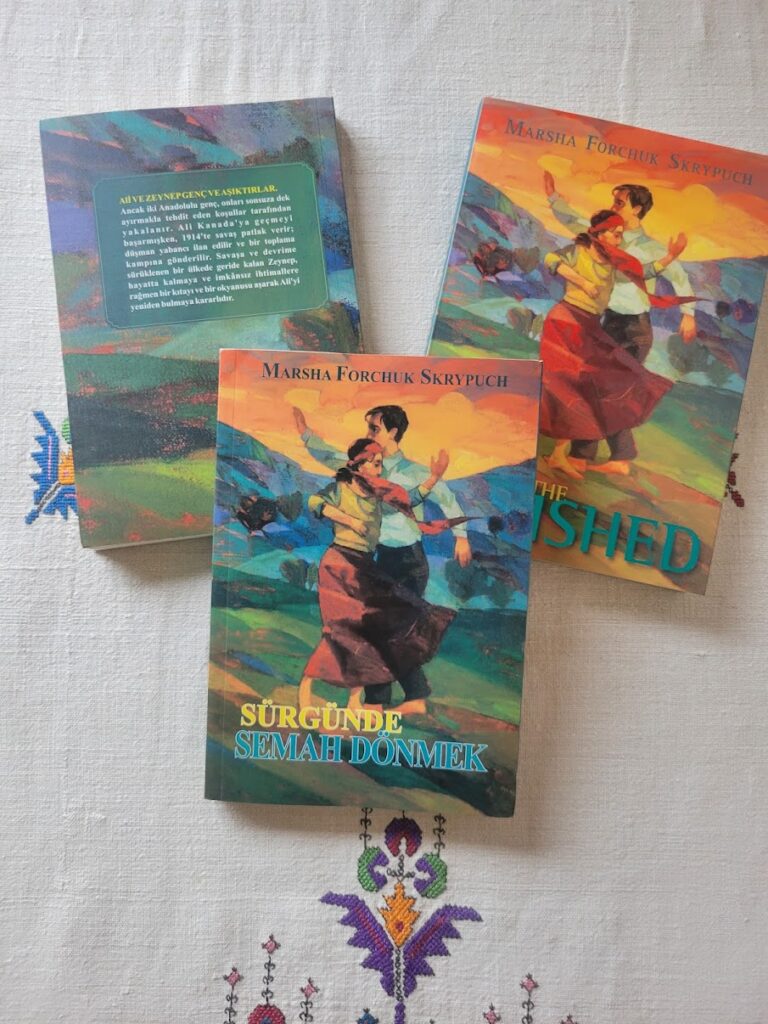
Ali and his fiancée Zeynep dream about leaving their home in Anatolia and building a new life together in Canada. But their homeland is controlled by the Turkish government, which is on the brink of war with Britain and Russia. And although Ali finds passage to Canada to work, he is forced to leave Zeynep behind until he can earn enough to bring her out to join him.
When the First World War breaks out and Canada joins Britain, Ali is declared an enemy alien. Unable to convince his captors that he is a refugee from an oppressive regime, he is thrown in an internment camp where he must count himself lucky to have a roof over his head and food to eat.
Meanwhile, Zeynep is a horrified witness to the suffering of her Christian Armenian neighbours under the Young Turk revolutionary forces. Caught in a country that is destroying its own people, she is determined to save a precious few. But if her plan succeeds, will Zeynep still find a way to cross the ocean to search out Ali? And if she does, will he still be waiting for her?
Continue reading “Dance of the Banished”
Last Airlift: A Vietnamese Child’s Rescue From War
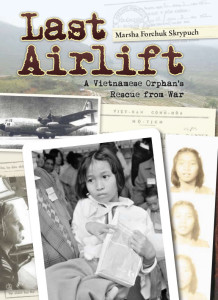 Last Airlift is the true story of the last Canadian airlift operation that left Saigon and arrived in Toronto on April 13, 1975. Son Thi Anh Tuyet was one of 57 babies and children on that flight. Based on personal interviews and enhanced with archive photos,Tuyet’s story of the Saigon orphanage and her flight to Canada is an emotional and suspenseful journey brought to life by the award-winning children’s author, Marsha Skrypuch.
Like the other children in the Saigon orphanage, Tuyet dreams of a family of her own. But she is one of the oldest, and polio has weakened her and left her with a limp. Nobody will adopt a girl like her. Instead, Tuyet cares for the babies and toddlers, hoping that if she continues to make herself useful, the nuns will let her stay.
One day in April, the babies and toddlers are packed into small boxes and frantically loaded into a van.The driver places Tuyet in the back of the van as well. As she and the younger children are taxied to the airport through streets filled with smoke, artillery fire and frenzied refugees trying to escape, Tuyet believes that her job is to look after the babies until they are airlifted to safety. But when the huge Hercules C-130 takes off from the burning city, Tuyet is not left behind after all. What will happen to her when she arrives in Canada? Will she be sent to an orphanage to look after new children, or will the people return her to Saigon to take her chances with the North’s invading forces?
Continue reading “Last Airlift: A Vietnamese Child’s Rescue From War”
Prisoners in the Promised Land
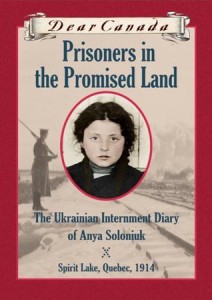
The heart-wrenching story of one girl’s experience at a Ukrainian internment camp in Quebec during World War I.
Anya’s family emigrates from Ukraine hoping for a fresh start and a new life in Canada. Soon after they cram into a tiny apartment in Montreal, WWI is declared. Because their district of Ukraine was annexed by Austria — now at war with the Commonwealth — many Ukrainians in Canada are declared “enemy aliens” and sent to internment camps. Anya and her family are shipped off to the Spirit Lake Internment Camp, in the remote wilderness of northern Quebec. Though conditions are brutal, at least Anya is at a camp that houses entire families together, and even in this barbed-wire world, she is able to make new friends and bring some happiness to the people around her.
Author Marsha Skrypuch, whose own grandfather was interned during WWI at Jasper Internment Camp in Alberta, travelled to Spirit Lake during her research for the book. “When we got to the cemetery, I was overwhelmed with emotion. Imagine seeing a series of crosses, all grown over with brush and abandoned, and knowing that the real person you based a character on had a little sister buried there? That real little girl was Mary Manko. She was only six years old when she and her family were taken from their Montreal home and set to Spirit Lake Internment Camp. Her two-year old sister Carolka died at the camp. Mary Manko is in her nineties now and is the last known survivor of the Ukrainian internment operations.” explains Skrypuch.
Continue reading “Prisoners in the Promised Land”
Dance of the Banished BookDragon review
 This review made my day!
The year is 1913. Zeynap and Ali are teenage lovers in Anatolia (once Asia Minor, now modern Turkey) who part with a lingering sense of bitterness: Ali’s impending departure breaks their promise of escaping their village together. Feeling betrayed, Zeynap turns away: “I refuse to be your betrothed, never knowing when, or even if, you’ll come back.”
Ali will not give up hope of reunion: before he leaves, Ali presents Zeynap with identical journals: “While we are apart, keep this journal for me and I’ll write in the other for you … That way, we will still be together.” In return, Zeynap places her blue evil-eye bead over his head, a cherished momentum that has kept her safe since she was a baby. “I’ll always love you, but I will not wait for you,” she adds.
The Great War arrives in 1914, further separating the lovers. In Canada, Ali is sent to a prison camp for enemy aliens; Canada and Turkey are on opposite sides of the conflagration, and Anatolia is claimed by Turkey. At home in Anatolia, Zeynap bears witnesses to the genocide that obliterates over a million Armenian lives; her humanity and ingenuity make her an unlikely hero; her journal intended for Ali becomes a historical document of international importance.
Although the story is fictional, “it is based on real historical events,” award-winning Canadian author Marsha Forchuk Skrypuch writes in her ending “Author’s Note.” What happens to the lovers, their families, their homeland, demands and deserves far more attention. Both Zeynap and Ali are Alevi Kurds, an ethnic minority about which is little known in the West. They are Kurdish, not Turkish; they are not Muslim, they are Alevi, “a 6,000 year-old religion that originated in Anatolia. Over the centuries Alevism has incorporated aspects of other religions,” Skrypuch explains.
Already the author of five titles “set during the Armenian Genocide,” Skrypuch elucidates how “in all that writing and research, [she] completely missed an outstanding instance of bravery: the rescue of 40,000 Armenians by the Alevi Kurds of the Dersim Mountains.” Five years earlier, Skrypuch learned about a hundred “enemy aliens” living in her hometown of Brantford, Ontario, who were rounded up in the middle of the night on false charges, jailed, and sent to prison camps.
“These men were victims of shameful wartime hysteria directed at foreigners, yet they had come to Canada because of its reputation for freedom and tolerance.” Listed as Turkish, the men turned out to be Alevi Kurds. And so Skrypuch’s Dance began. The result is an eye-opening, significant literary and historical gift to readers, young and old.
Silver Threads
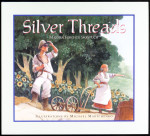
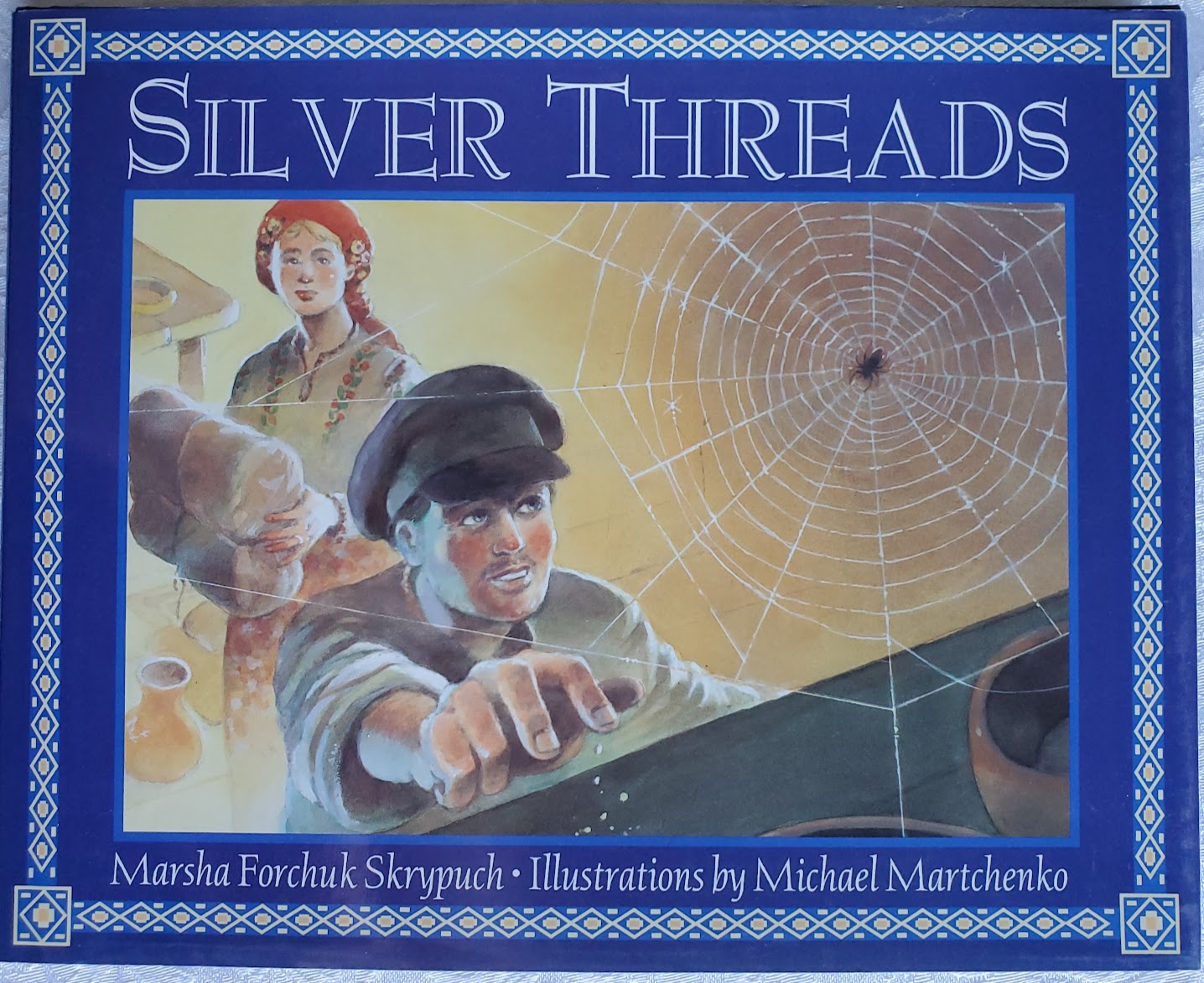
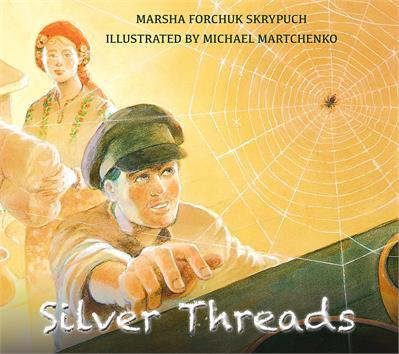
Silver Threads is the magical story of Anna and Ivan, two young newly-weds who escape poverty and hardship in Ukraine to start a new life on the Canadian frontier. As they struggle to build their homestead, World War I breaks out. And when Ivan volunteers to fight for his new homeland, tragedy strikes. While Anna works and waits alone, hope comes from an unexpected source. Based on true events, Silver Threads is a stirring lesson in history and a heart-warming tale of love and faith.
Silver Threads was selected by the Ontario Library Association as a Best Bet for 1996.
Ukrainian edition available here.
Reviews:Macleans wrote:
“A classic fable about the power of love.”
Lubomyr Luciuk on Kingston Whig Standard wrote:
“Remarkably, Ms Skrypuch has retrieved an all-but-forgotten indignity in Canadian history without bitterness….This is a book that every Canadian grade school library should own.”
on Edmonton Journal:
“Canadian readers of all stripes like Silver Threads.”
on Ukrainian Weekly:
“It was not at all hard for me to become enthralled, immediately, with ‘Silver Threads.’ ”
Kobzar’s Children
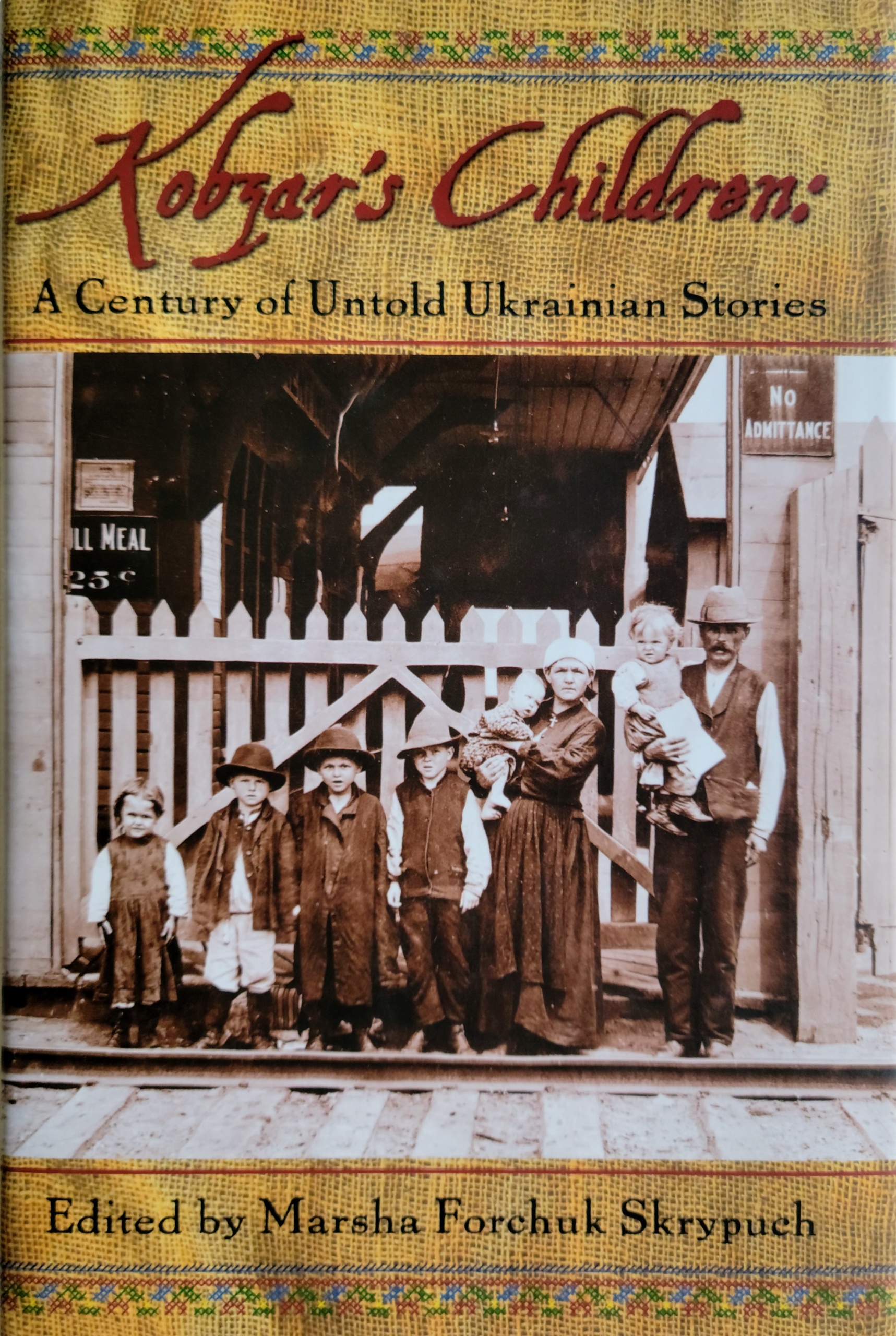 This unique anthology introduces new voices and a century of hidden stories.
The kobzars were the blind minstrels of Ukraine, who memorized the epic poems and stories of 100 generations. Traveling around the country, they stopped in towns and villages along the way, where they told their tales and were welcomed by all. Under Stalin’s regime, the kobzars were murdered. As the storytellers of Ukraine died, so too did their stories.
Kobzar’s Children is an anthology of short historical fiction, memoirs, and poems written about the Ukrainian immigrant experience. The stories span a century of history; and they contain stories of internment, homesteading, famine, displacement, concentration camps, and this new century’s Orange Revolution. Edited by Marsha Forchuk Skrypuch, Kobzar’s Children is more than a collection; it is a moving social document that honors the tradition of the kobzars and revives memories once deliberately forgotten.
Continue reading “Kobzar’s Children”