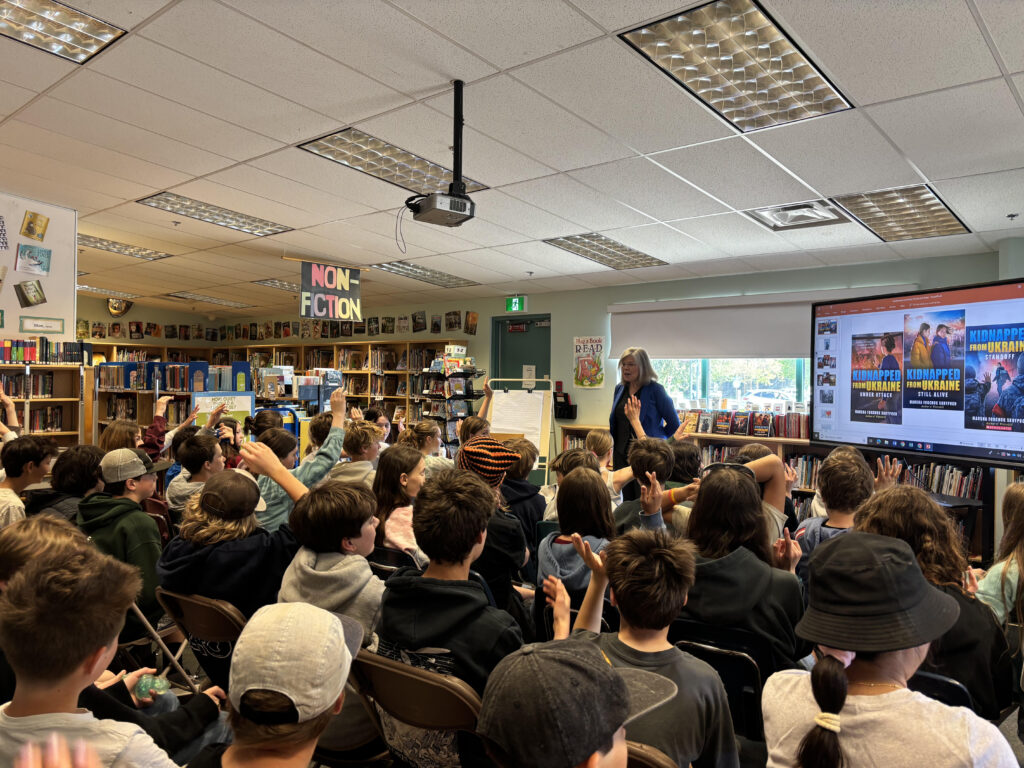
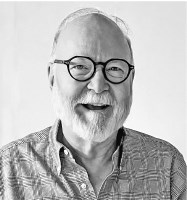
I had two sets of grade 6 and 7 students on Wednesday April 29 at Signal Hill ES in Pemberton. Both sessions were in the morning and the kids were fantastic. Teacher-librarian Nicole Benes is amazing! Not only did she organize these sessions, and the ones for tomorrow, but she was taking a bunch of her students on a bike ride midday!
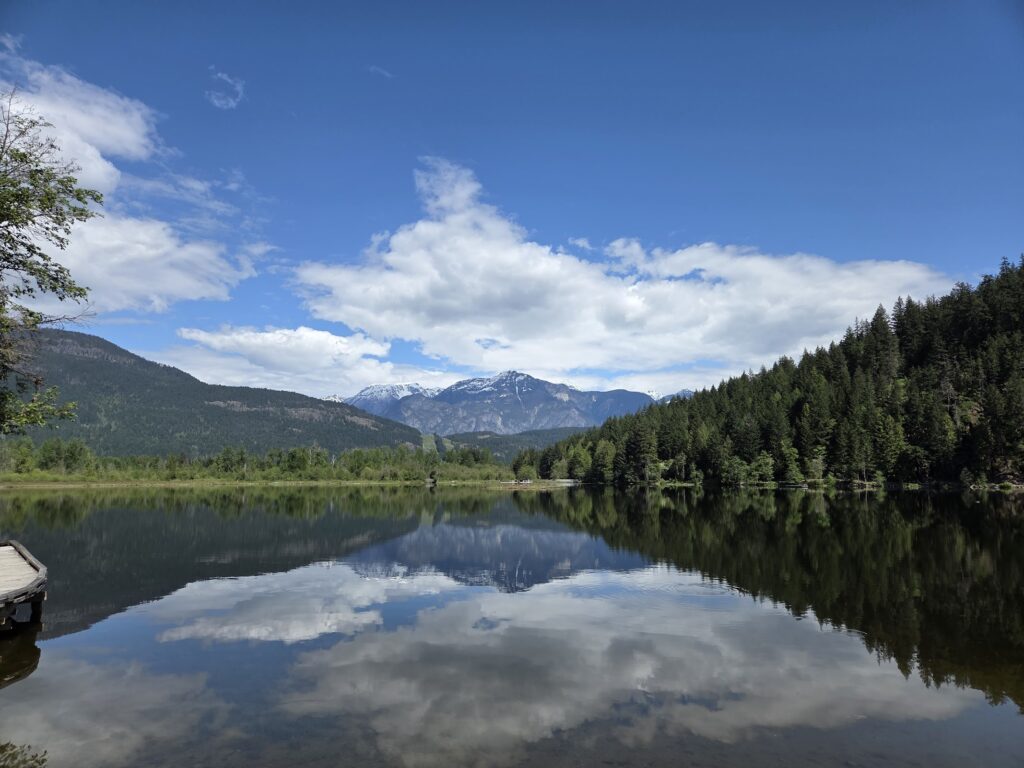
The afternoon was open, so I got some fresh air and took in my stunning surroundings.
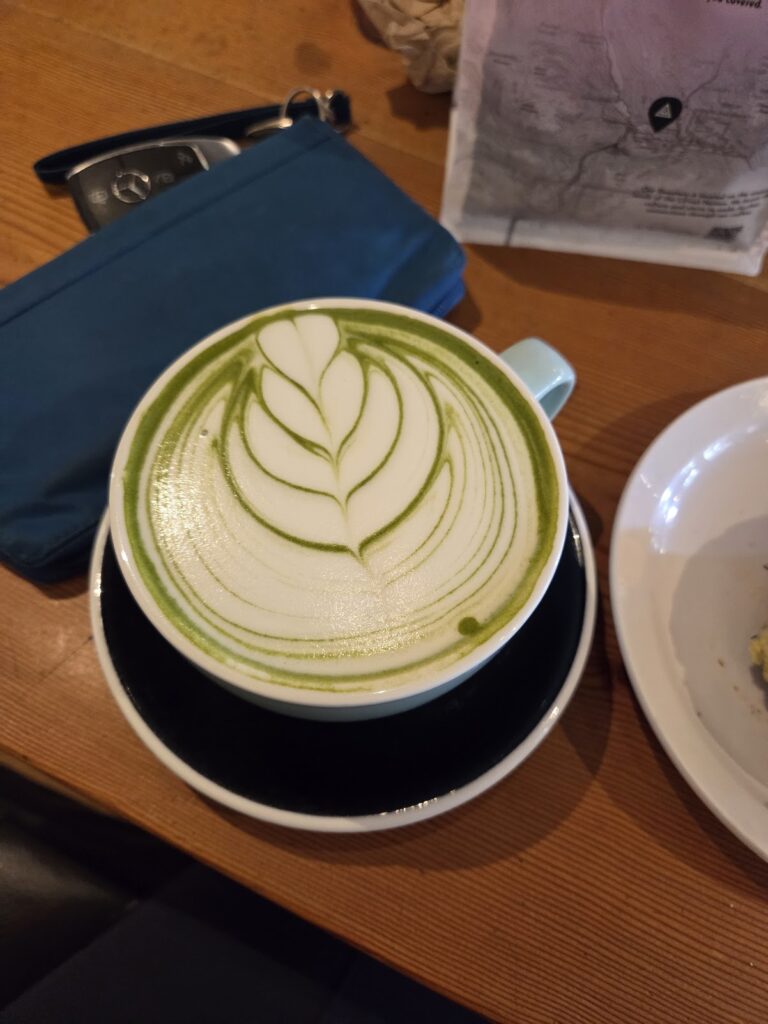
And look at this matcha latte, made with care by the barista at Mount Currie Coffee! It was as delicious as it was beautiful. I bought a package of locally roasted coffee as well so I could make coffee in my hotel room each morning. I had brought some with me, but had run out. (I bring my own filters, pour-over cone, and mini-kettle — obsessive, I know)
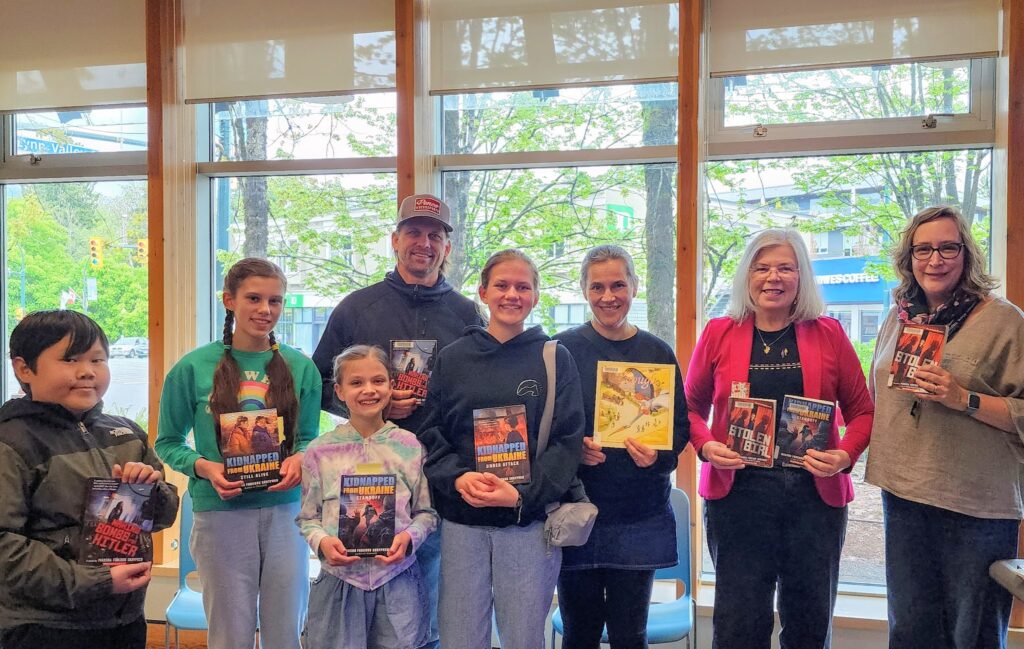
After speaking to big groups in the morning, it was a refreshing change to speak with a small group of homeschooled students and their parents. It was more like a conversation than a presentation and each person there had the opportunity to ask questions and comment. Thank you, Rachel Brown, librarian! I loved every minute of it!
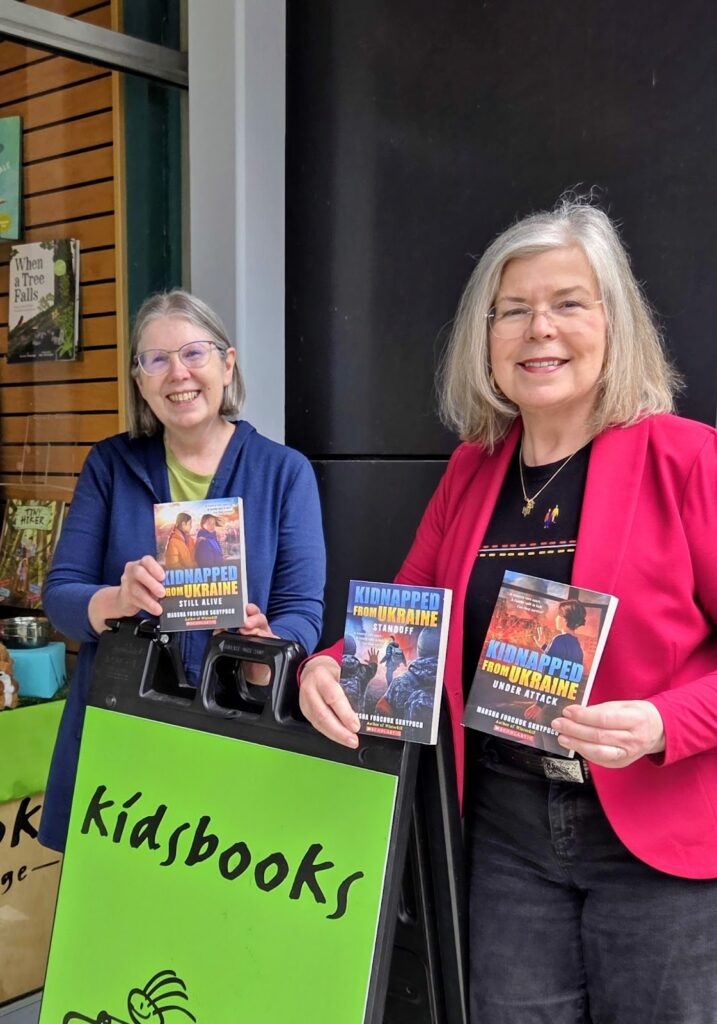
I dropped by Kidsbooks on Edgemont to sign stock copies of my books and asked Alex to pose with me by the outdoor sign! I LOVE independent bookstores! What would authors do without the expertise and passion of independent booksellers?
After signing, I headed out to the Sea to Sky highway and drove to Pemberton — a 2+ hour GLORIOUS drive! I would have loved to take photos. The mountains and the sea were breathtaking. I kept my eyes glued to the road!
The last time I did a book tour for CCBC’s Canadian Children’s Book Week was way back in 2014 when I toured Quebec. Before that, I toured Alberta in 2008 and Manitoba in 2002. It’s always a great opportunity to interact with students and educators that I’d never otherwise get to meet. I was at the school about thirty minutes early — I hate being late!
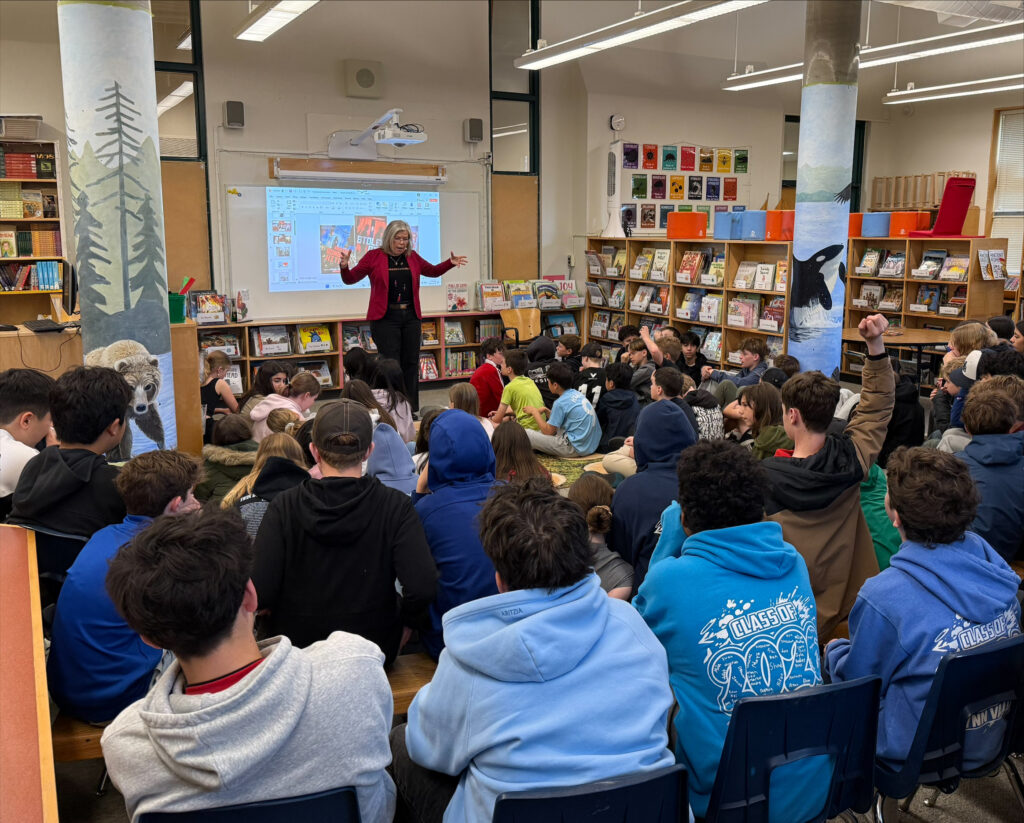
Teacher Librarian Kate Montgomerie greeted me with an enthusiastic smile and told me all about her fundraising efforts to increase her book buying powers. As she talked, she rearranged the library for my presentation, chatted with students, set up my power point. First up were grades 6&7 students, and the next were grades 5&6. I talked about why I write what I write, and my own struggles as a student. They were full of interesting questions and comments.
I took a direct Porter flight from Hamilton, which made things simple. I had prebooked a small AWD SUV from the Vancouver airport Enterprise, but when I got there, they didn’t have my car.
“We can give you an alternate,” said the rep, walking me through the vehicles they had on hand.
“The key is all wheel drive,” I said. “I’m driving on those curvy Sea-to-Sky roads.”
“We’ve got two AWD vehicles available right now,” he said, showing me a Jeep Cherokee and a humungous Mercedes SUV.
I didn’t want to drive a Jeep on curvy roads, but the Mercedes, hmm. “You’ll honour the price on the contract? For a small SUV?”
“Yes.”
“I’ll take the Mercedes.”
“Good choice.” He handed me the keys, put my luggage in the trunk, and left.
I got in the car and tried to figure out the controls. Weirdly, everything was on the wand that on my car is for the windshield wiper. It took me forever to find Park. This was going to be a learning curve. I also had to attach my phone mount so I could use my cell phone as a GPS, and then plug in where I was going.
The rep tapped on my window. “Can you move the car? People behind you can’t get out.”
I still hadn’t located Drive!
I managed to move the car and get it back into park, and keyed in my location, then drove out of the airport and into heavy Vancouver traffic, still trying to get used to the controls. Scary!
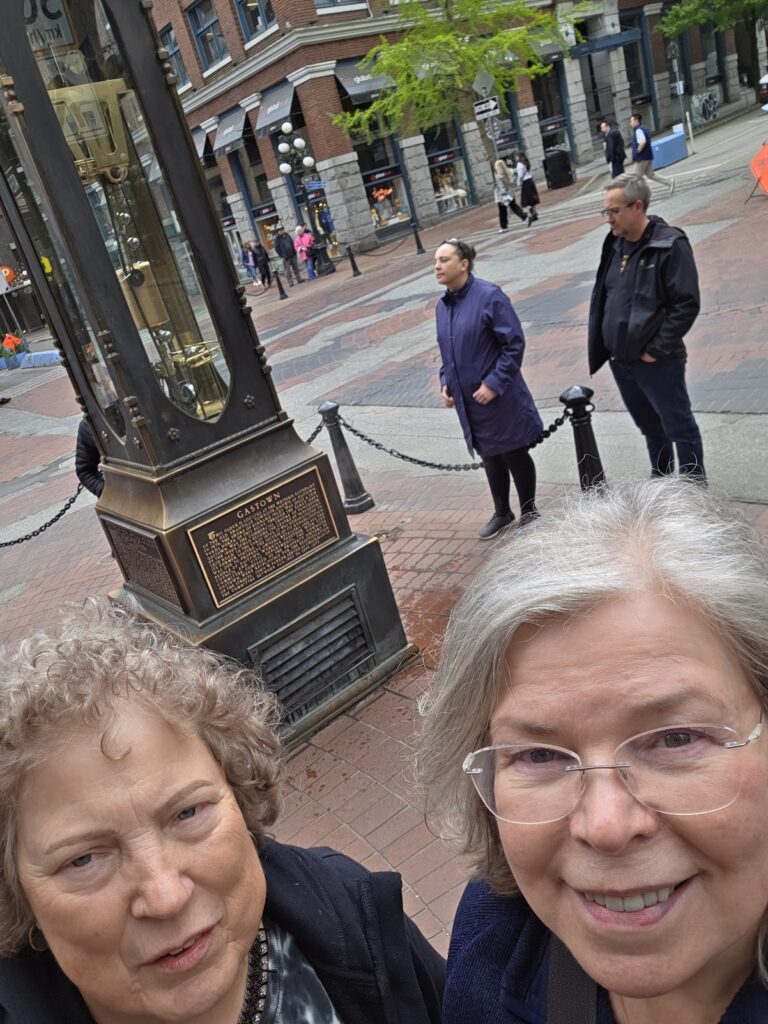
I met up with my longtime friend Paulette MacQuarrie, host of Nash Holos, Ukrainian Roots Radio. She had taken the ferry in to meet me for lunch.
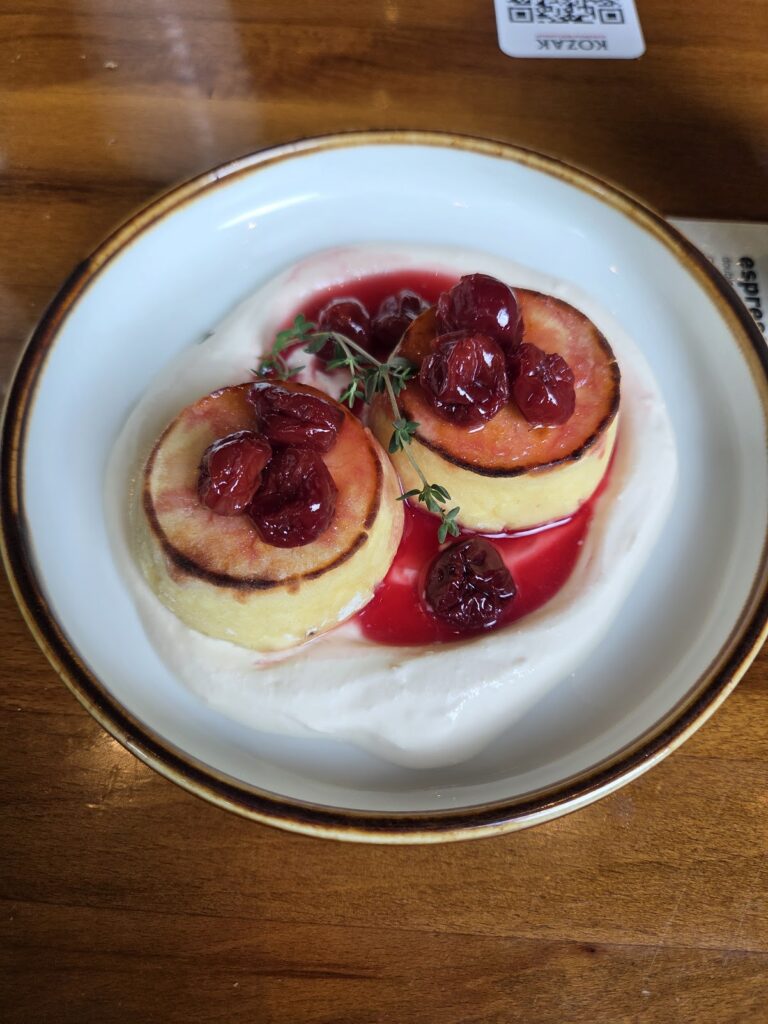
We headed over to Kozak Eatery in Gastown, a fabulous Ukrainian restaurant, and feasted on borshch and rye bread, with syrniki for dessert. It was so great to see Paulette in person. We chat often by zoom and phone but hadn’t seen each other in over a decade.
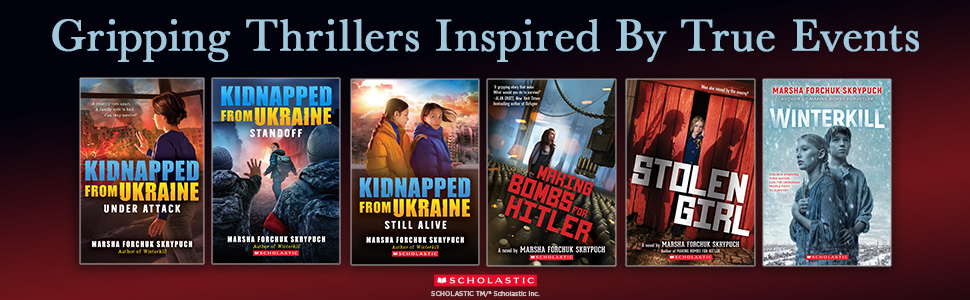
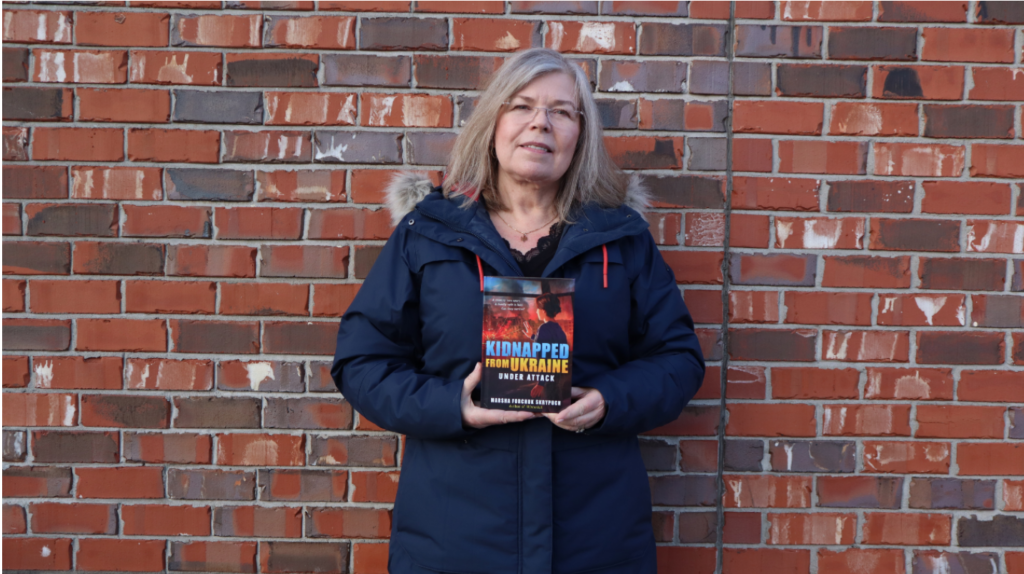
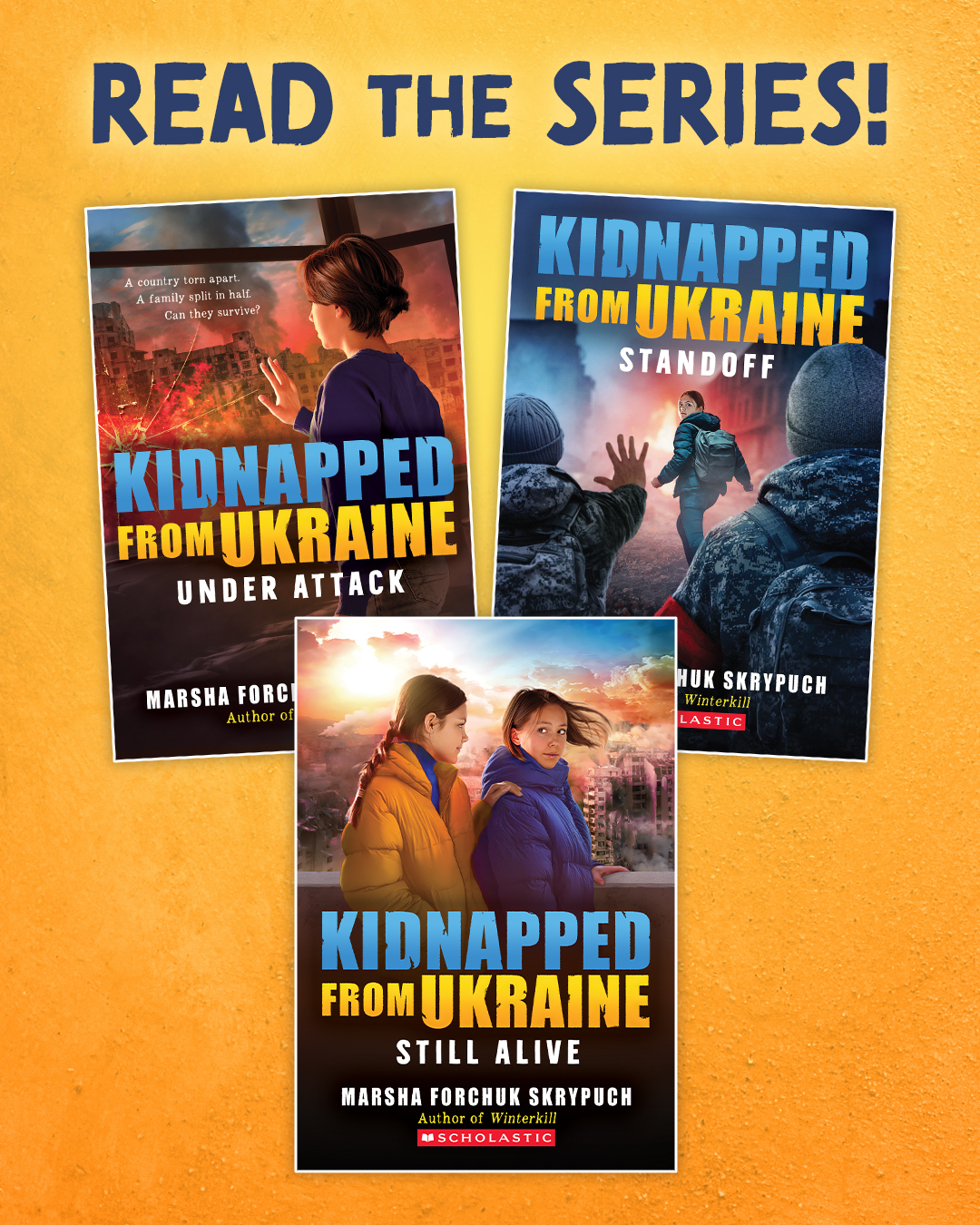
I am thrilled that Kidnapped from Ukraine book #1: Under Attack has been shortlisted for both the Wyoming Indian Paintbrush Book Award and the Manitoba Young Readers’ Choice Northern Lights Award. I love readers’ choice programs the best because young readers themselves select the books instead of adults on a jury.
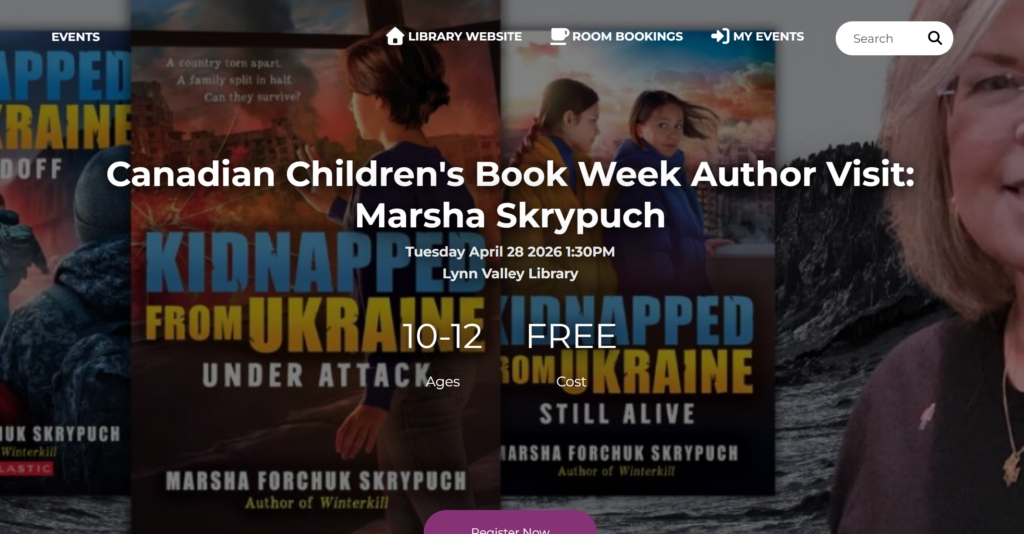
Next week, I’ll be touring for the Canadian Children’s Book Centre in North Vancouver and Pemberton BC. There is one open event at the NVPL. More info here.
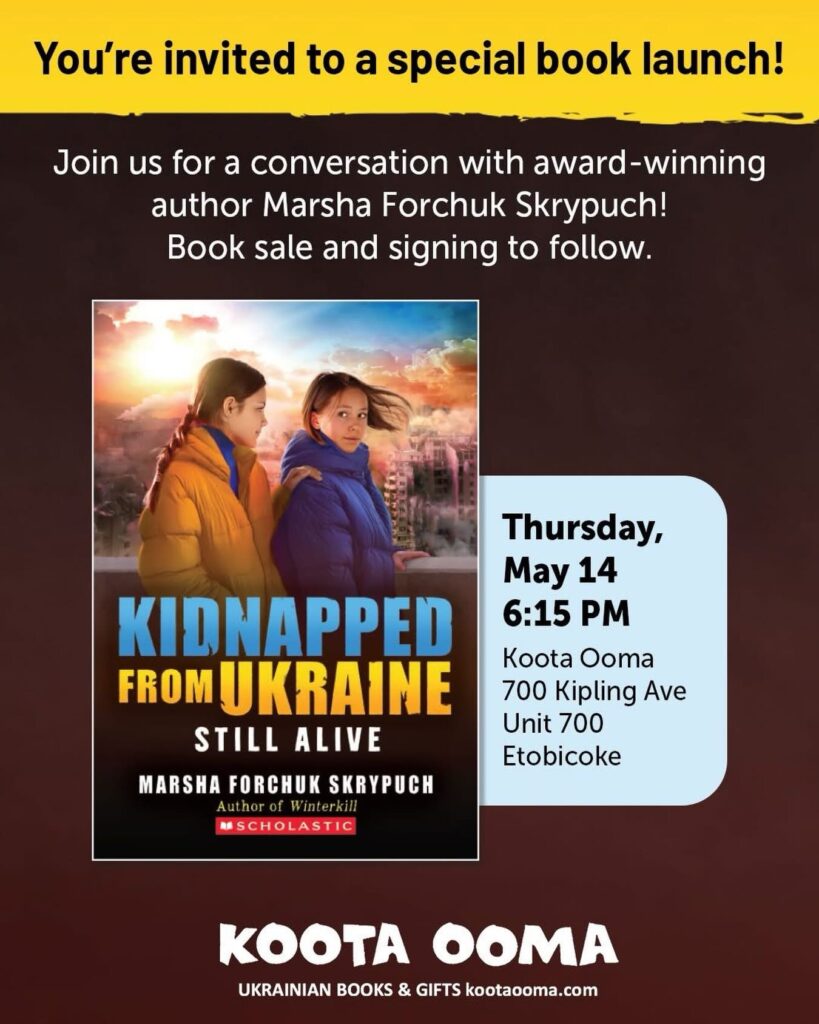
I’ll be back in Toronto on May 14th, at Koota Oooma!
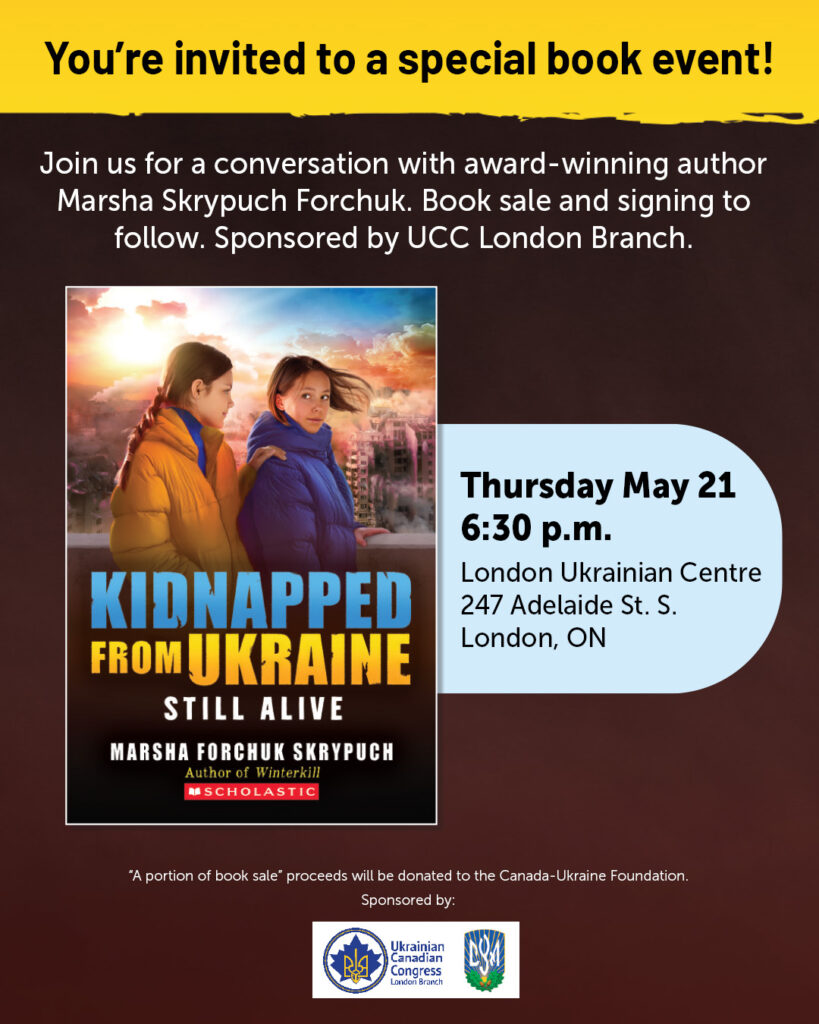
On May 21, I’ll be with London Ukrainian Canadian Congress for a book talk. A portion from book sales will be donated to the Canada-Ukraine Foundation. There will also be a raffle, and I’ve donated some hard-to-get editions of various books. May 21 is Vyshyvanka Day, and I will be wearing my newest traditional embroidered blouse! It will be neat to see a variety of vyshyvanky!!
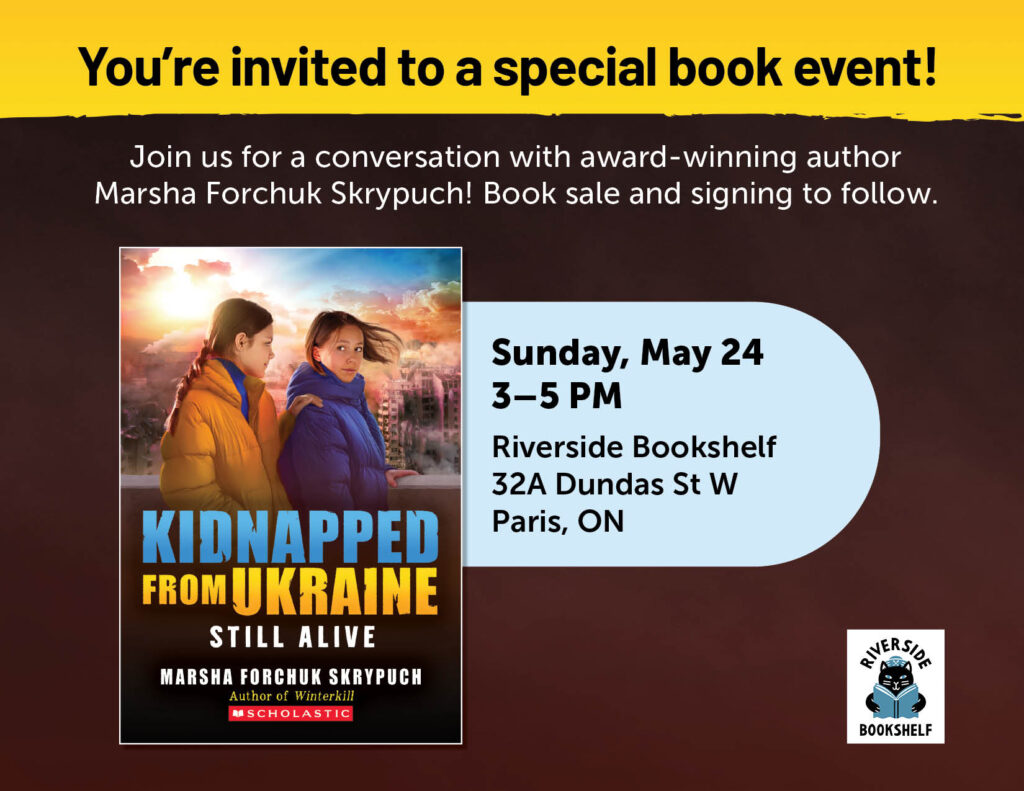
On May 24th, I’ll be close to home, doing an event hosted by my favourite local bookstore, Riverside Bookshelf!
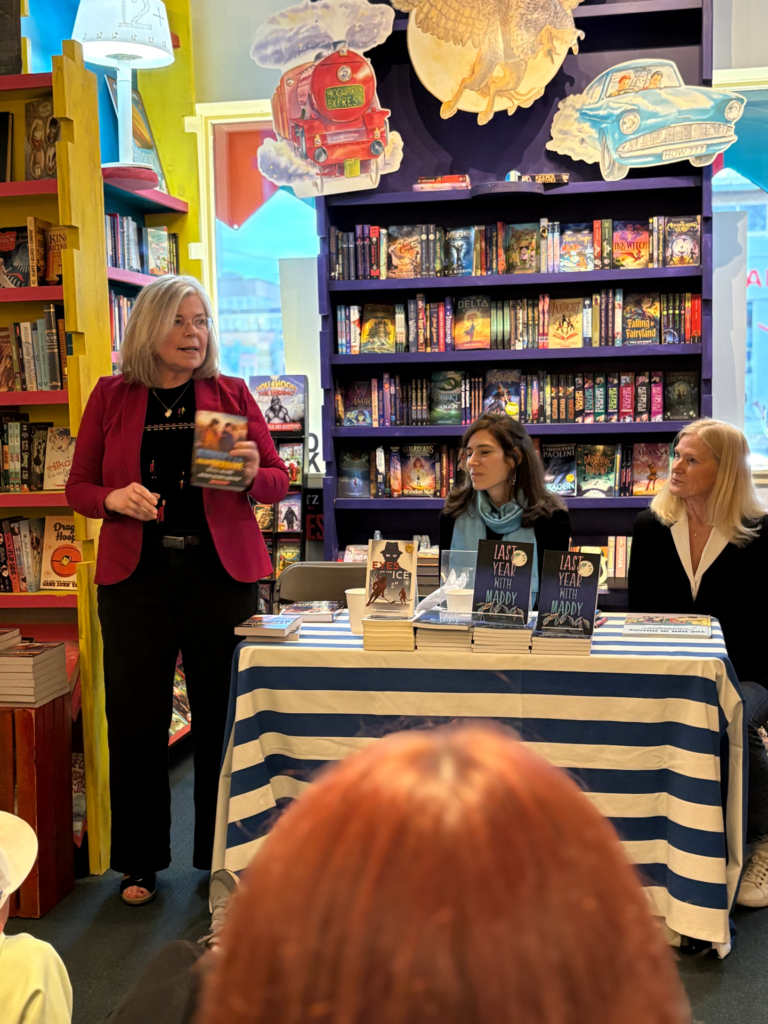
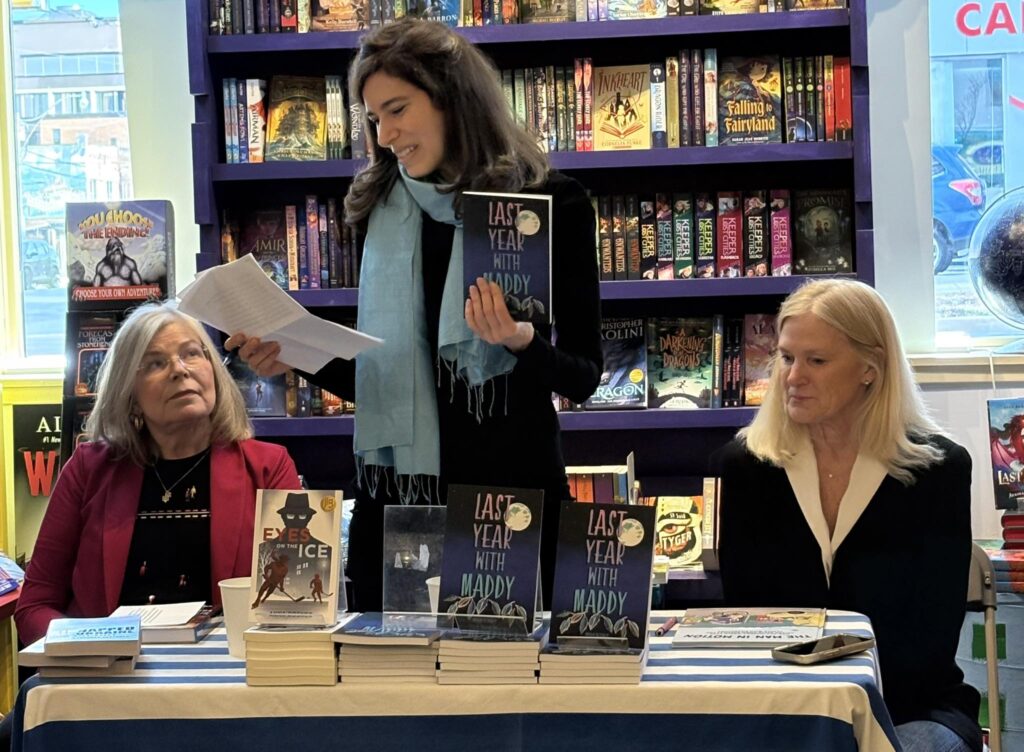
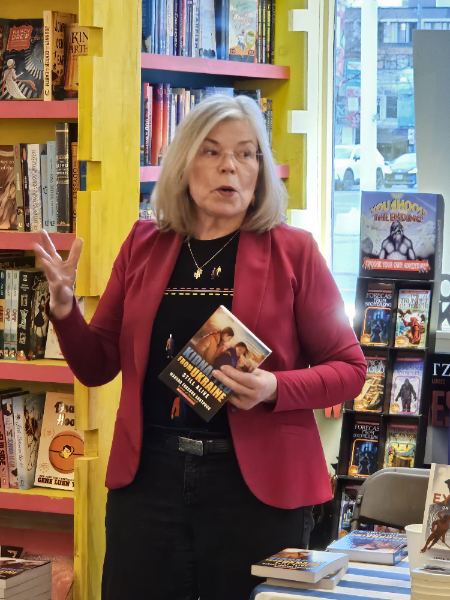
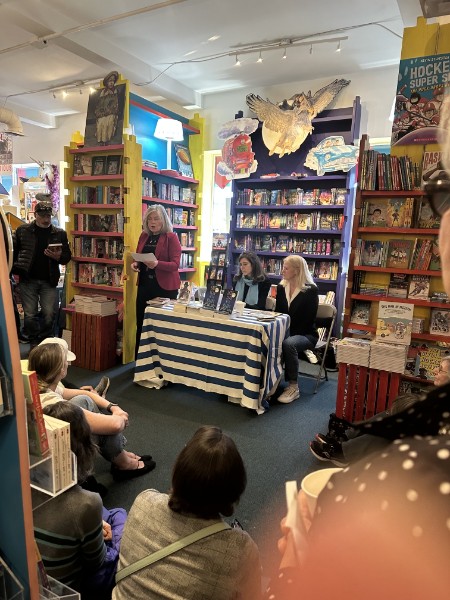
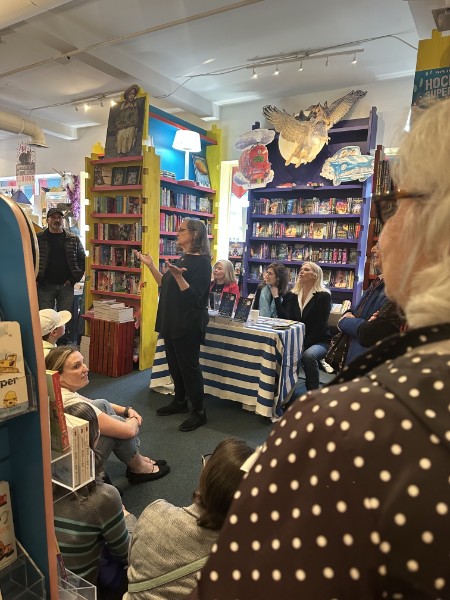
Many thanks to Eleanor LeFave and Mabel’s Fables for hosting a wonderful triple book launch last night! April is Canadian Independent Booksellers’ Month, so it was especially sweet to be in this iconic Canadian children’s bookstore right now.
It was an honour to be introducing my newest book with kidlit powerhouses Lorna Schultz Nicholson and Anna Rosner. An interesting and storied evening. And there were cookies and fruit! Thanks to everyone who came out and made it such a meaningful event.
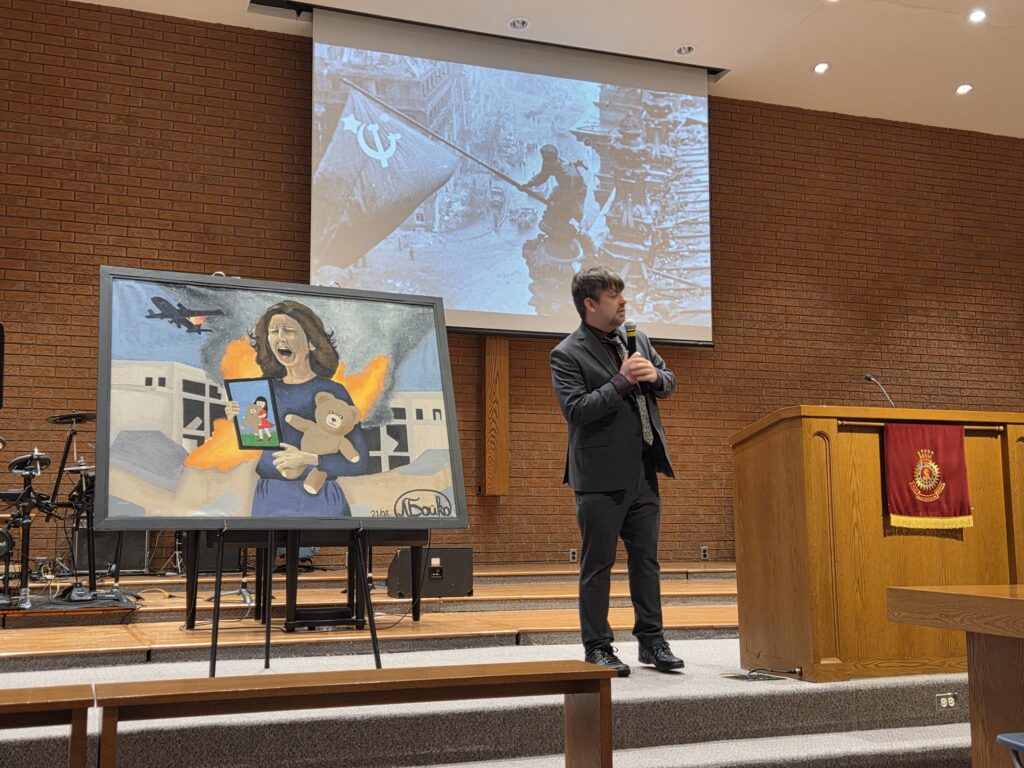
Attended a fantastic launch and presentation yesterday in Woodstock Ontario for Oleksa Drachewych’s new book, Replaying the Second World War, which documents the parallels between Soviet myths, national narrative and atrocities in WWII and what the Russians are doing now in Ukraine. The audience was so engaged that questions could have gone on for the rest of the day.
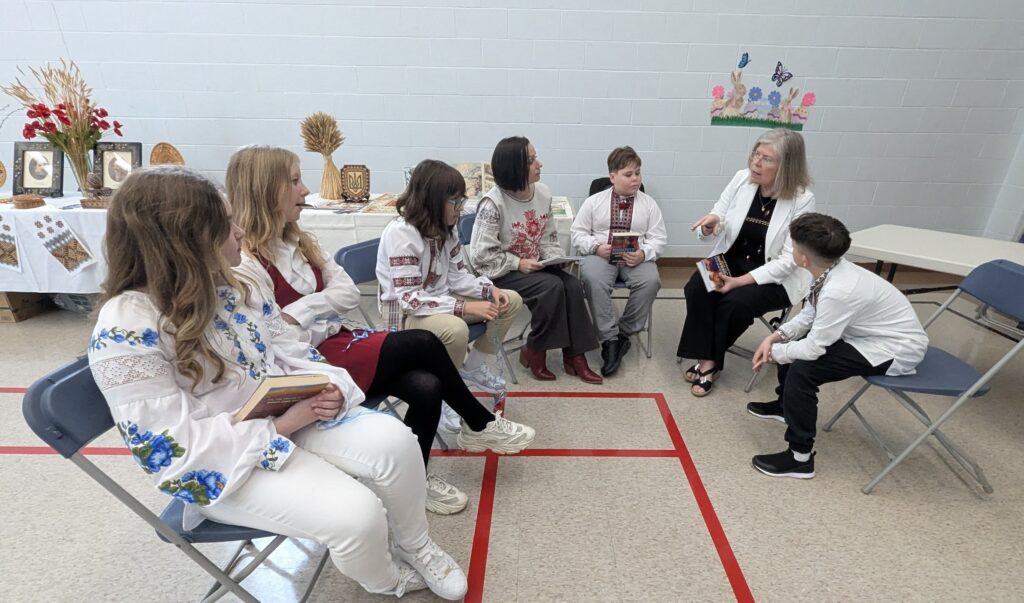
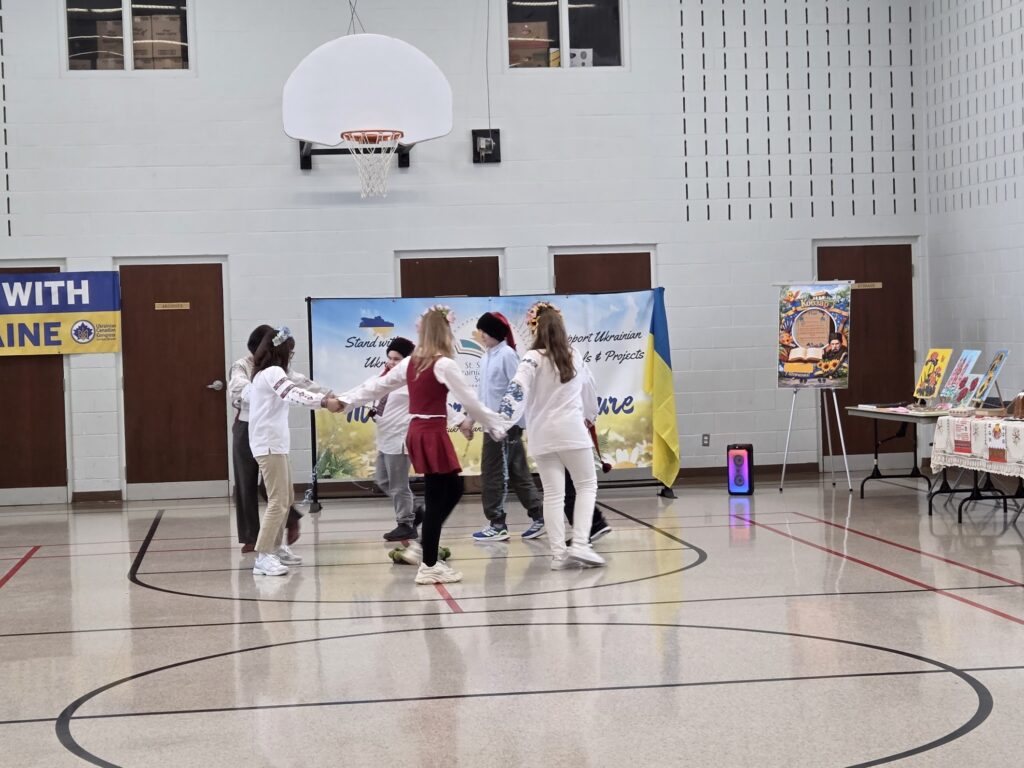
People had driven in from Hamilton and London to hear Oleksa’s talk, and also to participate in a display of Ukrainian culture. Students from St. Sophia Ukrainian Saturday school performed a dance. A number of the students had read my books and had questions, so after everything was over and people were packing up, we grabbed some chairs and the kids asked questions. I think every question began with, “I have a question, no, actually, I have two …” I was very impressed by these young people!
Devastated by the passing of Dean Cooke, who had been my literary agent from 1997 until his retirement in 2025. His impact on the book industry in Canada has been huge. For me personally, I don’t know how I would have survived as an author if it hadn’t been for his principled guidance. He didn’t represent many children’s authors but he loved my voice and he had a vision for my career. Every step of the way, he guided me through it. For his friendship, his guidance, his integrity, I am forever grateful.