Author Marsha Skrypuch is ‘crazy busy’ and loving it

By Michelle Ruby, Brantford Expositor

Author Marsha Skrypuch has two picture books out this week, When Mama Goes to Work, and a revised version of The Best Gifts, which was originally published in 1998. (BRIAN THOMPSON Brantford Expositor)

Author Marsha Skrypuch has two picture books out this week, When Mama Goes to Work, and a revised version of The Best Gifts, which was originally published in 1998. (BRIAN THOMPSON Brantford Expositor)

Brantford author Marsha Skrypuch’s recently released picture books are a marked departure from the historical fiction that continues to garner acclaim.

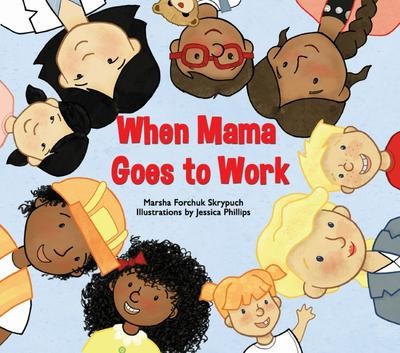
Out just this week are her 16th and 17th works: a picture book called When Mama Goes to Work, and a revised version of The Best Gifts, one of her earliest books, originally published in 1998.

“Having these two picture books out in the midst of the serious war fiction is a nice breath of fresh air,” she said.

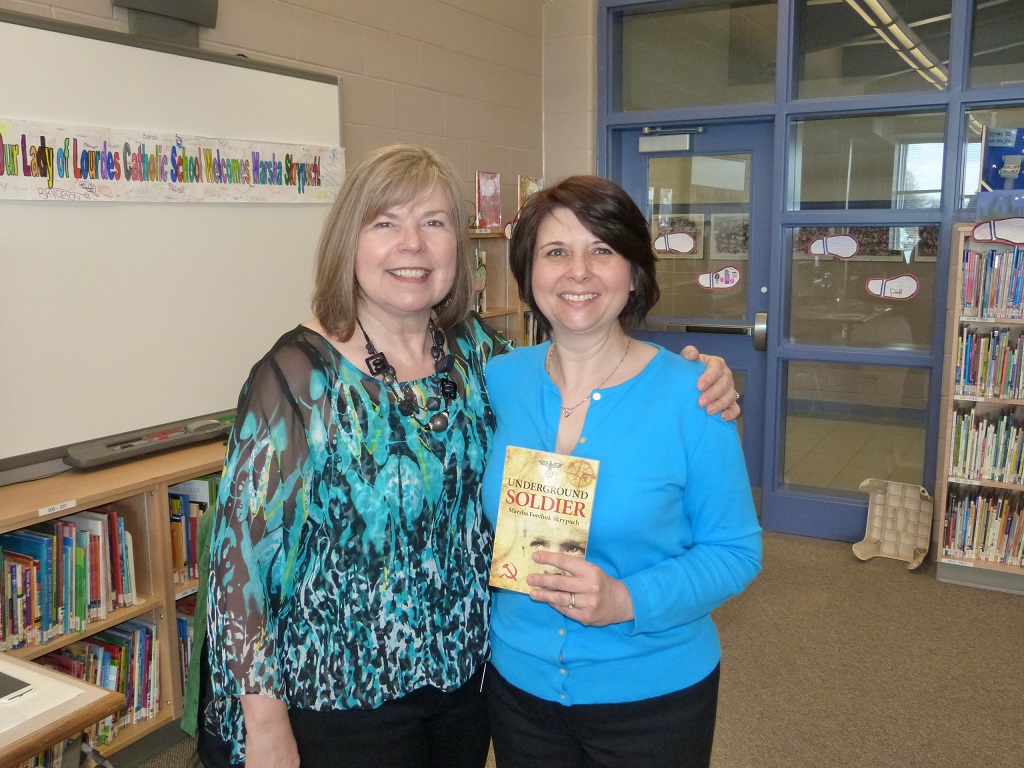
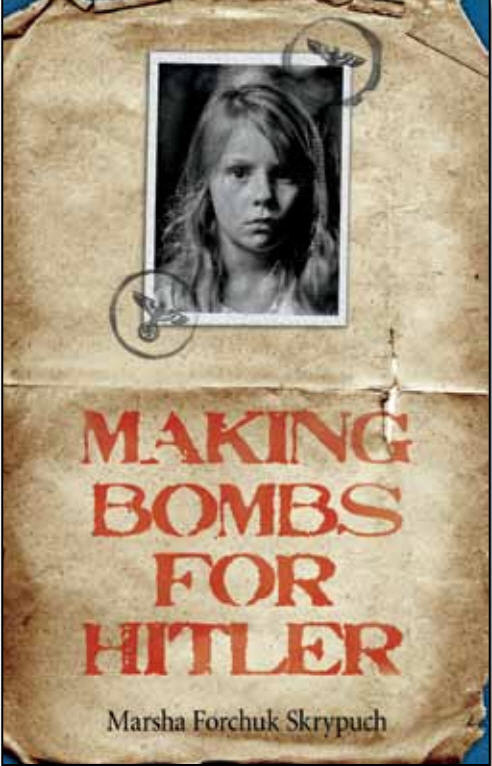
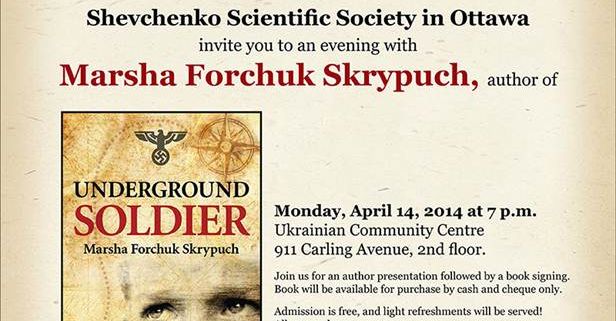
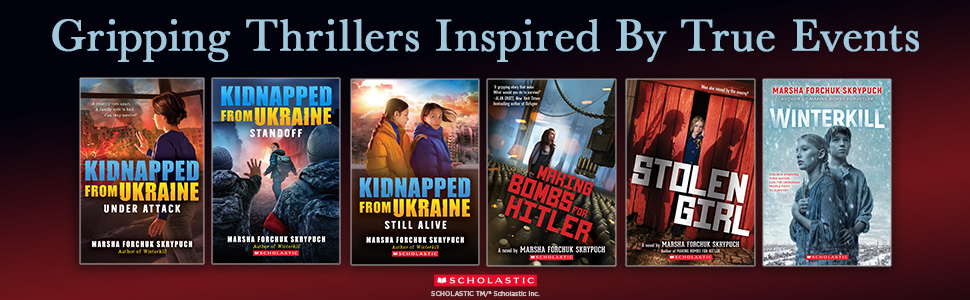
It won’t be long before Book 18 hits the shelves. Underground Soldier is the third volume in a Second World War trilogy that includes Stolen Child and Making Bombs for Hitler. Publication is set for Jan. 1.

Skrypuch has also written a young adult novel scheduled to be published next summer — a First World War love story that originates in Brantford.

What with book launches, speaking engagements and school and library visits that take her across the country, life is sometimes a whirlwind for the successful writer.

“It’s crazy busy, but it’s good busy,” she said.

When Mama Goes to Work follows several children and their working mothers as they move through the day. The story idea, said Skrypuch, was inspired in part by her friend Sharon Brooks of Kids Can Fly. Brooks, and several librarians consulted by Skrypuch, agreed there is a dearth of books about working moms and the children they leave in the care of others.

“The story parallels what’s happening with mom and child as they do the same things throughout their days,” said Skrypuch. “They’re thinking of each other and wishing they could be together but they are in each other’s hearts.”

Skrypuch has dedicated the book to her mother and two grandmothers, all working women.

Fans of Skrypuch will remember The Best Gifts, the story of Sara and the important moments in her life. The author’s second published book, released 15 years ago, has sold worldwide.

This rewritten version makes Best Gifts a more multicultural tale with all new illustrations by Elly MacKay.

“The original pictures were all blue-eyed and blond,” said Skrypuch. “We wanted to make it more inclusive. It’s a similar story but the cultural details are different.”

On the heels of her 2013 Silver Birch Award (Grades 3 to 6 reader category) for Making Bombs for Hitler, Skrypuch has been shortlisted for more honours.

Making Bombs was a finalist for the $5,000 Geoffrey Bilson Award for Historical Fiction for Young People. The book is also a finalist for the $25,000 Kobzar Literary Award. The winner will be announced in March.

One Step at a Time: A Vietnamese Child Finds Her Way — based on the childhood of a Brantford woman — is shortlisted for the 2014 Silver Birch non-fiction award. This is one of the Forest of Reading programs in which 250,000 Ontario kids choose the winners.

A launch for Skrypuch’s newest books will be held at the Brant County Library in Paris on Nov. 21 at 7 p.m. Proceeds from the launch will go to Kids Can Fly, a registered charity that supports early learning and parenting.


Armenian Holiday Traditions: An illustrated guide for children

Armenian Holiday Traditions: An Illustrated Guide for ChildrenArmenian Holiday Traditions: An Illustrated Guide for Children by Annie Seropian
My rating: 5 of 5 stars

View all my reviews

A lovely and informative book. The illustrations are colourful and engaging and make the book feel kid-friendly. The author devotes a page or two to each significant Armenian holy days throughout the year, giving historical, religious and cultural details for each, as well as suggestions on how to celebrate or commemorate the day. This tiny book is chock full of useful information for Armenian parents and children who are eager to keep their traditions. It is also a useful quick guide for someone like me, who writes about Armenian history. Well done!

Meet the Professional: Jeff Burnham, book wholesaler

Meet the Professional: book wholesaler, Jeff Burnham

My hometown of Brantford Ontario is rich in Six Nations culture and history. I goodmindsstafflove to go on long bike rides and one of my favourite routes takes me behind the Mohawk Chapel and past the Woodland Cultural Centre. Right beside the Woodland Cultural Centre on Mohawk Street and tucked into an industrial mall is Goodminds.com. I had passed it many times and took note of it, meaning to drop in.

Last June, I did.

Jeff Burnham is the president and he operates Goodminds.com with his wife Linda and their staff. He took me on a tour.

The warehouse is huge. Jeff showed me through the section where Aboriginal materials are organized – shelves upon shelves of curriculum texts, language instruction books, fiction and non-fiction for the school market, but also for academic and general reading. This is the largest and broadest selection of Aboriginal books in North America.

Goodminds.com second specialty is the school library market. Marlene Turkington, a former teacher-librarian from London Ontario, is their curriculum consultant and that part of the warehouse is massive as well.

Jeff took the time to sit down with me and answer a few questions.

Can you tell me about GoodMinds.com?

GoodMinds.com is an Aboriginal, family owned book wholesaler, based on the Six Nations of the Grand River Reserve, at Brantford, Ontario, Canada.  The business now stocks more than 6,000 titles including school library books and a strong Aboriginal collection. 

Although GoodMinds.com technically opened its “doors” in April 2000 to distribute Aboriginal educational resources, the roots of the business extend to a combination of events in 1987 and 1995.  Today, GoodMinds.com is operated by Linda and Jeff Burnham and 10 staff to date, including Sheila Staats, Marlene Turkington, Rosemary Lunau, Josiahs Cook, Sandy Nagy and others.

What is your role in GoodMinds.com?

As President, I focus on long term planning. Up until recently, we focused on Aboriginal books, but we identified a need for non-Native high quality children and youth books for the school library market, so we’ve expanded to include that as well. With that change, we’ve been making it easier for schools to purchase from us. We implemented automated shopping carts at book fairs, in our office and our website.

We have also been working with publishers directly with some projects – assisting in the production of books where we have the expertise and we see a need.

Implementation of the new SALT program is something I am passionate about.

What is SALT?

SALT stands for Supporting Aboriginal Libraries Today. It is a fund started in 2013 by GoodMinds.com, initially to raise money for the Six Nations Public Library, for their $15 million dollar new building and archives. We almost immediately realized that a huge need for a library existed in hundreds of Aboriginal communities across Canada. More than 90% of Aboriginal communities do not have any public library at all.

GoodMinds.com is donating 10%, of Canadian public library sales to the SALT fund and will do the same for all other sales upon request. For complete details please see the SALT information on the web site at www.goodminds.com.

Wow. I had no idea that most First Nations communities do not have public libraries.

SALT is a literacy issue and an education need.

Currently no funding exists in First Nations communities to start a public library. What scarce dollars there are has to compete with obvious needs such as housing, water and sanitation, roads, and education. Given that competition, it is easy to understand why most First Nations communities do not have a public library.

SALT is ultimately a campaign to get the Federal Government to recognize the need for public libraries in Aboriginal communities, and to provide funding for public libraries, so that literacy can improve in Aboriginal communities. At GoodMinds.com we see this as an important social justice concern. With everyone’s help we can make a difference!

Can you tell me about your book selection process at Goodminds.com?

Books are selected by our two professional selectors. Sheila Staats selects all Aboriginal Books from Grades K-12, and also for our College, University and Adult collections.

Marlene Turkington selects all other books for the library collection, which also includes Early Education, Graphic Novels from Grades K-8 and YA books. Marlene is a former head librarian for a large school board in Ontario.

Both have had years of experience and are knowledgeable about choosing books that support curriculum needs.

Can you describe your typical day?

My day ranges from administrative accounting functions and consultations with staff in the office, to very interesting meetings with authors and customers at book fairs, conferences and other events. There really is not a “typical” day. It can range from packing 100 bins of books for a major display, to setting up at a show, to selling, then packing up again and returning to the office to put the books back on the shelf, only to repeat the process the next day.

What kind of writing are you passionate about?

I recently enjoyed reading The Inconvenient Indian by Thomas King.

Is there something you wish people would ask you, but they never do?

I would love to be invited to speak about the need for public libraries in Aboriginal communities.

Peer into your crystal ball and tell me what you see in the future for children’s publishing.

GoodMinds.com sells books that for the most part are written and published by others. We are dependent on writers who put their heart and soul into the books they write.

As for the future, I hope there will continue to be growth in children’s multicultural books and in particular Aboriginal books. I hope that the general public will read more multicultural titles. That would be the best way that I know for everyone to become more informed about our global village.

Let me close by using Aboriginal books as an example. A book about residential schools is written more for the non-Aboriginal reader than for the Aboriginal reader. Most Native people already know about Residential Schools, but non-Native readers can learn about the issue by reading such a book. They may not already know that the real intention of Residential Schools was to get rid of the “Indian Problem”. We know now that the Residential School policies didn’t quite accomplish their goal. In some cases they did more damage by creating a whole new set of problems that we are still living with today. By reading a book on that topic, a non-Native reader can gain empathy.

Marsha Skrypuch won the Silver Birch Fiction Award last year for Making Bombs for Hitler. Her narrative non-fiction, Last Airlift: A Vietnamese Orphan’s Rescue From War won the BC Red Cedar Award for non-fiction and was a Red Maple Honour book. This year, One Step At A Time: A Vietnamese Orphan Makes Her Way is a Silver Birch non-fiction nominee, and Making Bombs for Hitler has been shortlisted for the Kobzar Literary Award and the Geoffrey Bilson Award for Historical Fiction for Young People.

The Kobzar Literary Award: Making Bombs for Hitler is shortlisted!

I am THRILLED that Making Bombs for Hitler has been shortlisted for the Kobzar Literary Award. Congratulations to my fellow nominees —

Kobzar shortlist announced

The nominees for the 2014 Kobzar Literary Award, handed out every other year in recognition of Canadian books that present “a Ukrainian Canadian theme with literary merit,” include poetry, a play, a “folk history,” and a pair of novels (including one for kids). The shortlist is as follows:

  • Luba, Simply Luba by Diane Flacks, with Andrew Tarasiuk and Luba Goy, (Scirocco Drama/J.Gordon Shillingford, 2013)
  • The Unmemntioable by Erin Mouré (House of Anansi Press, 2012)
  • Baba’s Kitchen Medicines by Michael Mucz (University of Alberta Press, 2012)
  • Blood and Salt by Barbara Sapergia (Coteau Books, 2012)
  • Making Bombs for Hitler by Marsha Forchuk Skrypuch (Scholastic Canada, 2012)

Each of the finalists will read from their work on Oct. 27 as part of Toronto’s International Festival of Authors. The $25,000 prize will be handed out on March 5.


The Kite That Bridged Two Nations: Homan Walsh and the First Niagara Suspension Bridge

alexis alexismarsha alexismausIt was a pleasure to attend Alexis O’Neill’s book launch! As I waited in the long lineup for autographs, I read The Kite That Bridged Two Nations. Well done, Alexis! Lushly illustrated and lots of good action in the story. A great way to highlight a unique historical event. I love the fact that this is a meaty story-focused picture book — 40 pages long and very approachable for reluctant readers in addition to book-a-holics.

Want to buy it? Here’s the Amazon.ca page.

Underground Soldier

Info

underground

A companion to the award-winning books Stolen Child and Making Bombs for Hitler.

Fourteen-year-old Luka works as an Ostarbeiter in Nazi-occupied Eastern Europe, alongside Lida from Making Bombs for Hitler. Desperate to escape the brutal conditions of the labour camp, he manages to get away by hiding in a truck under a pile of dead bodies.

Once free, Luka joins a group of Ukrainian resistance fighters. Caught between advancing Nazis in the west and Soviet troops in the east, they mount guerilla raids, help POW escapees, and do all they can to make life hard for the Nazis and Soviets. After the war, Luka must decide whether to follow Lida to Canada — or stay in Europe and search for his long-lost mother.

Underground Soldier is a companion book to Stolen Child and Making Bombs for Hitler, and a perfect entry point into the series for new readers, as the books can be read in any order.

Here’s an audio interview with Marsha about Underground Soldier from TeachingBooks.net.
Continue reading “Underground Soldier”

The Tale of Two Trees

On the left is my Silver Birch award from 2013. On the right is Sylvia McNicoll’s award from 1996.

2014 marks the 20th anniversary of the Silver Birch Awards and the list of winners is like a Who’s Who of Canadian children’s lit: Kevin Sylvester, Robert Weston, Eric Walters, Kathy Kacer, Kenneth Oppel, Carol Matas, Bill Richardson and so many more. . .

In 1996 when Sylvia won the Silver Birch (in addition to other awards for Bringing Up Beauty), my very first book had just been published. I remember viewing Sylvia from a distance with awe. I actually got to meet her in person a year later when we were both involved in the same book event at a Chapters store in Burlington. Children’s authors Gillian Chan and Gary Barwin also came. Gary brought worms as a prop for his picture book, The Racing Worm Brothers.

It was one of those sad events with well-prepared and enthusiastic authors in search of an audience. We all patiently listened to each others’ presentations, clapped loudly and bought each others’ books. And then became lifelong friends.

Winning the Silver Birch award this year was like the completion of a circle. Back in 1996 when I looked in awe at Sylvia, I would never have dreamed that I would win the Silver Birch just like Sylvia one day.

With this 20th Silver Birch anniversary looming, Meredith Tutching at the OLA asked all of us winners if we could each put together a 2 minute video to upload to Youtube. I emailed Sylvia, suggesting we interview each other with the video camera on our phones. She had a much better idea: her son Craig McNicoll is a videographer and editor. She’d ask him to tape us both and we could ask each other our questions. I thought this was a great idea! The McNicoll family is a talented clan. Sylvia’s husband Bob has a magic photographic touch, especially when it comes to photographing people.

Bob and Craig set up an impromptu set in the basement, and then Sylvia and I interviewed each other. It was a lovely day, not just because I got to spend some time with my good friend Sylvia, but I got to know her family better, sweet grandkids and all. Sylvia served a lovely lunch (and we won’t talk about the wine bottle I broke) and Gisela Sherman came over and joined us.

Now Craig is busy editing our our ums and ahs and massaging what we said into a cohesive and short whole. I can hardly wait to see the videos!

Here’s the link to Sylvia’s blog post about our day.


Banff floods

Last week was to mark a long overdue event: the opening of an interpretive centre by Parks Canada at Cave & Basin to acknowledge Canada’s unjust World War I internment of so called “enemy aliens”. More than 8000 recent immigrants to Canada were held captive and made to work. The network of public parks in Canada was built on the backs of slave labourers. My grandfather was one of them. He was interned at Jasper. The majority of those interned were Ukrainian.

This is my grandfather with my grandmother, about 8 years after he was interned.

After much kicking and screaming, Parks Canada was finally opening this interpretive centre, at 2pm on June 20th. I wanted to be there.

Denise Drury and Banff Public Library kindly invited me to speak on the evening of June 19th, about my own interned grandfather and the two books I have written on this subject.

Calgary writer extraordinaire and friend Cathy Ostlere was in attendance and she decided to stay in the area overnight in order to attend the next day’s opening of the interpretive centre.

But by the next day, all had changed. The flooding and mudslides had begun. Calgary was shut down. The roads to Banff were flooded out.

All of the dignitaries who had flown in to Calgary to come to Banff the next morning for the exhibit opening were stranded in Calgary. The Honourable Jason Kenney was one of them.

Those of us in Banff did get a sneak peek at the exhibit, but we were not allowed to take photos. In Calgary, a commemorative event was quickly put together.

I have to say that I was surrounded by a wonderful group of people stranded in Banff. The circumstances were not ideal, but I loved the opportunity to spend time with Cathy Ostlere, and John Boxtel. John is the gifted sculptor who has created the iconic internment statues like the Interned Madonna at Spirit Lake and the internee at Castle Mountain. Also there was Atul Bahl, who has been working on resource materials on internment. Several of my fellow UCCLA members made it in, including Ryan Boyko who is in the midst of creating a feature film on the internment.

On Friday afternoon, the sun did come out, so Cathy and I walked around Banff.

Early Saturday morning, Cathy and I decided to try to make our escape. We stopped at information booths along the way so we’d be updated on which roads to take. The devastation that we saw on our journey was astounding. When we got into Calgary it was like driving into a nightmare. Those of you in Calgary, please stay safe.

It was a an 11 hour trip. Cathy got me to the airport at 6 and I was able to change my flight for a seat on the only flight available that evening — 7:15 — with 19 minutes to spare before boarding time. There was almost no one on the flight — maybe 20 people in all — each passenger had a row to themselves.  I got home around 2am Ontario time.