Here is a short interview and reading from Underground Soldier. Thank you, Teachingbooks.net!
writes about war from a young person's view #bannedbyrussia
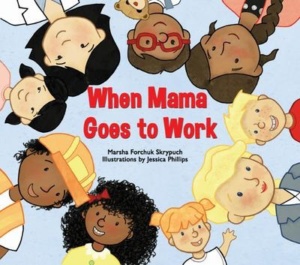
Teachingbooks.net recently recorded this brief interview and reading with me about When Mama Goes To Work.
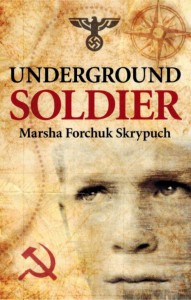
Underground Soldier officially hit store shelves on January 1, 2014 and I have been on pins and needles, waiting for initial reader response. Well, today I got it, and I am thrilled!
Karen Upper, teacher-librarian-superwoman of the Near North, made a trailer of the book. You can view it on Youtube. Wow!
And she had this to say:
Hi Marsha:
I have let one of my Grade 8 students read this wonderful story, her mom told me she found Gabby crying, while reading it.
Gabby’s response was so strong, she felt that she had to write you her reaction:
{she is usually a very shy girl, and doesn’t talk much — but this book evoked a very strong reaction in her}
“This is an extraordinary book that you cannot put down, until you’re done and even then, you find yourself rereading it over and over. The author used great descriptive wording that placed a clear image into your head. This novel makes you laugh, CRY, and fear for the characters.
Gabby W”
I just had to share this wonderful comment with you. My reaction echoes Gabby’s.
Thank you for allowing me to read this very moving story.
sincerely,
Karen
I am THRILLED that Making Bombs for Hitler has been shortlisted for the Kobzar Literary Award. Congratulations to my fellow nominees —
 The nominees for the 2014 Kobzar Literary Award, handed out every other year in recognition of Canadian books that present “a Ukrainian Canadian theme with literary merit,” include poetry, a play, a “folk history,” and a pair of novels (including one for kids). The shortlist is as follows:
Each of the finalists will read from their work on Oct. 27 as part of Toronto’s International Festival of Authors. The $25,000 prize will be handed out on March 5.
A companion to the award-winning books Stolen Child and Making Bombs for Hitler.
Fourteen-year-old Luka works as an Ostarbeiter in Nazi-occupied Eastern Europe, alongside Lida from Making Bombs for Hitler. Desperate to escape the brutal conditions of the labour camp, he manages to get away by hiding in a truck under a pile of dead bodies.
Once free, Luka joins a group of Ukrainian resistance fighters. Caught between advancing Nazis in the west and Soviet troops in the east, they mount guerilla raids, help POW escapees, and do all they can to make life hard for the Nazis and Soviets. After the war, Luka must decide whether to follow Lida to Canada — or stay in Europe and search for his long-lost mother.
Underground Soldier is a companion book to Stolen Child and Making Bombs for Hitler, and a perfect entry point into the series for new readers, as the books can be read in any order.
Here’s an audio interview with Marsha about Underground Soldier from TeachingBooks.net.
Continue reading “Underground Soldier”
Last week was to mark a long overdue event: the opening of an interpretive centre by Parks Canada at Cave & Basin to acknowledge Canada’s unjust World War I internment of so called “enemy aliens”. More than 8000 recent immigrants to Canada were held captive and made to work. The network of public parks in Canada was built on the backs of slave labourers. My grandfather was one of them. He was interned at Jasper. The majority of those interned were Ukrainian.
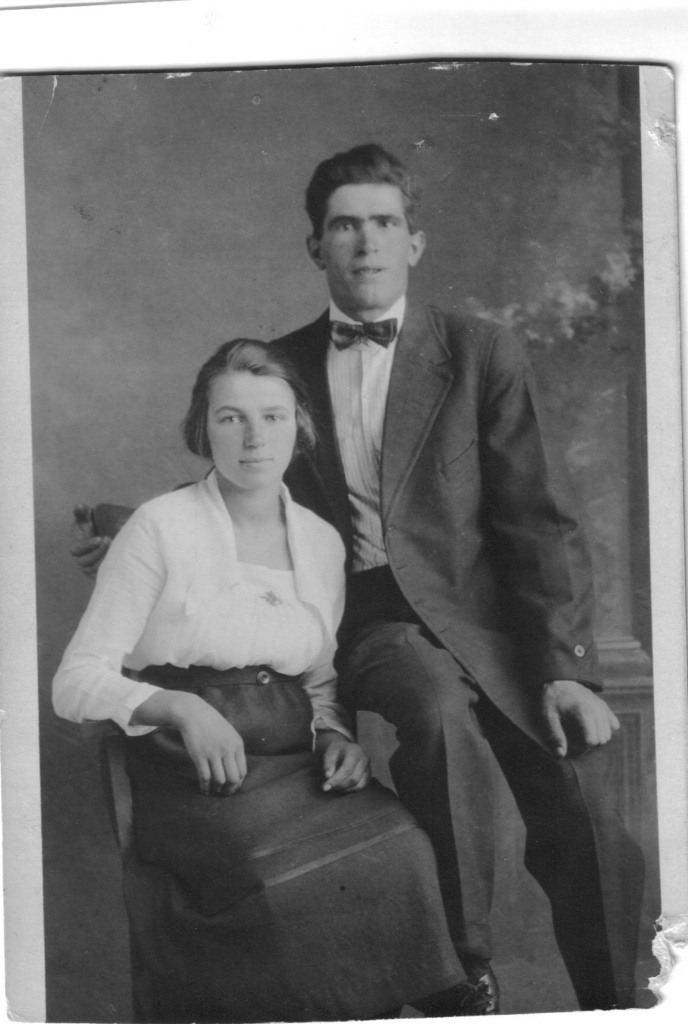
After much kicking and screaming, Parks Canada was finally opening this interpretive centre, at 2pm on June 20th. I wanted to be there.
Denise Drury and Banff Public Library kindly invited me to speak on the evening of June 19th, about my own interned grandfather and the two books I have written on this subject.
Calgary writer extraordinaire and friend Cathy Ostlere was in attendance and she decided to stay in the area overnight in order to attend the next day’s opening of the interpretive centre.
But by the next day, all had changed. The flooding and mudslides had begun. Calgary was shut down. The roads to Banff were flooded out.
All of the dignitaries who had flown in to Calgary to come to Banff the next morning for the exhibit opening were stranded in Calgary. The Honourable Jason Kenney was one of them.
Those of us in Banff did get a sneak peek at the exhibit, but we were not allowed to take photos. In Calgary, a commemorative event was quickly put together.
I have to say that I was surrounded by a wonderful group of people stranded in Banff. The circumstances were not ideal, but I loved the opportunity to spend time with Cathy Ostlere, and John Boxtel. John is the gifted sculptor who has created the iconic internment statues like the Interned Madonna at Spirit Lake and the internee at Castle Mountain. Also there was Atul Bahl, who has been working on resource materials on internment. Several of my fellow UCCLA members made it in, including Ryan Boyko who is in the midst of creating a feature film on the internment.
On Friday afternoon, the sun did come out, so Cathy and I walked around Banff.
Early Saturday morning, Cathy and I decided to try to make our escape. We stopped at information booths along the way so we’d be updated on which roads to take. The devastation that we saw on our journey was astounding. When we got into Calgary it was like driving into a nightmare. Those of you in Calgary, please stay safe.
It was a an 11 hour trip. Cathy got me to the airport at 6 and I was able to change my flight for a seat on the only flight available that evening — 7:15 — with 19 minutes to spare before boarding time. There was almost no one on the flight — maybe 20 people in all — each passenger had a row to themselves. I got home around 2am Ontario time.
http://www.brantfordexpositor.ca/2013/05/22/making-bombs-for-hitler-wins-silver-birch-award

By Michelle Ruby, Brantford Expositor

Author Marsha Skrypuch, who enjoys writing while working at her treadmill desk, has added to her list of awards. (BRIAN THOMPSON, The Expositor)
There is blossoming praise for Brantford author Marsha Skrypuch’s books with recent wins in the Ontario Library Association’s Forest of Reading program.
Skrypuch last week took home the 2013 Silver Birch Award (the Grades 3 to 6 reader category) for Making Bombs for Hitler, her 15th published book ,which tells the Second World War story of nine-year-old Lida, who is kidnapped by the Germans and forced into slave labour.
Skrypuch, who has made a successful career from sharing difficult stories with young readers, also was honoured for Last Airlift, which was named a Red Maple Honour Book (Grades 6 to 8), one of the top three in the category. As an added bonus, Last Airlift also won the B.C. Red Cedar Information Book Award.
The Forest of Reading is Canada’s largest recreational reading program, made up of seven reading awards programs. The programs culminate every year in an event run in partnership with Authors at Harbourfront Centre in Toronto, called the Festival of Trees, the largest annual literacy event for children, attracting thousands of young readers.
More than 250,000 students participate annually in the program from their local schools or public libraries. Award winners are selected by these young readers.
“I was totally in shock when they opened the envelope and announced that I had won,” said Skrypuch.
“It was a lovely moment. I have been receiving floods of snail mail letters and emails from students across the province telling me that Making Bombs for Hitler had changed their life.
The novel is a companion book to Skrypuch’s award-winning Stolen Child. In that book she introduced readers to Hitler’s largely unknown Lebensborn program. The protagonist, Lida, becomes what was called an Ostarbeiter (eastern worker).
Lida’s small dexterous hands make her the perfect candidate to handle delicate munitions work, so she is sent to a factory to make bombs.
Skrypuch said approval from her readers is particularly gratifying since she has received a couple of complaints from parents who thought the novel must be too graphic for Grade 4 to 6 kids.
“Anyone who would do this couldn’t possibly have read the book, and certainly can’t understand what makes kids want to read,” she said.
“I didn’t learn to read until I was nine years old. It wasn’t that I didn’t have the ability but I lacked the desire. Books offered to kids in the 1960s were really bad, the assumption being that children should be fed saccharine.
“I write meaty kinds of books that I wish were available when I was a kid: tightly written, accurately researched historical fiction about kids in times of turmoil. I write for kids because they are a discerning audience. I respect their intelligence.”
One Grade 5 student from Richland Academy in Richmond Hill had this to say: “Making Bombs for Hitler was very sad, but very interesting and entertaining. The major life lesson that I take from this book is that I should be thankful for what I have.”
Since Making Bombs for Hitler and Stolen Child were shortlisted for the Forest of Reading awards in the fall, Skrypuch has been doing rounds of visits to libraries and schools, including those in Brantford, Paris and Scotland.
The author has also been travelling all over the province meeting readers. The week before the Harbourfront ceremonies, she flew to mass events in Parry Sound, North Bay and Thunder Bay with other nominees.
In order for students to attend the major Forest of Reading events, they must read at least five of the 10 nominated books in each category.
The awards themselves are designed by students who submit their artwork in a contest. The Silver Birch award was created by Gurleen Randhawa, a Grade 6 student at Fletcher’s Creek Public School in Brampton.
Skrypuch, who writes aboard a treadmill desk, slowly walking while typing on her computer, is working on a number of new projects.
She recently finished a companion novel to Making Bombs for Hitler, tentatively called Luka, Underground Soldier. It is set for release by Scholastic in February.
At the end of May, a new edition of Skrypuch’s 1998 picture book, The Best Gifts, will come out and, in October, a new picture book, called When Mama Goes to Work, will be released. The book was inspired by a suggestion from Skrypuch’s good friend, Sharon Brooks of Kids Can Fly.
Both of the picture books will be published by Fitzhenry and Whiteside.
The prolific author also has another “quirky” picture book text that was just accepted for publication by Pajama Press and one still in early development stages. She said it takes about two years for a picture book to go to press once it’s accepted.
Also, Skrypuch is writing a First World War young adult novel, partly set in Brantford, to be published by Pajama Press in the fall of 2014.
michelle.ruby@sunmedia.ca
Skrypuch, Marsha Forchuk. (2013). One step at a time: A Vietnamese child finds her way. Toronto, Ontario, CA: Pajama Press.
 This companion book to Last Airlift: A Vietnamese Orphan’s Rescue from War (2012) provides the chapters that follow in the life of young Tuyet, a Vietnamese orphan stricken with polio and raised in a Vietnamese orphanage until her adoption by a Canadian family. As Tuyet becomes part of her new family, she also faces the surgeries that are required to repair her inward-turning foot. Unable to speak much English, the young girl is frightened by the hospital and surgical lights, the doctors, the consultations and examinations since she is still dealing with the nightmares of war-torn Vietnam and near-death experiences with guns and helicopters. As the surgeries conclude and the painful physical therapy begins, her new life starts to take shape. The cover of the book and the red shoes pictured take on a very special meaning by the end of this heart-warming book that will leave readers in tears. Teachers can read an interview with the author on the back matter for her book.
– Karen Hildebrand, Ohio Library and Reading Consultant
Reading.org