The Hunger: Franklin Street Little Library

hunger

I dropped off a few of my older books as a donation to the Franklin Street Little Library yesterday. Susan Gibson has already read The Hunger, and reviewed it:

The Hunger is local author, Marsha Forchuk Skrypuch‘s very first novel.  It intertwines the current experience of a young girl struggling with an eating disorders with the historical tragedy of the Armenian genocide.  This novel has a Brantford connection which will engage young adult readers that borrow this book from the Franklin Street Little Free Library.

The novel begins with Paula, a 15 year old student who strives for perfection and to be thinner.  She is a strong student who works hard and is helpful at home.  She is assigned a project about her family heritage and discovers that her grandmother, Pauline, has a secret history and an Armenian heritage.

Paula discovers scant information on the Armenian genocide and as she researches the starvation, massacres and horrendous abuse, she becomes emaciated and her own life becomes at risk.  The two stories collide as Paula experiences her own health crisis.  She begins to understand more about her grandmother’s life as she fights for her own.

This is a great historical novel that should be part of the curriculum for senior elementary school students.  In her first novel, Skyrpuch has educated the reader about this little known piece of history through a expertly woven tale much like her subsequent novels like Stolen Child, Dance of the Banished and Making Bombs for Hitler.

I personally love to read novels with local references and happened to attend both Agnes Hodge School and Ryerson School many years ago.  Being local, it was easy to imagine Paula running up the former library stairs (now Laurier Brantford) and spending time in the Brantford General Hospital.  It is engaging to visualize the locations that are referenced in the book.  Don’t think that this novel is ONLY for young adults, although it is a quick read for an adult (one evening) it is a story that is difficult to put down!

I would like to thank Marsha for donating this book (and others to be reviewed in future posts) to the Franklin Street Little Free Library and invite others to borrow it and comment below after reading it.


Dance of the Banished BookDragon review

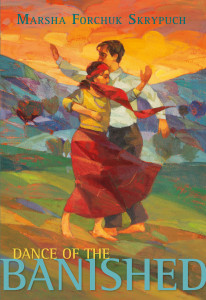
DanceOfTheBanished_HR_RGB1This review made my day!

The year is 1913. Zeynap and Ali are teenage lovers in Anatolia (once Asia Minor, now modern Turkey) who part with a lingering sense of bitterness: Ali’s impending departure breaks their promise of escaping their village together. Feeling betrayed, Zeynap turns away: “I refuse to be your betrothed, never knowing when, or even if, you’ll come back.”

Ali will not give up hope of reunion: before he leaves, Ali presents Zeynap with identical journals: “While we are apart, keep this journal for me and I’ll write in the other for you … That way, we will still be together.” In return, Zeynap places her blue evil-eye bead over his head, a cherished momentum that has kept her safe since she was a baby. “I’ll always love you, but I will not wait for you,” she adds.

The Great War arrives in 1914, further separating the lovers. In Canada, Ali is sent to a prison camp for enemy aliens; Canada and Turkey are on opposite sides of the conflagration, and Anatolia is claimed by Turkey. At home in Anatolia, Zeynap bears witnesses to the genocide that obliterates over a million Armenian lives; her humanity and ingenuity make her an unlikely hero; her journal intended for Ali becomes a historical document of international importance.

Although the story is fictional, “it is based on real historical events,” award-winning Canadian author Marsha Forchuk Skrypuch writes in her ending “Author’s Note.” What happens to the lovers, their families, their homeland, demands and deserves far more attention. Both Zeynap and Ali are Alevi Kurds, an ethnic minority about which is little known in the West. They are Kurdish, not Turkish; they are not Muslim, they are Alevi, “a 6,000 year-old religion that originated in Anatolia. Over the centuries Alevism has incorporated aspects of other religions,” Skrypuch explains.

Already the author of five titles “set during the Armenian Genocide,” Skrypuch elucidates how “in all that writing and research, [she] completely missed an outstanding instance of bravery: the rescue of 40,000 Armenians by the Alevi Kurds of the Dersim Mountains.” Five years earlier, Skrypuch learned about a hundred “enemy aliens” living in her hometown of Brantford, Ontario, who were rounded up in the middle of the night on false charges, jailed, and sent to prison camps.

“These men were victims of shameful wartime hysteria directed at foreigners, yet they had come to Canada because of its reputation for freedom and tolerance.” Listed as Turkish, the men turned out to be Alevi Kurds. And so Skrypuch’s Dance began. The result is an eye-opening, significant literary and historical gift to readers, young and old.

Georgetown Boys images now available online

It is thrilling to see that the United Church of Canada has digitized 128 photographic images of the Georgetown Boys. It can be accessed here.

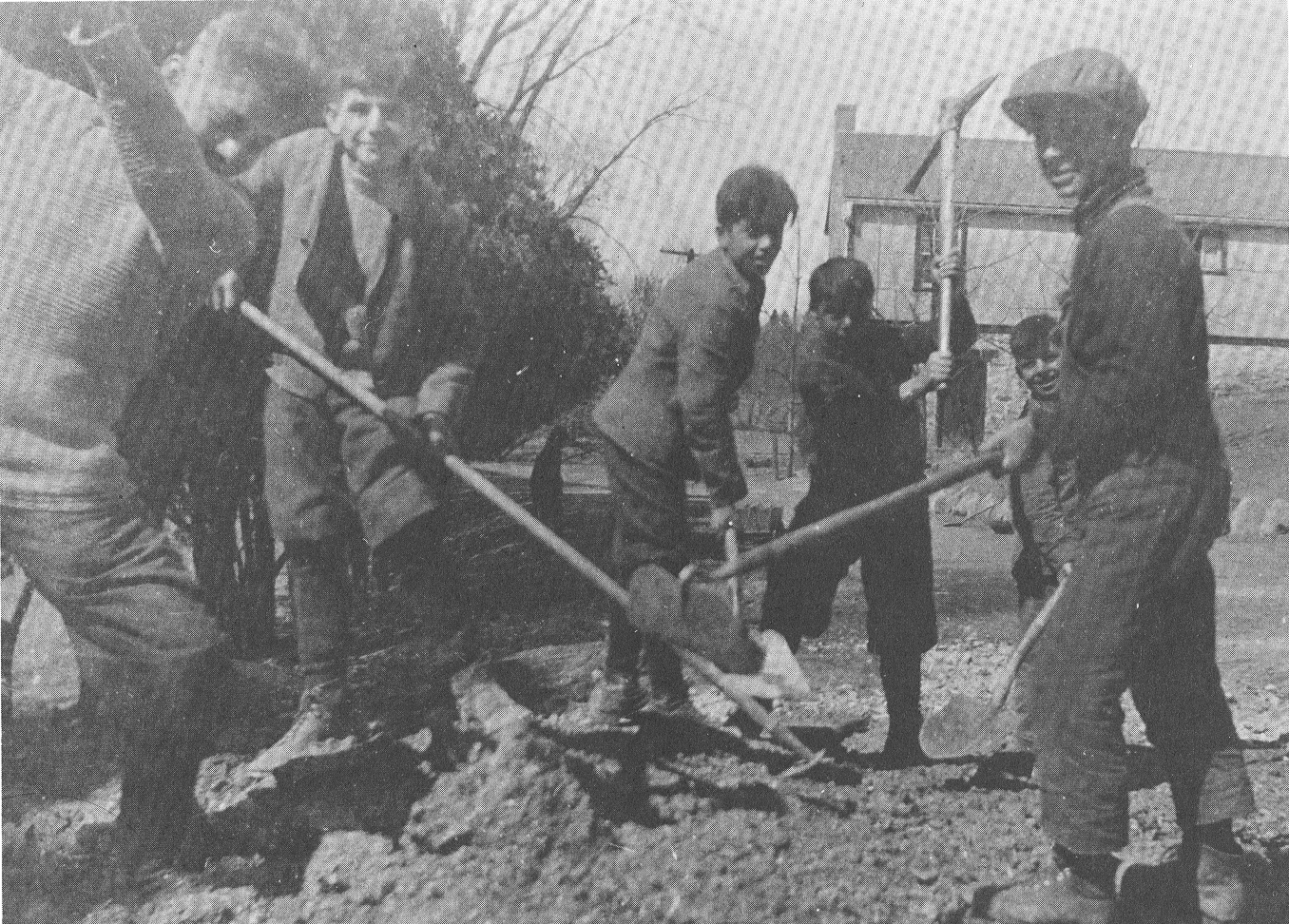
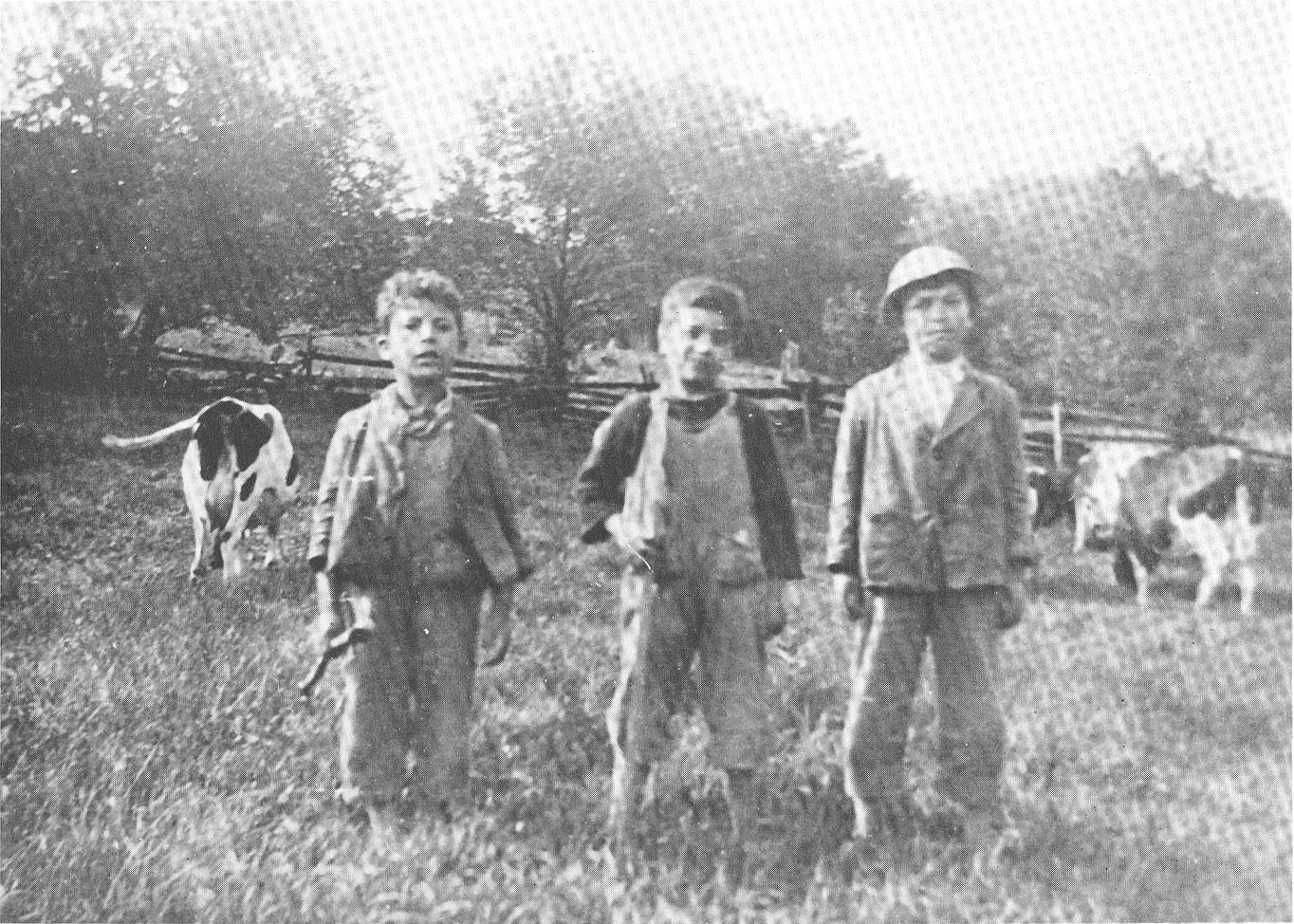
Not familiar with the Georgetown Boys?After the Armenian Genocide of 1915, Canadian churches and the Armenian Canadian community collected donations and purchased Cedarvale Farm in Georgetown Ontario and transformed it into a home for 109 orphaned Armenian boys.

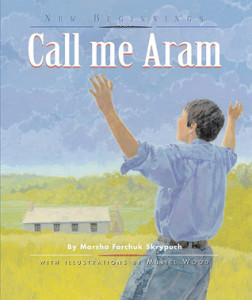
I wrote two books on this topic, Aram’s Choice and Call Me Aram.


The Georgetown Boys

georgetown

A moving experience in Georgetown Ontario with Armenian students bussed in from all over. As I sat on a picnic table and watched these very young children playing in the trees and chasing after each other with shouts of joy I couldn’t help but think of those first orphaned little boys who came in 1923, in what became known as Canada’s Noble Experiment — ie — Canada’s first international relief effort.


Georgetown 25 April 2015-page-001


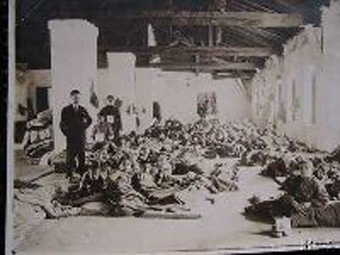
Thousands of children had been orphaned during the Armenian Genocide. By 1923, many had taken refuge in Corfu, in caves, on beaches, in old abandoned barracks.

Armenian orphans Feb.23

109 boys got a chance to start a new life in Canada. They left behind grandmothers and sisters and younger brothers, but they never forgot who they were.

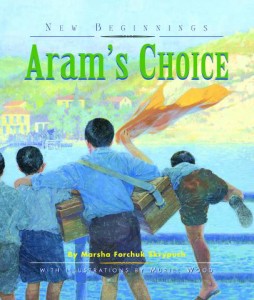
Aram's Choice
Cover image by Muriel Wood for Aram’s Choice by Marsha Forchuk Skrypuch

It was heartening to see hundreds of Armenian Canadian children and their families coming together in Georgetown today, to remember those first little boys, and more importantly, to remember those who didn’t survive. One hundred years ago the Turkish government tried to obliterate Armenians, their culture, their blood. They killed 1.5 million Armenians, but the nation and memory lives and thrives worldwide.

It was an honour to be one of the speakers at this commemorative event. I will never forget.

april25


Goodbye, Antoura

After my presentation at the Watertown MA Public Library last week, I was honoured to be presented with a copy of Karnig Panian’s memoir about his time as a child genocide survivor who is taken to the Orphanage of Antoura in Lebanon where the administrators tried to Turkify him. Panian’s daughter, Houry Panian Boyamian, wrote the acknowledgements. This photo shows Houry and I together. She is inscribing her very first autographed copy. Here is more information on this important memoir.

houri